
Kirjojen hintavertailu. Mukana 12 403 030 kirjaa ja 12 kauppaa.

Kirjahaku

Etsi kirjoja tekijän nimen, kirjan nimen tai ISBN:n perusteella.

2 kirjaa tekijältä Jeffrey D. Grynaviski

Partisan Bonds

Partisan Bonds

Jeffrey D. Grynaviski

Cambridge University Press
2013
pokkari
Political scientists have long painted American voters' dependence on partisan cues at the ballot box as a discouraging consequence of their overall ignorance about politics. Taking on this conventional wisdom, Jeffrey D. Grynaviski advances the provocative theory that voters instead rely on these cues because party brand names provide credible information about how politicians are likely to act in office, despite the weakness of formal party organization in the United States. Among the important empirical implications of his theory, which he carefully supports with rigorous data analysis, are that voter uncertainty about a party's issue positions varies with the level of party unity it exhibits in government, that party preferences in the electorate are strongest among the most certain voters, and that party brand names have meaningful consequences for the electoral strategies of party leaders and individual candidates for office.
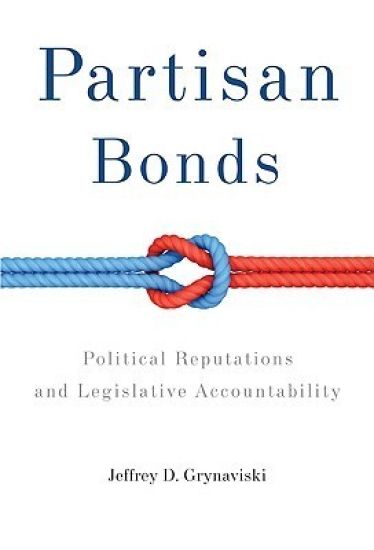
Partisan Bonds

Partisan Bonds

Jeffrey D. Grynaviski

Cambridge University Press
2010
sidottu
Political scientists have long painted American voters' dependence on partisan cues at the ballot box as a discouraging consequence of their overall ignorance about politics. Taking on this conventional wisdom, Jeffrey D. Grynaviski advances the provocative theory that voters instead rely on these cues because party brand names provide credible information about how politicians are likely to act in office, despite the weakness of formal party organization in the United States. Among the important empirical implications of his theory, which he carefully supports with rigorous data analysis, are that voter uncertainty about a party's issue positions varies with the level of party unity it exhibits in government, that party preferences in the electorate are strongest among the most certain voters, and that party brand names have meaningful consequences for the electoral strategies of party leaders and individual candidates for office.