Kirjojen hintavertailu. Mukana 12 386 672 kirjaa ja 12 kauppaa.

Kirjahaku

Etsi kirjoja tekijän nimen, kirjan nimen tai ISBN:n perusteella.

2 kirjaa tekijältä Jeffrey D. Needell

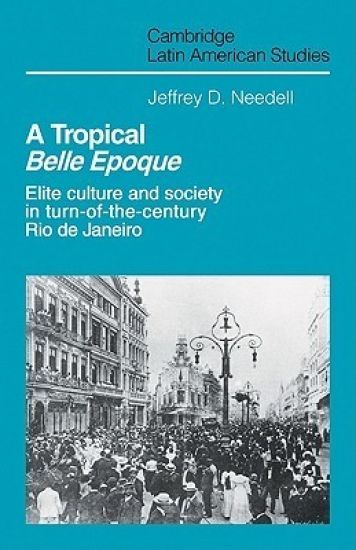
A Tropical Belle Epoque

A Tropical Belle Epoque

Jeffrey D. Needell

Cambridge University Press
2010
pokkari
This book, originally published in 1987, is a socio-cultural analysis of a tropical belle epoque: Rio de Janeiro between 1898 and 1914. It relates how the city's elite evolved from the semi-rural, slave-owning patriarchy of the coffee-port seat of a monarchy into an urbane, professional, rentier upper crust dominating the centre of a 'modernising' oligarchical republic. It explores such varied topics as architecture, literature, prostitution, urban reform, the family, secondary schools, and the salon. It evokes a milieu increasingly marked by Europe, demonstrating how French and English culture permeated the lives of elite members who adapted it to their needs and perspectives as a dominant stratum of relatively recent and varied origin. This exploration of cultural 'dependency' in a unique, cosmopolitan, fin-de-siecle urban culture will also interest those concerned with the broader questions of culture and colonialism during the high tide of European imperialism.

The Party of Order

The Party of Order

Jeffrey D. Needell

Stanford University Press
2006
sidottu
This study analyzes Brazil's monarchy, which adapted European ideas and practices to a creole plantation society that was traditionally based on African slavery. It focuses upon the Conservatives, who represented the sugar and coffee elites in reconstructing the new nation's state as a strong, representative, constitutional monarchy in troubled times. After the monarch himself assumed power, however, his views undercut parliamentary and party government, which were also sapped by regional differences and the pressure for state patronage. Increasingly, the emperor and his cabinets used state patronage and state authority to dominate politics. When the emperor decided upon gradualist abolition, Conservatives were unable to defeat it, despite its unconstitutional origin and imposition and its threat to the society and economy they represented. The legacy of an authoritarian, centralized political culture survived; that of a representative, constitutional regime did not. This book dramatically revises notions of the monarchy in terms of the social and ideological origins and nature of the Brazilian state, the role of the monarch, and the range and complexity of elite politics in the era.