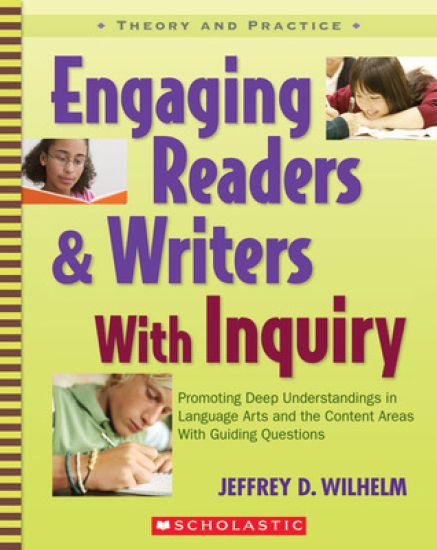
What makes a good relationship? How does flight influence behavior for humans and birds? Is it ever permissible to lie? Reframing our units and lessons with questions such as these makes learning more exciting for students. Wilhelm debunks the myth that teaching through inquiry is hard. He shares practical, easy ideas for turning state standards into engaging authentic questions that propel students toward deep understandings. Includes sample lessons, discussion techniques, and questioning schemes for all the content areas.
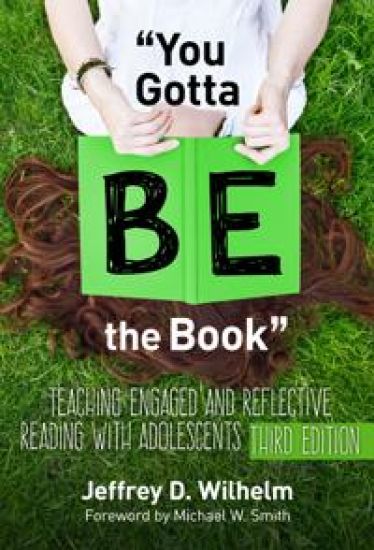
This award-winning book continues to resonate with teachers and inspire their teaching because it focuses on the joy of reading and how it can engage and even transform readers. In a time of next generation standards that emphasize higher-order strategies, text complexity, and the reading of nonfiction, “You Gotta BE the Book” continues to help teachers meet new challenges including those of increasing cultural diversity. At the core of Wilhelm’s foundational text is an in-depth account of what highly motivated adolescent readers actually do when they read, and how to help struggling readers take on those same stances and strategies. His work offers a robust model teachers can use to prepare students for the demands of disciplinary understanding and for literacy in the real world. The Third Edition includes new commentaries and tips for using visual techniques, drama and action strategies, think-aloud protocols, and symbolic story representation/reading manipulatives.Book Features:A data-driven theory of literature and literary reading as engagement.A case for undertaking teacher research with students.An approach for using drama and visual art to support readers’ comprehension.Guidance for assisting students in the use of higher-order strategies of reading (and writing) as required by next generation standards like the Common Core.Classroom interventions to help all students, especially reluctant ones, become successful readers.
Ett viktigt syfte för skolans litteraturundervisning är att vidga elevernas syn på egna och andras erfarenheter. Vi går in i karaktärernas liv, känner med dem, tänker med dem och oroar oss över de val de står inför. Med dramat får de verktyg att genomleva litterära texter. Det kan vara i form av rollspel eller genom att låta karaktären intervjuas i den heta stolen, genom att gestalta tysta scener eller genom att arbeta med diskussionsdramer. I rollspelet får eleven möjlighet att se problemen utifrån karaktärens perspektiv och kan på ett fruktbart sätt närma sig honom/henne och på så sätt utforska de dilemman som han/hon står inför och även prövade lösningar författaren skapar. Dramat låter läsaren träda in i och se på världen utifrån ett annat perspektiv än det egna. läsning i kombination med drama ger elevernamöjlighet att dra slutsatser och engagera sig emotionellt och på så sätt ta en personlig ståndpunkt i de frågeställningar boken reser. Jeffrey D. Wilhelm har under många år ndervisat elever och studenter. Han har skrivit ett tiotal böcker och är nu ansvarig för Boise State Writing Project. I denna bok beskriver han olika sätt att med dramats hjälp närma sig den skönlitterära texten. Boken ger en rik översikt över olika strategier som kan fördjupa läsningen och reflektionen kring texter.
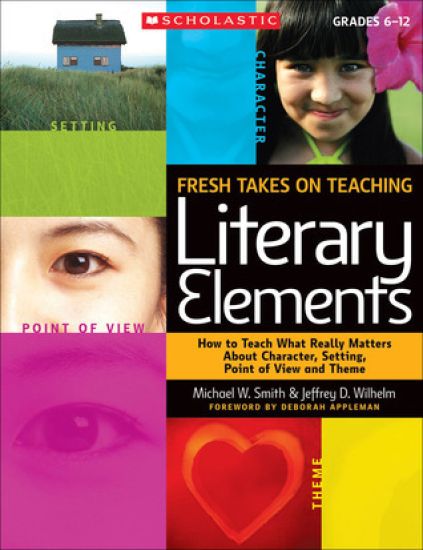
Bring new power and purpose to the study of literature with innovative tools and strategies that deepen students' understanding of literary elements and help them apply that understanding to their reading as well as their writing. Rich, original passages illuminate the intricacies of character, setting, point of view, and theme, and deeply engaging activities framed by inquiry enable students to transfer what they learn to new reading situations as well as to the way they think through problems and live their lives.
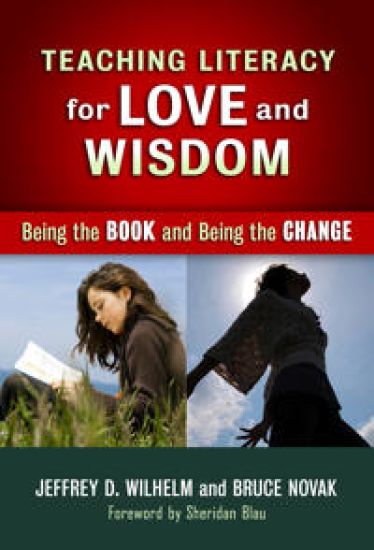
This powerful book lays out an inspiring new vision for the teaching of English, building on themes central to Wilhelm’s influential ""You Gotta BE The Book."" With this new work, Wilhelm and Novak challenge business as usual in the language arts. They call for nothing short of a revolution in our understanding of the aims and methods of the English classroom, showing what English can do for democratic life, inside and outside of classrooms. With moving portraits of teachers and students, as well as practical strategies and advice, they provide a roadmap to educational transformation far beyond the field of English that will be of interest to a wide audience of teachers, teacher educators, curriculum developers, and educational leaders. Essential questions explored by Teaching Literacy for Love and Wisdom:Why is what English teachers do so often underestimated?How can we teach literature in a way that fully taps into its transformative power?How can we artfully teach all subjects, at all levels, for personal wisdom, democratic community, and social and ecological justice?
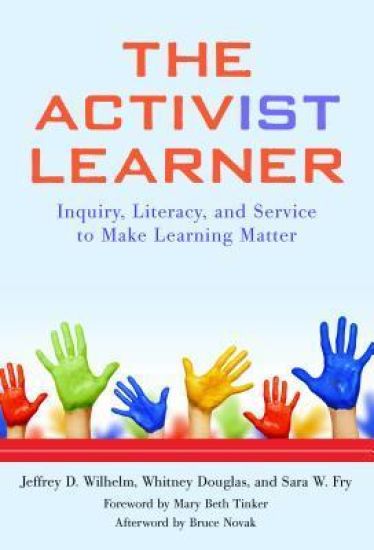
This dynamic book explores a variety of ways teachers can integrate service learning to enliven their classroom, meet the unique developmental needs of their students, and satisfy the next generation of standards and assessments. The authors demonstrate how inquiry-based teaching with service learning outcomes cultivates, requires, and rewards literacy, as well as important skills like perspective taking and compassion. Through the pursuit of service learning projects, students develop and apply literacy and disciplinary knowledge, experience real-world implications, and learn to think in more connected ways. At the same time, students acquire literacies essential for creating a culture of civic engagement and for mastering the Common Core.
Critical thinking and online reading need to go hand in hand—but they often don’t. Students click, swipe, and believe because they don’t know how to do otherwise. At times, so do we. And that’s a problem. Fighting Fake News combats this challenge by helping you model how to read, myth-bust, truth-test, and respond in ways that lead to wisdom rather than reactivity. No matter what content you teach, the lessons showcased here provide engaging, collaborative reading and discussion experiences so students can: Notice how teacher and peers read digital content, to be mindful of how various reading pathways influence perceptionIdentify the author background, the website sponsor, and other evidence that help set a piece in contextStress-test the facts by evaluating news sources, reading laterally, and other critical reading strategiesUse "Reader’s Rules of Notice" to learn to identify common rhetorical devices used to influence the readerBe aware of how for-profit social media platforms feed on our responses to narrow rather than widen our reading landscape We are still in the wild west era of the digital age, scrambling to impart a safer, ethical framework for evaluating information. Thankfully, it distills to one mission: teach students (and ourselves) how to think critically, and we will forever have the tools to fight fake news.
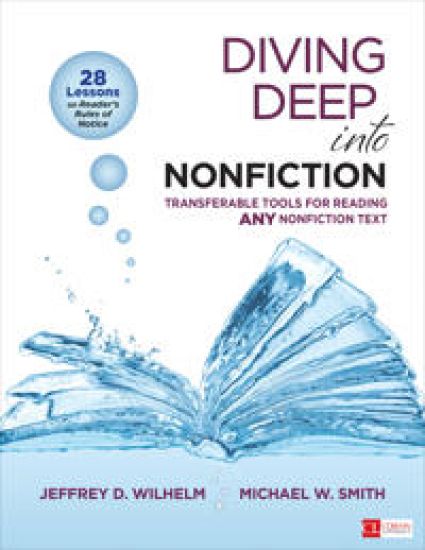
With Diving Deep Into Nonfiction, Jeffrey D. Wilhelm and Michael W. Smith deliver a revolutionary teaching framework that helps students read well by noticing the rules and conventions of nonfiction texts. Classroom-tested lessons, compelling short excerpts, and provocative discussion takes reading across content areas into a whole new era.
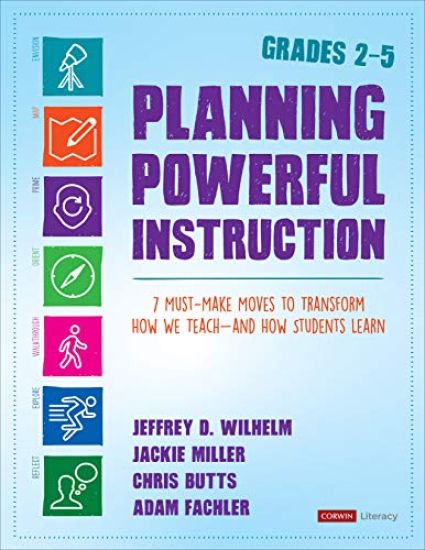
Are you ready to plan your best lessons ever? With so many demands and so much content available for teachers, we need to put a higher value on an often-overlooked skill: planning learning experiences that will both engage and inspire our students, by design, over time. Planning Powerful Instruction is your go-to guide for transforming student outcomes through stellar instructional planning. Its seven-step framework—the EMPOWER model—gives you techniques proven to help students develop true insight and understanding. You’ll have at your fingertips: the real reasons why students engage—and what you must do to ensure they doa framework to help you create, plan, and teach the most effective units and lessons in any subject areamore than 50 actionable strategies to incorporate right awaysuggestions for tailoring units for a wide range of learnersdownloadable, ready-to-go tools for planning and teaching Whether you are a classroom teacher, an instructional leader, or a pre-service teacher, Planning Powerful Instruction will forever change the way you think about how you teach and the unique value you bring to your learners.
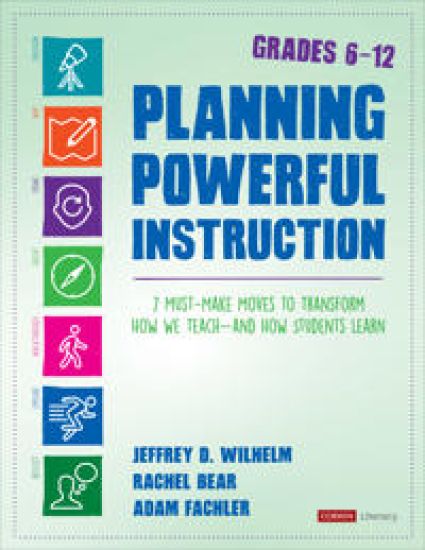
Are you ready to plan your best lessons ever? With so many demands and so much content available for teachers, we need to put a higher value on an often-overlooked skill: planning learning experiences that will both engage and inspire our students, by design, over time. Planning Powerful Instruction is your go-to guide for transforming student outcomes through stellar instructional planning. Its seven-step framework—the EMPOWER model—gives you techniques proven to help students develop true insight and understanding. You’ll have at your fingertips: the real reasons why students engage—and what you must do to ensure they doa framework to help you create, plan, and teach the most effective units and lessons in any subject areamore than 50 actionable strategies to incorporate right awaysuggestions for tailoring units for a wide range of learnersdownloadable, ready-to-go tools for planning and teaching Whether you are a classroom teacher, an instructional leader, or a pre-service teacher, Planning Powerful Instruction will forever change the way you think about how you teach and the unique value you bring to your learners.
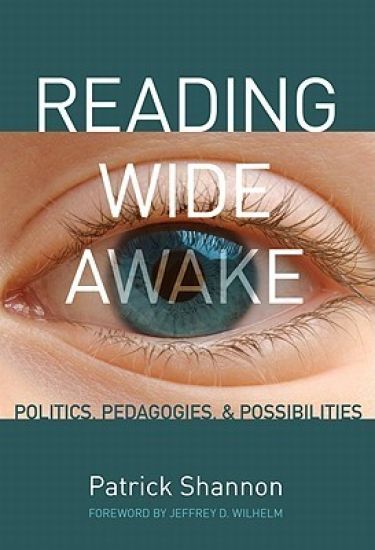
In his new book, popular author Patrick Shannon examines reading as agency—why reading critically is essential to civic engagement and a healthy democracy. We follow the author on a journey of self discovery as he practices “wide-awake reading” with a variety of everyday texts, from radio programs to legal documents to more traditional books and magazines. Shannon demonstrates how we can and must engage in close reading of the world around us and how teachers, in turn, can help their students make meaning from the information in their lives that often appears to move at warp speed. Reading Wide Awake integrates personal stories, political commentary, and guidance for educators into a fun-to-read book that will resonate with a diverse audience of teachers. Book Features: How to read social objects and events as texts, such as a Little League game, Google Earth, and PieLab. New connections between reading comprehension and the role of reading in society. “Imagining Pedagogy” and “Reading Theory” summary sections in each chapter.