Kirjojen hintavertailu. Mukana 11 627 064 kirjaa ja 12 kauppaa.

Kirjahaku

Etsi kirjoja tekijän nimen, kirjan nimen tai ISBN:n perusteella.

8 kirjaa tekijältä Jeffrey Greene

French Spirits

French Spirits

Jeffrey Greene

HARPERCOLLINS PUBLISHERS INC
2016
pokkari
A prize-winning American poet shares the miraculous story of his life in Burgundy, France, where he transformed an old stone village presbytery into a home for him and his wife. Reprint.
The Golden-Bristled Boar

The Golden-Bristled Boar

Jeffrey Greene

University of Virginia Press
2011
sidottu
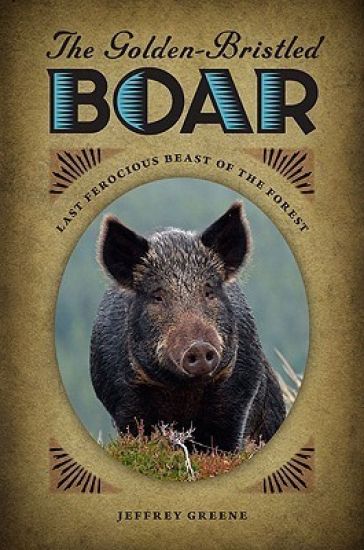
The wild boar appears to us as something straight out of a myth. But as Jeffrey Greene learned, these creatures are very real, living by night and, despite shrinking habitats and hordes of hunters, thriving on six continents. Greene purchased an eighteenth-century presbytery in a region of ponds and forests in northern Burgundy between the Loire and Seine Rivers of France. He soon discovered he'd moved to one of the most densely populated boar areas in Europe. Following the gift of a side of boar from a neighbour, and a dramatic early-morning encounter with a boar-hunting party and its prey, Greene became fascinated with the animal and immersed himself in the legend and the reality of the wild boar. Although it has no natural enemies, the boar is in constant conflict with humans. Most societies consider it a pest, not only wreaking havoc on crops and livestock, but destroying golf-course greens in search of worms, even creating a hazard for drivers (hogs on the roads cause over 14,000 car accidents a year in France). It has also been the object of highly ritualized hunts, dating back to classical times. The animal's remarkable appearance--it can grow larger than a person, and the males sport prominent tusks, called ""whetters"" and ""cutters""--has inspired artists for centuries; its depictions range from primitive masks to works of high art such as Pietro Tacca's Porcellino and paintings by Vel#xE1;zquez and Frans Snyders. The boar also plays a unique role in myth, appearing in the stories of Hercules and Adonis as well as in the folktale Beauty and the Beast. The author's search for the elusive animal takes him to Sardinia, Corsica, and Tuscany; he even casts an eye to the American South, where he explores the boar's feral-pig counterparts and descendents. He introduces us to a fascinating cast of experts, from museum curators and scientists to hunters and chefs (who share their recipes) to the inhabitants of chateaux who have lived in the same ancient countryside with generations of boars. They are all part of a journey filled with wonders and discoveries about these majestic animals the poet Robinson Jeffers called ""beautiful monsters.""
In Pursuit of Wild Edibles

In Pursuit of Wild Edibles

Jeffrey Greene

University of Virginia Press
2016
sidottu
Today we care about the source of our food as much as the preparation, so it is no surprise that foodies have discovered wild edibles. From the most upscale restaurants in New York to humble farm stays in Europe, chefs and restaurant-goers alike are seeking pleasure in food found in the wild.In Pursuit of Wild Edibles: A Forager’s Tour tells the story of one man passionate about finding wild edibles and creating recipes to highlight their unique flavors. An American expatriate, poet, and gourmet living in France, Jeffrey Greene has scoured the fields, rivers, and beaches of Europe and his native New England in search of foods ranging from puffballs and periwinkles to stone pine nuts and gooseneck barnacles. For many, foraging is the latest trend in foodie culture, but for Greene this journey stretches back to his childhood, when his parents fled New York City to a shack-like house in rural Connecticut. Convinced they could live off the land, the family raised goats, planted gardens, gathered seafood at the nearby coast, and foraged for food from the woods.Inspired by these childhood experiences, Greene and his wife, Mary, bought and restored an old priory in rural Burgundy. Surrounded by forests, they learned to identify mushrooms and greens, and devoted themselves to inventing recipes for them. Thus began a pursuit that took Greene to the Polish Carpathians, the Appennines overlooking the Ligurian coast, the shores of Normandy and Brittany, and to Plymouth, Massachusetts, where the Pilgrims eked out their first winter in near starvation.Greene’s captivating book offers experienced foragers and novices alike an extensive sampling of his own recipes and a chance to come along with him on his international adventures. From razor clams and wild sea urchins, to young nettles and dandelion greens, to wild strawberries and cherries, Greene showcases the beauty of what one can cook up in a truly wild recipe.
In Pursuit of Wild Edibles

In Pursuit of Wild Edibles

Jeffrey Greene

University of Virginia Press
2017
nidottu
Today we care about the source of our food as much as the preparation, so it is no surprise that foodies have discovered wild edibles. From the most upscale restaurants in New York to humble farm stays in Europe, chefs and restaurant-goers alike are seeking pleasure in food found in the wild.In Pursuit of Wild Edibles: A Forager’s Tour tells the story of one man passionate about finding wild edibles and creating recipes to highlight their unique flavors. An American expatriate, poet, and gourmet living in France, Jeffrey Greene has scoured the fields, rivers, and beaches of Europe and his native New England in search of foods ranging from puffballs and periwinkles to stone pine nuts and gooseneck barnacles. For many, foraging is the latest trend in foodie culture, but for Greene this journey stretches back to his childhood, when his parents fled New York City to a shack-like house in rural Connecticut. Convinced they could live off the land, the family raised goats, planted gardens, gathered seafood at the nearby coast, and foraged for food from the woods.Inspired by these childhood experiences, Greene and his wife, Mary, bought and restored an old priory in rural Burgundy. Surrounded by forests, they learned to identify mushrooms and greens, and devoted themselves to inventing recipes for them. Thus began a pursuit that took Greene to the Polish Carpathians, the Appennines overlooking the Ligurian coast, the shores of Normandy and Brittany, and to Plymouth, Massachusetts, where the Pilgrims eked out their first winter in near starvation.Greene’s captivating book offers experienced foragers and novices alike an extensive sampling of his own recipes and a chance to come along with him on his international adventures. From razor clams and wild sea urchins, to young nettles and dandelion greens, to wild strawberries and cherries, Greene showcases the beauty of what one can cook up in a truly wild recipe.
Masters of Tonewood

Masters of Tonewood

Jeffrey Greene

UNIVERSITY OF VIRGINIA PRESS
2022
sidottu
The wood used by master craftsmen to create many of the world’s legendary stringed instruments—violins and cellos, mandolins and guitars—comes from seven near-mythic European forests. In his latest book, Jeffrey Greene takes the reader into those woodlands and into luthiers’ workshops to show us how the world’s finest instruments not only contribute to great musical art but are prized works of art in themselves. Masters of Tonewood describes the "hidden life" of stringed instruments, beginning with the unique wood, expertly chosen and sometimes cured for decades, that gives them voices that rivet audiences. Greene takes us to forests in Italy, France, Switzerland, Austria, Romania, Poland, and the Czech Republic. We are introduced to the acoustical and aesthetic properties of the spruce that Stradivari treasured, and the mystery of why just one in a thousand maple trees contains decorative figuring worthy of the highest-quality instruments. Greene visits the greatest traditional centers of this craft, from Spain to the United States. He recounts the ideas and experiences of tonewood millers, luthiers, and musicians and discusses their concerns about environmental issues associated with a tradition dependent on ancient woodlands in a modern world.
Water from Stone

Water from Stone

Jeffrey Greene

Texas A M University Press
2007
sidottu
Award-winning author Jeffrey Greene provides a portrait, by turns lyrical and provocative, of J. David Bamberger's unlikely transformation from first, a vacuum cleaner salesman, then to co-founder and CEO of Church's Fried Chicken, to an internationally recognized conservationist. In fact, Greene tells two integrally related stories: the evolution of one man's business sense, applying profit incentives to land restoration and nature conservancy; and the creation of a Texas Hill Country preserve where he effectively demonstrates his own principles. Growing up in rural Ohio during the Great Depression and World War II, Bamberger learned at an early age to shun waste, grow food productively, and admire the Amish for living in harmony with the land. His mother taught him to love the natural world and gave him a book that would set the course for his life: Pleasant Valley, by Louis Bromfield, a visionary American advocate for land restoration. Inspired by his new role model, Bamberger would say, ""If I ever make money, I want to do what Bromfield did."" After finding that financial success, Bamberger bought what he describes as ""the sorriest piece of land in Blanco County"" and entered upon his decades-long effort to restore the ecological balance of 5,500 acres that had been virtually destroyed by more than a century of misuse. Naming his preserve Selah - from the Old Testament term meaning ""pause and reflect"" - Bamberger dedicates himself and his resources to protecting species and educating school children, conservation groups, government officials, and everyone else who will listen to his central message, delivered with evangelical zeal: We must take care of the earth, and anyone can help. Today, David and his wife, Margaret, have received many awards, and he has been featured in ""The New Yorker"", in ""Audubon"", and on CNN and network news. But until now, no one has fully told the story of how a man with vision transformed a place - and in doing so, transformed himself.
Water from Stone

Water from Stone

Jeffrey Greene

Texas A M University Press
2008
nidottu
Award-winning author Jeffrey Greene provides a portrait of J. David Bamberger's unlikely transformation from a vacuum cleaner salesman to co-founder and CEO of Church's Fried Chicken and an internationally recognized conservationist.Growing up in rural Ohio during the Great Depression and World War II, Bamberger learned from his mother to love the natural world. She gave him a book that would set the course for his life: ""Pleasant Valley"", by Louis Bromfield. Inspired by his new role model, Bamberger would say, 'If I ever make money, I want to do what Bromfield did.'After finding that financial success, Bamberger bought what he describes as ""the sorriest piece of land in Blanco County"" and entered upon his decades-long effort to restore the ecological balance of 5,500 acres that had been virtually destroyed by more than a century of misuse. Naming his preserve Selah - from the Old Testament term meaning ""pause and reflect"" - Bamberger now dedicates himself and his resources to protecting species and educating everyone else who will listen to his central message, delivered with evangelical zeal: We must take care of the earth, and anyone can help.
The Golden-Bristled Boar

The Golden-Bristled Boar

Jeffrey Greene

University of Virginia Press
2012
nidottu
The wild boar appears to us as something straight out of a myth. But as Jeffrey Greene learned, these creatures are very real, living by night and, despite shrinking habitats and hordes of hunters, thriving on six continents. Greene purchased an eighteenth-century presbytery in a region of ponds and forests in northern Burgundy between the Loire and Seine Rivers of France. He soon discovered he’d moved to one of the most densely populated boar areas in Europe. Following the gift of a side of boar from a neighbor, and a dramatic early-morning encounter with a boar-hunting party and its prey, Greene became fascinated with the animal and immersed himself in the legend and the reality of the wild boar. Although it has no natural enemies, the boar is in constant conflict with humans. Most societies consider it a pest, not only wreaking havoc on crops and livestock, but destroying golf-course greens in search of worms, even creating a hazard for drivers (hogs on the roads cause over 14,000 car accidents a year in France). It has also been the object of highly ritualized hunts, dating back to classical times. The animal’s remarkable appearance-it can grow larger than a person, and the males sport prominent tusks, called ""whetters"" and ""cutters""-has inspired artists for centuries; its depictions range from primitive masks to works of high art such as Pietro Tacca’s Porcellino and paintings by Velázquez and Frans Snyders. The boar also plays a unique role in myth, appearing in the stories of Hercules and Adonis as well as in the folktale Beauty and the Beast. The author’s search for the elusive animal takes him to Sardinia, Corsica, and Tuscany; he even casts an eye to the American South, where he explores the boar’s feral-pig counterparts and descendents. He introduces us to a fascinating cast of experts, from museum curators and scientists to hunters and chefs (who share their recipes) to the inhabitants of chateaux who have lived in the same ancient countryside with generations of boars. They are all part of a journey filled with wonders and discoveries about these majestic animals the poet Robinson Jeffers called ""beautiful monsters.""