Kirjojen hintavertailu. Mukana 12 595 353 kirjaa ja 12 kauppaa.

Kirjahaku

Etsi kirjoja tekijän nimen, kirjan nimen tai ISBN:n perusteella.

8 kirjaa tekijältä Jeffrey H. Jackson

Paris Under Water

Paris Under Water

Jeffrey H. Jackson

Palgrave Macmillan
2011
nidottu
In the winter of 1910, the river that brought life to Paris quickly became a force of destruction. Torrential rainfall saturated the soil, and faulty engineering created a perfect storm of conditions that soon drowned Parisian streets, homes, businesses, and museums. The city seemed to have lost its battle with the elements. Given the Parisians' history of deep-seated social, religious, and political strife, it was questionable whether they could collaborate to confront the crisis. Yet while the sewers, Metro, and electricity failed around them, Parisians of all backgrounds rallied to save the city and one another. Improvising techniques to keep Paris functioning and braving the dangers of collapsing infrastructure and looters, leaders and residents alike answered the call to action. This newfound ability to work together proved a crucial rehearsal for an even graver crisis four years later, when France was plunged into World War I. On the occasion of the hundredth anniversary of the flood, Jeffrey H. Jackson captures here for the first time the drama and ultimate victory of man over nature.
Making Jazz French

Making Jazz French

Jeffrey H. Jackson

Duke University Press
2003
pokkari
In "Making Jazz French", Jeffrey H. Jackson examines not only how and why jazz became so widely performed in Paris in the 1920s and 1930s but also why it was so controversial.
Making Jazz French

Making Jazz French

Jeffrey H. Jackson

Duke University Press
2003
sidottu
Between the world wars, Paris welcomed not only a number of glamorous American expatriates, including Josephine Baker and F. Scott Fitzgerald, but also a dynamic musical style emerging in the United States: jazz. Roaring through cabarets, music halls, and dance clubs, the upbeat, syncopated rhythms of jazz soon added to the allure of Paris as a center of international nightlife and cutting-edge modern culture. In Making Jazz French, Jeffrey H. Jackson examines not only how and why jazz became so widely performed in Paris during the 1920s and 1930s but also why it was so controversial.Drawing on memoirs, press accounts, and cultural criticism, Jackson uses the history of jazz in Paris to illuminate the challenges confounding French national identity during the interwar years. As he explains, many French people initially regarded jazz as alien because of its associations with America and Africa. Some reveled in its explosive energy and the exoticism of its racial connotations, while others saw it as a dangerous reversal of France’s most cherished notions of "civilization." At the same time, many French musicians, though not threatened by jazz as a musical style, feared their jobs would vanish with the arrival of American performers. By the 1930s, however, a core group of French fans, critics, and musicians had incorporated jazz into the French entertainment tradition. Today it is an integral part of Parisian musical performance. In showing how jazz became French, Jackson reveals some of the ways a musical form created in the United States became an international phenomenon and acquired new meanings unique to the places where it was heard and performed.
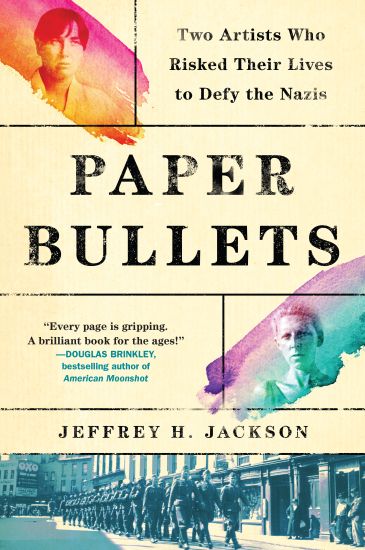
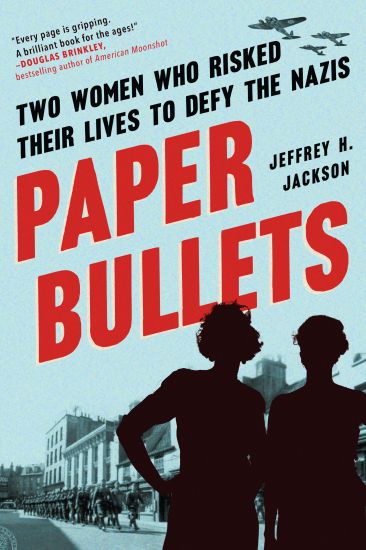
Paper Bullets

Paper Bullets

Jeffrey H. Jackson

Algonquin Books (division of Workman)
2020
sidottu
Hunted by the secret field police, Lucy and Suzanne were finally betrayed in 1944, when the Germans imprisoned them, and tried them in a court martial, sentencing them to death for their actions. Ultimately they survived, but even in jail, they continued to fight the Nazis by reaching out to other prisoners and spreading a message of hope. Better remembered today by their artist names, Claude Cahun and Marcel Moore, the couple’s actions were even more courageous because of who they were: lesbian partners known for cross-dressing and creating the kind of gender-bending work that the Nazis would come to call “degenerate art.” In addition, Lucy was half Jewish, and they had communist affiliations in Paris, where they attended political rallies with Surrealists and socialized with artists like Gertrude Stein. Paper Bullets is a compelling World War II story that has not been told before, about the galvanizing power of art, and of resistance.
Paper Bullets

Paper Bullets

Jeffrey H. Jackson

Algonquin Books (division of Workman)
2021
pokkari
“A Nazi resistance story like none you’ve ever heard or read.” —Hampton Sides, author of Ghost Soldiers and On Desperate Ground"Every page is gripping, and the amount of new research is nothing short of mind-boggling. A brilliant book for the ages!” —Douglas Brinkley, author of American Moonshot A Stonewall Honor Book in Nonfiction Longlisted for the Carnegie Medal for Excellence in NonfictionPaper Bullets is the first book to tell the history of an audacious anti-Nazi campaign undertaken by an unlikely pair: two French women, Lucy Schwob and Suzanne Malherbe, who drew on their skills as Parisian avant-garde artists to write and distribute “paper bullets”—wicked insults against Hitler, calls to rebel, and subversive fictional dialogues designed to demoralize Nazi troops occupying their adopted home on the British Channel Island of Jersey. Devising their own PSYOPS campaign, they slipped their notes into soldier’s pockets or tucked them inside newsstand magazines. Hunted by the secret field police, Lucy and Suzanne were finally betrayed in 1944, when the Germans imprisoned them and tried them in a court martial, sentencing them to death for their actions. Ultimately they survived, but even in jail, they continued to fight the Nazis by reaching out to other prisoners and spreading a message of hope. Better remembered today by their artist names, Claude Cahun and Marcel Moore, the couple’s actions were even more courageous because of who they were: lesbian partners known for cross-dressing and creating the kind of gender-bending work that the Nazis would come to call “degenerate art.” In addition, Lucy was half Jewish, and they had communist affiliations in Paris, where they attended political rallies with Surrealists and socialized with artists like Gertrude Stein.Paper Bullets is a compelling World War II story that has not been told before about the galvanizing power of art, and of resistance.