Kirjojen hintavertailu. Mukana 12 390 323 kirjaa ja 12 kauppaa.

Kirjahaku

Etsi kirjoja tekijän nimen, kirjan nimen tai ISBN:n perusteella.

4 kirjaa tekijältä Jeffrey S. Peake

Dysfunctional Diplomacy

Dysfunctional Diplomacy

Jeffrey S. Peake

TAYLOR FRANCIS LTD
2022
nidottu
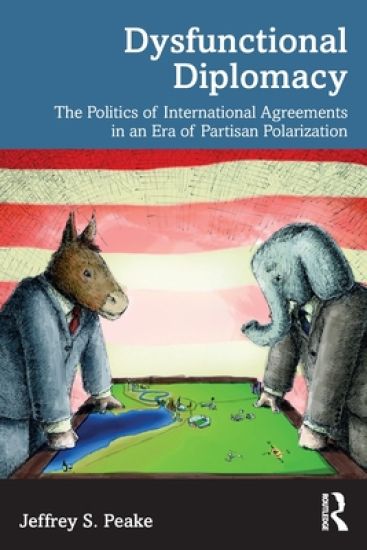
US diplomacy is broken. As a result, the United States sits on the sidelines as the remainder of the world writes international law dealing with a host of vexing problems. The source of the dysfunction is domestic politics. Partisan polarization has rendered the domestic treaty process unworkable. Instead, presidents rely entirely on unilateral tools to complete their agreements, making them far weaker and less legitimate. Using a mixed-methods approach, Peake assesses the politics surrounding treaty ratification and the use of unilateral authority since World War Two, with a particular focus on the twenty-first century. He employs original data from 1949 through 2020, including 1,000 treaties and more than 3,000 executive agreements. The analysis provides case studies of the domestic politics of several recent international agreements, including on climate change, Iranian nuclear weapons, security in Iraq and Afghanistan, human rights, and the law of the sea.
Dysfunctional Diplomacy

Dysfunctional Diplomacy

Jeffrey S. Peake

TAYLOR FRANCIS LTD
2022
sidottu
US diplomacy is broken. As a result, the United States sits on the sidelines as the remainder of the world writes international law dealing with a host of vexing problems. The source of the dysfunction is domestic politics. Partisan polarization has rendered the domestic treaty process unworkable. Instead, presidents rely entirely on unilateral tools to complete their agreements, making them far weaker and less legitimate. Using a mixed-methods approach, Peake assesses the politics surrounding treaty ratification and the use of unilateral authority since World War Two, with a particular focus on the twenty-first century. He employs original data from 1949 through 2020, including 1,000 treaties and more than 3,000 executive agreements. The analysis provides case studies of the domestic politics of several recent international agreements, including on climate change, Iranian nuclear weapons, security in Iraq and Afghanistan, human rights, and the law of the sea.
Breaking Through the Noise

Breaking Through the Noise

Matthew Eshbaugh-Soha; Jeffrey S. Peake

Stanford University Press
2011
sidottu
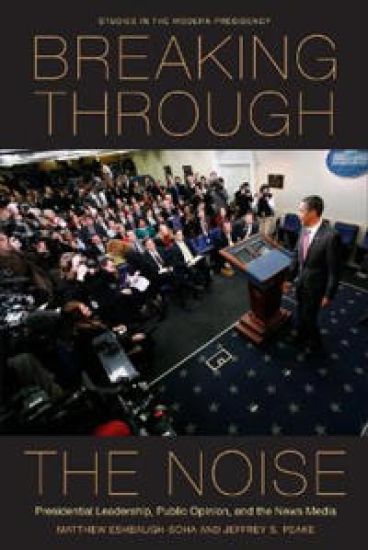
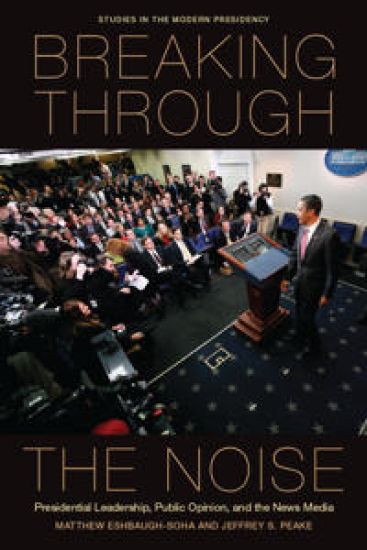
Modern presidents engage in public leadership through national television addresses, routine speechmaking, and by speaking to local audiences. With these strategies, presidents tend to influence the media's agenda. In fact, presidential leadership of the news media provides an important avenue for indirect presidential leadership of the public, the president's ultimate target audience. Although frequently left out of sophisticated treatments of the public presidency, the media are directly incorporated into this book's theoretical approach and analysis. The authors find that when the public expresses real concern about an issue, such as high unemployment, the president tends to be responsive. But when the president gives attention to an issue in which the public does not have a preexisting interest, he can expect, through the news media, to directly influence public opinion. Eshbaugh-Soha and Peake offer key insights on when presidents are likely to have their greatest leadership successes and demonstrate that presidents can indeed "break through the noise" of news coverage to lead the public agenda.
Breaking Through the Noise

Breaking Through the Noise

Matthew Eshbaugh-Soha; Jeffrey S. Peake

Stanford University Press
2011
pokkari
Modern presidents engage in public leadership through national television addresses, routine speechmaking, and by speaking to local audiences. With these strategies, presidents tend to influence the media's agenda. In fact, presidential leadership of the news media provides an important avenue for indirect presidential leadership of the public, the president's ultimate target audience. Although frequently left out of sophisticated treatments of the public presidency, the media are directly incorporated into this book's theoretical approach and analysis. The authors find that when the public expresses real concern about an issue, such as high unemployment, the president tends to be responsive. But when the president gives attention to an issue in which the public does not have a preexisting interest, he can expect, through the news media, to directly influence public opinion. Eshbaugh-Soha and Peake offer key insights on when presidents are likely to have their greatest leadership successes and demonstrate that presidents can indeed "break through the noise" of news coverage to lead the public agenda.