Kirjojen hintavertailu. Mukana 12 406 556 kirjaa ja 12 kauppaa.

Kirjahaku

Etsi kirjoja tekijän nimen, kirjan nimen tai ISBN:n perusteella.

10 kirjaa tekijältä Jeffrey Shandler

Yiddish

Yiddish

Jeffrey Shandler

Oxford University Press Inc
2021
sidottu
The most widely spoken Jewish language on the eve of the Holocaust, Yiddish continues to play a significant role in Jewish life today, from Hasidim for whom it is a language of daily life to avant-garde performers, political activists, and LGBTQ writers turning to Yiddish for inspiration. Yiddish: Biography of a Language presents the story of this centuries-old language, the defining vernacular of Ashkenazi Jews, from its origins to the present. Jeffrey Shandler tells the multifaceted history of Yiddish in the form of a biographical profile, revealing surprising insights through a series of thematic chapters. He addresses key aspects of Yiddish as the language of a diasporic population, whose speakers have always used more than one language. As the vernacular of a marginalized minority, Yiddish has often been held in low regard compared to other languages, and its legitimacy as a language has been questioned. But some devoted Yiddish speakers have championed the language as embodying the essence of Jewish culture and a defining feature of a Jewish national identity. Despite predictions of the demise of Yiddish-dating back well before half of its speakers were murdered during the Holocaust-the language leads a vibrant, evolving life to this day.
Homes of the Past

Homes of the Past

Jeffrey Shandler

INDIANA UNIVERSITY PRESS
2024
sidottu
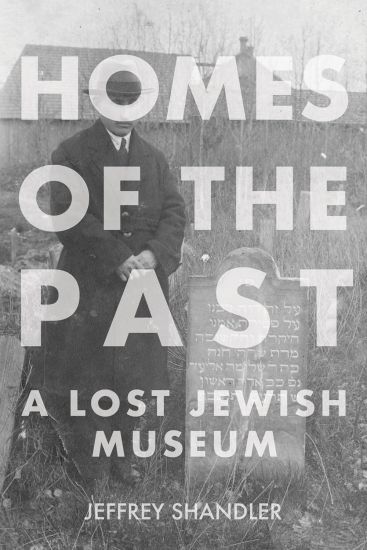
Homes of the Past tells the powerful story of how immigrant Jewish scholars in 1940s New York sought to build a museum to commemorate their lost worlds and people. Among the Jews who arrived in the United States in the early 1940s were a small number of Polish scholars who had devoted their professional lives to the study of Europe's Yiddish-speaking Jews at the YIVO Institute for Jewish Research. Faced with the devastating knowledge that returning to their former homes and resuming their scholarly work there was no longer viable, they sought to address their profound sense of loss by continuing their work, under radically different circumstances, to document the European Jewish lives, places, and ways of living that were being destroyed. In pursuing this daunting agenda, they made a remarkable decision: they would create a museum to memorialize East European Jewry and educate American Jews about this legacy. YIVO scholars determinedly pursued this undertaking for several years, publicizing the initiative and collecting materials to exhibit. However, the Museum of the Homes of the Past was abandoned shortly after the war ended. With insight and clarity, Jeffrey Shandler draws upon the surviving archival sources to tell the story of the purpose, development, and ultimate fate of the Museum of the Homes of the Past. Homes of the Past explores this largely unknown episode of modern Jewish history and museum history and demonstrates that the project, even though it was never realized, marked a critical inflection point in the dynamic interrelations between Jews in America and Eastern Europe.
Homes of the Past

Homes of the Past

Jeffrey Shandler

INDIANA UNIVERSITY PRESS
2024
pokkari
Homes of the Past tells the powerful story of how immigrant Jewish scholars in 1940s New York sought to build a museum to commemorate their lost worlds and people. Among the Jews who arrived in the United States in the early 1940s were a small number of Polish scholars who had devoted their professional lives to the study of Europe's Yiddish-speaking Jews at the YIVO Institute for Jewish Research. Faced with the devastating knowledge that returning to their former homes and resuming their scholarly work there was no longer viable, they sought to address their profound sense of loss by continuing their work, under radically different circumstances, to document the European Jewish lives, places, and ways of living that were being destroyed. In pursuing this daunting agenda, they made a remarkable decision: they would create a museum to memorialize East European Jewry and educate American Jews about this legacy. YIVO scholars determinedly pursued this undertaking for several years, publicizing the initiative and collecting materials to exhibit. However, the Museum of the Homes of the Past was abandoned shortly after the war ended. With insight and clarity, Jeffrey Shandler draws upon the surviving archival sources to tell the story of the purpose, development, and ultimate fate of the Museum of the Homes of the Past. Homes of the Past explores this largely unknown episode of modern Jewish history and museum history and demonstrates that the project, even though it was never realized, marked a critical inflection point in the dynamic interrelations between Jews in America and Eastern Europe.
Adventures in Yiddishland

Adventures in Yiddishland

Jeffrey Shandler

University of California Press
2008
pokkari
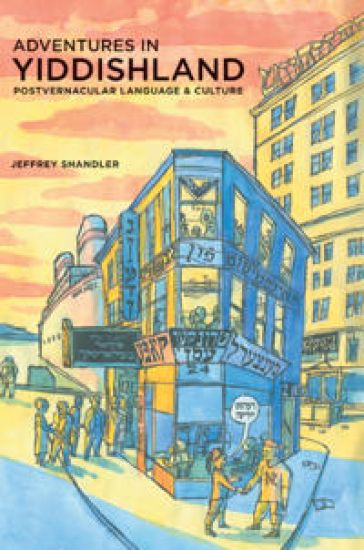
"Adventures in Yiddishland" examines the transformation of Yiddish in the six decades since the Holocaust, tracing its shift from the language of daily life for millions of Jews to what the author terms a postvernacular language of diverse and expanding symbolic value. With a thorough command of modern Yiddish culture, as well as its centuries-old history, Jeffrey Shandler investigates the remarkable diversity of contemporary encounters with the language. His study traverses the broad spectrum of people who engage with Yiddish - from Hasidim to avant-garde performers, Jews as well as non-Jews, fluent speakers, as well as those who know little or no Yiddish - in communities across the Americas, in Europe, Israel, and other outposts of "Yiddishland."
Shtetl

Shtetl

Jeffrey Shandler

Rutgers University Press
2014
nidottu
In Yiddish, shtetl simply means “town.” How does such an unassuming word come to loom so large in modern Jewish culture, with a proliferation of uses and connotations? By examining the meaning of shtetl, Jeffrey Shandler asks how Jewish life in provincial towns in Eastern Europe has become the subject of extensive creativity, memory, and scholarship from the early modern era in European history to the present.In the post-Holocaust era, the shtetl looms large in public culture as the epitome of a bygone traditional Jewish communal life. People now encounter the Jewish history of these towns through an array of cultural practices, including fiction, documentary photography, film, memoirs, art, heritage tourism, and political activism. At the same time, the shtetl attracts growing scholarly interest, as historians, social scientists, literary critics, and others seek to understand both the complex reality of life in provincial towns and the nature of its wide-ranging remembrance.Shtetl: A Vernacular Intellectual History traces the trajectory of writing about these towns—by Jews and non-Jews, residents and visitors, researchers, novelists, memoirists, journalists and others—to demonstrate how the Yiddish word for “town” emerged as a key word in Jewish culture and studies. Shandler proposes that the intellectual history of the shtetl is best approached as an exemplar of engaging Jewish vernacularity, and that the variable nature of this engagement, far from being a drawback, is central to the subject’s enduring interest.
Shtetl

Shtetl

Jeffrey Shandler

Rutgers University Press
2014
sidottu
In Yiddish, shtetl simply means “town.” How does such an unassuming word come to loom so large in modern Jewish culture, with a proliferation of uses and connotations? By examining the meaning of shtetl, Jeffrey Shandler asks how Jewish life in provincial towns in Eastern Europe has become the subject of extensive creativity, memory, and scholarship from the early modern era in European history to the present.In the post-Holocaust era, the shtetl looms large in public culture as the epitome of a bygone traditional Jewish communal life. People now encounter the Jewish history of these towns through an array of cultural practices, including fiction, documentary photography, film, memoirs, art, heritage tourism, and political activism. At the same time, the shtetl attracts growing scholarly interest, as historians, social scientists, literary critics, and others seek to understand both the complex reality of life in provincial towns and the nature of its wide-ranging remembrance.Shtetl: A Vernacular Intellectual History traces the trajectory of writing about these towns—by Jews and non-Jews, residents and visitors, researchers, novelists, memoirists, journalists and others—to demonstrate how the Yiddish word for “town” emerged as a key word in Jewish culture and studies. Shandler proposes that the intellectual history of the shtetl is best approached as an exemplar of engaging Jewish vernacularity, and that the variable nature of this engagement, far from being a drawback, is central to the subject’s enduring interest.
Jews, God, and Videotape

Jews, God, and Videotape

Jeffrey Shandler

New York University Press
2009
sidottu
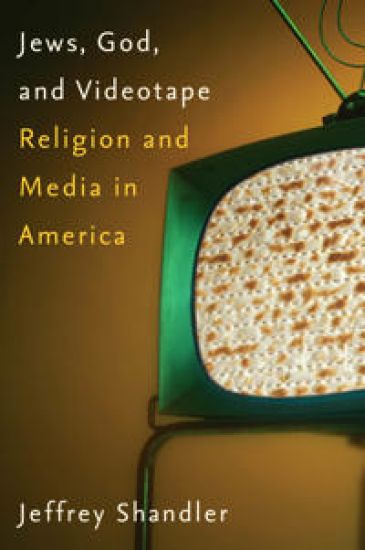
A pioneering examination of the impact of new communications technologies and media practices on the religious life of American Jewry Engaging media has been an ongoing issue for American Jews, as it has been for other religious communities in the United States, for several generations. Shandler's examples range from early recordings of cantorial music to Hasidic outreach on the Internet. In between he explores mid-twentieth-century ecumenical radio and television broadcasting, video documentation of life cycle rituals, museum displays and tourist practices as means for engaging the Holocaust as a moral touchstone, and the role of mass-produced material culture in Jews' responses to the American celebration of Christmas. Shandler argues that the impact of these and other media on American Judaism is varied and extensive: they have challenged the role of clergy and transformed the nature of ritual; facilitated innovations in religious practice and scholarship, as well as efforts to maintain traditional observance and teachings; created venues for outreach, both to enhance relationships with non-Jewish neighbors and to promote greater religiosity among Jews; even redefined the notion of what might constitute a Jewish religious community or spiritual experience. As Jews, God, and Videotape demonstrates, American Jews' experiences are emblematic of how religious communities' engagements with new media have become central to defining religiosity in the modern age.
Jews, God, and Videotape

Jews, God, and Videotape

Jeffrey Shandler

New York University Press
2009
pokkari
A pioneering examination of the impact of new communications technologies and media practices on the religious life of American Jewry Engaging media has been an ongoing issue for American Jews, as it has been for other religious communities in the United States, for several generations. Shandler's examples range from early recordings of cantorial music to Hasidic outreach on the Internet. In between he explores mid-twentieth-century ecumenical radio and television broadcasting, video documentation of life cycle rituals, museum displays and tourist practices as means for engaging the Holocaust as a moral touchstone, and the role of mass-produced material culture in Jews' responses to the American celebration of Christmas. Shandler argues that the impact of these and other media on American Judaism is varied and extensive: they have challenged the role of clergy and transformed the nature of ritual; facilitated innovations in religious practice and scholarship, as well as efforts to maintain traditional observance and teachings; created venues for outreach, both to enhance relationships with non-Jewish neighbors and to promote greater religiosity among Jews; even redefined the notion of what might constitute a Jewish religious community or spiritual experience. As Jews, God, and Videotape demonstrates, American Jews' experiences are emblematic of how religious communities' engagements with new media have become central to defining religiosity in the modern age.
Holocaust Memory in the Digital Age

Holocaust Memory in the Digital Age

Jeffrey Shandler

Stanford University Press
2017
sidottu
Holocaust Memory in the Digital Age explores the nexus of new media and memory practices, raising questions about how advances in digital technologies continue to influence the nature of Holocaust memorialization. Through an in-depth study of the largest and most widely available collection of videotaped interviews with survivors and other witnesses to the Holocaust, the University of Southern California Shoah Foundation's Visual History Archive, Jeffrey Shandler weighs the possibilities and challenges brought about by digital forms of public memory. The Visual History Archive's holdings are extensive—over 100,000 hours of video, including interviews with over 50,000 individuals—and came about at a time of heightened anxiety about the imminent passing of the generation of Holocaust survivors and other eyewitnesses. Now, the Shoah Foundation's investment in new digital media is instrumental to its commitment to remembering the Holocaust both as a subject of historical importance in its own right and as a paradigmatic moral exhortation against intolerance. Shandler not only considers the Archive as a whole, but also looks closely at individual survivors' stories, focusing on narrative, language, and spectacle to understand how Holocaust remembrance is mediated.
Holocaust Memory in the Digital Age

Holocaust Memory in the Digital Age

Jeffrey Shandler

Stanford University Press
2017
pokkari
Holocaust Memory in the Digital Age explores the nexus of new media and memory practices, raising questions about how advances in digital technologies continue to influence the nature of Holocaust memorialization. Through an in-depth study of the largest and most widely available collection of videotaped interviews with survivors and other witnesses to the Holocaust, the University of Southern California Shoah Foundation's Visual History Archive, Jeffrey Shandler weighs the possibilities and challenges brought about by digital forms of public memory. The Visual History Archive's holdings are extensive—over 100,000 hours of video, including interviews with over 50,000 individuals—and came about at a time of heightened anxiety about the imminent passing of the generation of Holocaust survivors and other eyewitnesses. Now, the Shoah Foundation's investment in new digital media is instrumental to its commitment to remembering the Holocaust both as a subject of historical importance in its own right and as a paradigmatic moral exhortation against intolerance. Shandler not only considers the Archive as a whole, but also looks closely at individual survivors' stories, focusing on narrative, language, and spectacle to understand how Holocaust remembrance is mediated.