Kirjojen hintavertailu. Mukana 11 244 527 kirjaa ja 12 kauppaa.

Kirjahaku

Etsi kirjoja tekijän nimen, kirjan nimen tai ISBN:n perusteella.

3 kirjaa tekijältä Jeffrey Stackert

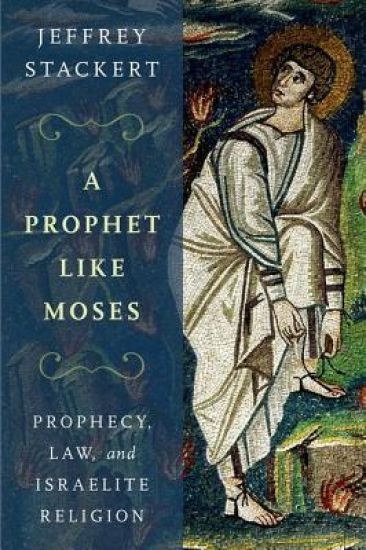
A Prophet Like Moses

A Prophet Like Moses

Jeffrey Stackert

Oxford University Press Inc
2014
sidottu
Jeffrey Stackert addresses two of the oldest and most persistent problems in biblical studies: the relationship between prophecy and law in the Hebrew Bible and the utility of the Documentary Hypothesis for understanding Israelite religion. These topics have in many ways dominated pentateuchal studies and the investigation of Israelite religion since the nineteenth century, culminating in Julius Wellhausens influential Prolegomena to the History of Ancient Israel. Setting his inquiry against this backdrop while drawing on and extending recent developments in pentateuchal theory, Stackert tackles the subject through an investigation of the different presentations of Mosaic prophecy in the four Torah sources. His book shows that these texts contain a rich and longstanding debate over prophecy, its relation to law, and its place in Israelite religion. With this argument, A Prophet Like Moses demonstrates a new role for the Documentary Hypothesis in discussions of Israelite religion. It also provides an opportunity for critical reflection on the history of the field of biblical studies. Stackert concludes with an argument for the importance of situating biblical studies and the study of ancient Israelite religion within the larger field of religious studies rather than treating them solely or even primarily as theological disciplines.
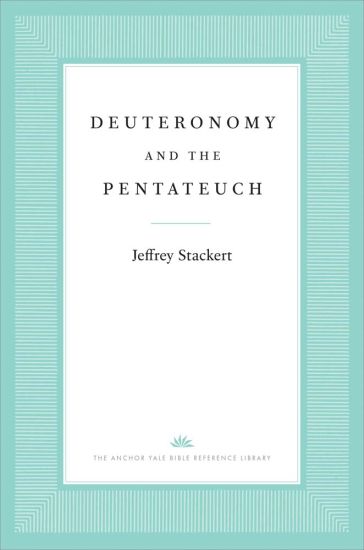
Deuteronomy and the Pentateuch

Deuteronomy and the Pentateuch

Jeffrey Stackert

YALE UNIVERSITY PRESS
2022
sidottu
This indispensable monograph synthesizes current debates and offers a new historical and literary analysis of the book of Deuteronomy “In this exciting addition to the Anchor Yale Bible Reference Library, Stackert offers something genuinely new: he brilliantly weaves together biblical scholarship, cuneiform literature, and contemporary literary theory. This clearly written and engaging volume examines how the concept of scripture shaped ancient readers’ understanding of Deuteronomy.”—Bernard M. Levinson, University of Minnesota The book of Deuteronomy introduces and develops many of the essential ideas, events, and texts of both Judaism and Christianity, and it has thus been a resource—and in some instances even a starting point—for investigations of themes and concepts beyond it. In this volume, Jeffrey Stackert deftly guides the reader through major topics in the interpretation of Deuteronomy and its relationship to the other four pentateuchal books. Considering subjects such as the relationship between law and narrative, the role of Deuteronomy in Israel’s history, its composition and reception history, the influence of cuneiform legal and treaty traditions, textual and archaeological evidence from the Levant and Mesopotamia, and the status of Deuteronomy within the larger biblical canon, this book introduces ongoing debates surrounding the book of Deuteronomy and offers a contemporary evaluation of the latest textual and material evidence.
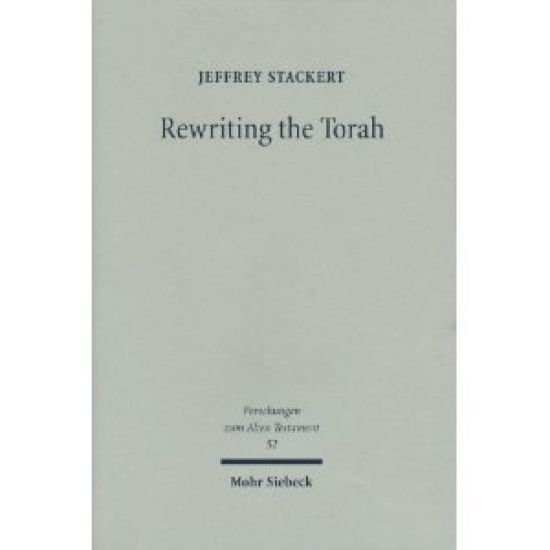
Rewriting the Torah

Rewriting the Torah

Jeffrey Stackert

Mohr Siebeck
2007
sidottu
Jeffrey Stackert explores literary correspondences among the pentateuchal legal corpora and especially the relationships between similar laws in Deuteronomy and the Holiness Legislation (Lev 17-26, the so-called "Holiness Code," as well as significant parts of the Priestly source elsewhere in the Pentateuch). Resemblances between these law collections range from broad structure to fine detail and include treatments of similar legal topics, correlations with regard to sequence of laws, and precise grammatical and lexical correspondences. Yet the nature and basis of these resemblances persist as debated points among biblical scholars. Through an analysis of the pentateuchal laws on asylum, seventh-year release, manumission, and tithes, the author argues that the Holiness Legislation depends upon both the Covenant Collection and Deuteronomy. He also elucidates the compositional logic of the Holiness legislators, showing that these authors do not simply replicate pre-existing legal content. Rather, they employ a method of literary revision in which they reconceptualize source material according to their own ideological biases. In the end, the Holiness Legislation proves to be a "super law" that collects and distills the Priestly and non-Priestly laws that precede it. By accommodating, reformulating, and incorporating various viewpoints from these sources, the Holiness authors create a work that is intended to supersede them all.