Kirjojen hintavertailu. Mukana 11 717 486 kirjaa ja 12 kauppaa.

Kirjahaku

Etsi kirjoja tekijän nimen, kirjan nimen tai ISBN:n perusteella.

2 kirjaa tekijältä Jeffrey Witsoe

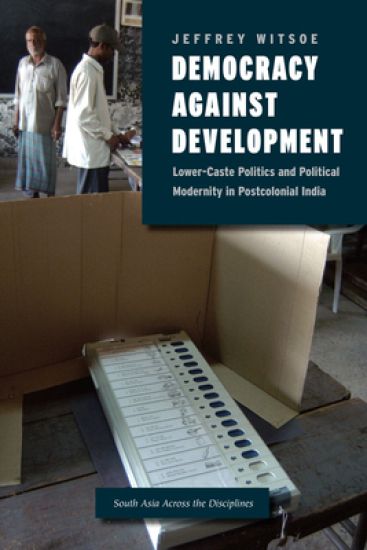
Democracy against Development

Democracy against Development

Jeffrey Witsoe

University of Chicago Press
2013
sidottu
Hidden behind the much-touted success story of India's emergence as an economic superpower is another, far more complex narrative of the nation's recent history, one in which economic development is frequently countered by profoundly unsettling, and often violent, political movements. In Democracy against Development, Jeffrey Witsoe investigates this counternarrative, uncovering an antagonistic relationship between recent democratic mobilization and development-oriented governance in India. Witsoe looks at the history of colonialism in India and its role in both shaping modern caste identities and linking locally powerful caste groups to state institutions, which has effectively created a postcolonial patronage state. He then looks at the rise of lower-caste politics in one of India's poorest and most populous states, Bihar, showing how this increase in democratic participation has radically threatened the patronage state by systematically weakening its institutions and disrupting its development projects. By depicting democracy and development as they truly are in India - in tension - Witsoe reveals crucial new empirical and theoretical insights about the long-term trajectory of democratization in the larger postcolonial world.
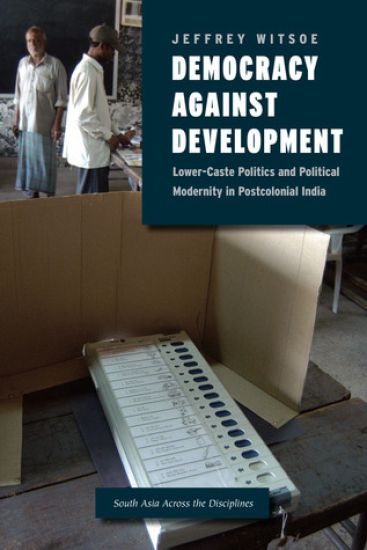
Democracy against Development

Democracy against Development

Jeffrey Witsoe

University of Chicago Press
2013
nidottu
Hidden behind the much-touted success story of India's emergence as an economic superpower is another, far more complex narrative of the nation's recent history, one in which economic development is frequently countered by profoundly unsettling, and often violent, political movements. In Democracy against Development, Jeffrey Witsoe investigates this counternarrative, uncovering an antagonistic relationship between recent democratic mobilization and development-oriented governance in India. Witsoe looks at the history of colonialism in India and its role in both shaping modern caste identities and linking locally powerful caste groups to state institutions, which has effectively created a postcolonial patronage state. He then looks at the rise of lower-caste politics in one of India's poorest and most populous states, Bihar, showing how this increase in democratic participation has radically threatened the patronage state by systematically weakening its institutions and disrupting its development projects. By depicting democracy and development as they truly are in India - in tension - Witsoe reveals crucial new empirical and theoretical insights about the long-term trajectory of democratization in the larger postcolonial world.