Kirjojen hintavertailu. Mukana 11 342 296 kirjaa ja 12 kauppaa.

Kirjahaku

Etsi kirjoja tekijän nimen, kirjan nimen tai ISBN:n perusteella.

4 kirjaa tekijältä Jenell Johnson

Every Living Thing

Every Living Thing

Jenell Johnson

Pennsylvania State University Press
2023
sidottu
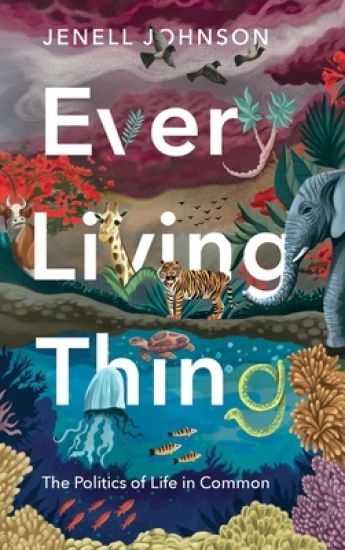
This book examines the question of what we mean when we talk about life, revealing new insights into what life is, what it does, and why it matters. Jenell Johnson studies arguments on behalf of life—not just of the human or animal variety, but all life. She considers, for example, the Standing Rock Sioux tribe’s fight for water, deep ecologists’ Earth First! activism, the Voluntary Human Extinction Movement, and astrophysicists’ positions on Martian microbes. What she reveals is that this advocacy—vital advocacy—expands our view of what counts as life and shows us what it would mean for the moral standing of human life to be extended to life itself.Including short interviews with celebrated ecological writer Dorion Sagan, former NASA Planetary Protection Officer Catharine Conley, and leading figure in Indigenous and environmental studies Kyle Whyte, Every Living Thing provides a capacious view of life in the natural world. This book is a must-read for anyone interested in biodiversity, bioethics, and the environment.
Every Living Thing

Every Living Thing

Jenell Johnson

Pennsylvania State University Press
2023
pokkari
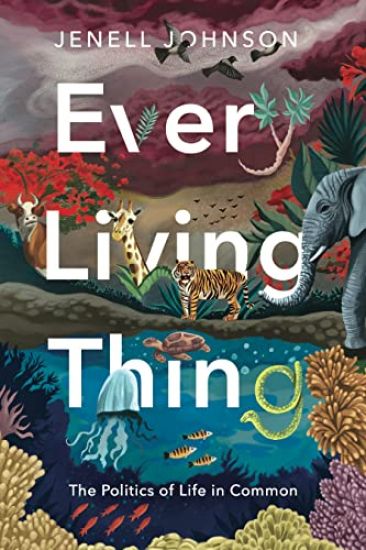
This book examines the question of what we mean when we talk about life, revealing new insights into what life is, what it does, and why it matters. Jenell Johnson studies arguments on behalf of life—not just of the human or animal variety, but all life. She considers, for example, the Standing Rock Sioux tribe’s fight for water, deep ecologists’ Earth First! activism, the Voluntary Human Extinction Movement, and astrophysicists’ positions on Martian microbes. What she reveals is that this advocacy—vital advocacy—expands our view of what counts as life and shows us what it would mean for the moral standing of human life to be extended to life itself.Including short interviews with celebrated ecological writer Dorion Sagan, former NASA Planetary Protection Officer Catharine Conley, and leading figure in Indigenous and environmental studies Kyle Whyte, Every Living Thing provides a capacious view of life in the natural world. This book is a must-read for anyone interested in biodiversity, bioethics, and the environment.

American Lobotomy

American Lobotomy

Jenell Johnson

The University of Michigan Press
2016
nidottu
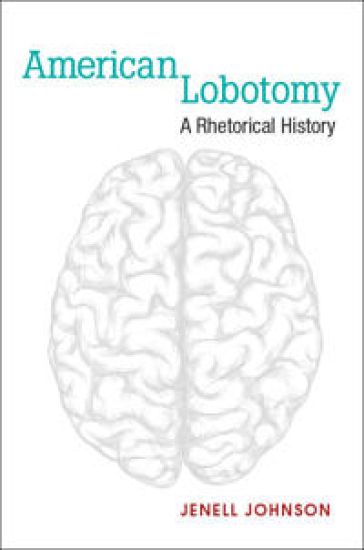
American Lobotomy studies a wide variety of representations of lobotomy to offer a rhetorical history of one of the most infamous procedures in the history of medicine. The development of lobotomy in 1935 was heralded as a “miracle cure” that would empty the nation’s perennially blighted asylums. However, only twenty years later, lobotomists initially praised for their “therapeutic courage” were condemned for their barbarity, an image that has only soured in subsequent decades. Johnson employs previously abandoned texts like science fiction, horror film, political polemics, and conspiracy theory to show how lobotomy’s entanglement with social and political narratives contributed to a powerful image of the operation that persists to this day. The book provocatively challenges the history of medicine, arguing that rhetorical history is crucial to understanding medical history. It offers a case study of how medicine accumulates meaning as it circulates in public culture and argues for the need to understand biomedicine as a culturally situated practice.
American Lobotomy

American Lobotomy

Jenell Johnson

The University of Michigan Press
2014
sidottu
American Lobotomy studies a wide variety of representations of lobotomy to offer a rhetorical history of one of the most infamous procedures in the history of medicine. The development of lobotomy in 1935 was heralded as a “miracle cure” that would empty the nation’s perennially blighted asylums. However, only twenty years later, lobotomists initially praised for their “therapeutic courage” were condemned for their barbarity, an image that has only soured in subsequent decades. Johnson employs previously abandoned texts like science fiction, horror film, political polemics, and conspiracy theory to show how lobotomy’s entanglement with social and political narratives contributed to a powerful image of the operation that persists to this day. The book provocatively challenges the history of medicine, arguing that rhetorical history is crucial to understanding medical history. It offers a case study of how medicine accumulates meaning as it circulates in public culture and argues for the need to understand biomedicine as a culturally situated practice.