Kirjojen hintavertailu. Mukana 11 627 373 kirjaa ja 12 kauppaa.

Kirjahaku

Etsi kirjoja tekijän nimen, kirjan nimen tai ISBN:n perusteella.

7 kirjaa tekijältä Jennifer Anna Gosetti-Ferencei

On Being and Becoming

On Being and Becoming

Jennifer Anna Gosetti-Ferencei

Oxford University Press Inc
2020
sidottu
While existentialism has long been associated with Parisian Left Bank philosophers sipping cocktails in smoke-filled cafés, or with a brooding, angst-filled outlook on life, Gosetti-Ferencei shows how vital and heterogeneous the movement really was. In this concise, accessible book, Gosetti-Ferencei offers a new vision of existentialism. As she lucidly demonstrates, existentialism is a rich and diverse philosophy that encourages meaningful engagement with the world around us, offering a host of fascinating concepts that pertain to life as we experience it. The movement was as heterogeneous as it is now misunderstood, influenced by jazz music, involving diverse thinkers from around the world, challenging received ideas about the meaning of human existence. Part of the difficulty in defining existentialism is that it was never a unified philosophy, but came to identify a set of shared concerns about the meaning and possibility of human freedom, as it may be expressed in authentic choices, actions, and projects. Existentialists all explored how, in the absence of traditional reassurances about the meaning of life, we may transcend our present circumstances, and give our situation new meaning. With existentialism, concrete, lived experience of the single individual emerged from the shadow of abstract systems and long-defended traditions, and became subject-matter in its own right for philosophical inquiry. Far from solipsistic, Gosetti-Ferencei shows that existentialist attention to the human self can be intertwined with ways of conceiving the world, our being with others, the earth, and the encompassing concept of being. Fully appreciating what existentialism has to offer requires recognizing the rich diversity of its prospects, which involve not only anxiety, absurdity, awareness of death and the loss of religious meaning, but also hope, the striving for happiness, and a sense of the transcendent. On Being and Becoming unpacks this philosophical movement's insights, and reveals how its core ideas promote creative responses to the question of life's meaning.
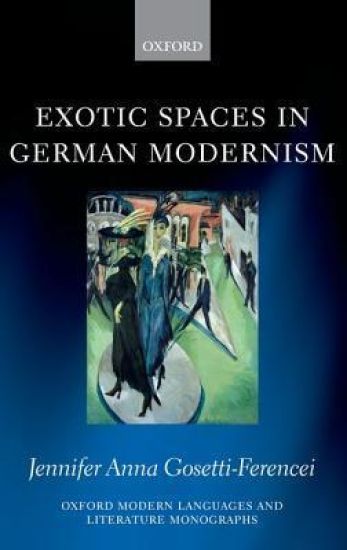
Exotic Spaces in German Modernism

Exotic Spaces in German Modernism

Jennifer Anna Gosetti-Ferencei

Oxford University Press
2011
sidottu
Jennifer Anna Gosetti-Ferencei demonstrates that the exotic, as reflected in major works of German literature and in the philosophy and art that inspires it, provokes central questions about the modern self and the spaces it inhabits. Exotic spaces in the writings of such authors as Thomas Mann, Franz Kafka, Stefan Zweig, Robert Musil, Hugo von Hofmannsthal, Gottfried Benn, and Bertold Brecht, along with the thought of Nietzsche, Freud, Levi-Strauss, and Simmel and the art of German Expressionism, are shown to present alternatives to the landscape and experience of modernity. In an examination of the concept of the exotic and of spatial experience in their cultural, subjective, and philosophical contingencies, Gosetti-Ferencei shows that exotic spaces may contest and reconfigure the relationship between the familiar and the foreign, the self and the other. Exotic spaces may serve not only to affirm the subject in a symbolic conquering of territory, as emphasized in post-colonial interpretations, or project the fantasy of escapism to a lost paradise, as utopian readings suggest, but condition moral, aesthetic, or imaginative transformation. Such transformation, while risking disaster or dissolution of the self as well as endangerment of the other, may promote new possibilities of perceiving or being, and reconfigure the boundaries of a familiar world. As exotic spaces are conceived as mystical, liberating, erotic, infectious, frightening or mysterious, several possibilities for transformation emerge in their exposure: re-enchantment through epiphany; the collapse of the rational self; liberation of the imagination from the confines of the familiar world; and aesthetic transformation, revealing the paradoxically 'primitive' nature of modern experience. In strikingly original readings of canonical authors and compelling rediscoveries of forgotten ones, this study establishes that exotic experience can evidence the fragility of the European or Germanic self as depicted in modernist literature, revealing the usually unconsidered boundaries of the subject's own familiar world.
The Life of Imagination

The Life of Imagination

Jennifer Anna Gosetti-Ferencei

Columbia University Press
2018
sidottu
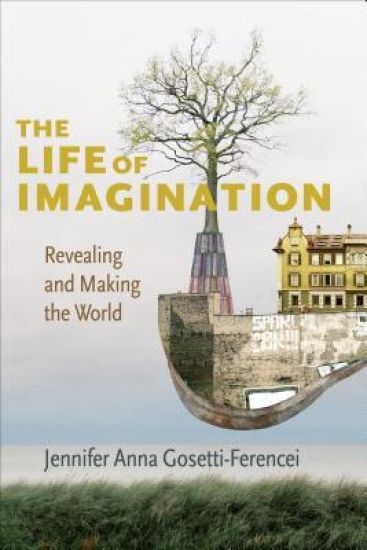
Imagination allows us to step out of the ordinary but also to transform it through our sense of wonder and play, artistic inspiration and innovation, or the eureka moment of a scientific breakthrough. In this book, Jennifer Anna Gosetti-Ferencei offers a groundbreaking new understanding of its place in everyday experience as well as the heights of creative achievement.The Life of Imagination delivers a new conception of imagination that places it at the heart of our engagement with the world—thinking, acting, feeling, making, and being. Gosetti-Ferencei reveals imagination’s roots in embodied human cognition and its role in shaping our cognitive ecology. She demonstrates how imagination arises from our material engagements with the world and at the same time endows us with the sense of an inner life, how it both allows us to escape from reality and aids us in better understanding it. Drawing from philosophy, cognitive science, evolutionary anthropology, developmental psychology, literary theory, and aesthetics, Gosetti-Ferencei engages a spectacular range of examples from ordinary thought processes and actions to artistic, scientific, and literary feats to argue that, like consciousness itself, imagination resists reductive explanation. The Life of Imagination offers a vital account of transformative thinking that shows how imagination will be essential in cultivating a future conducive to human flourishing and to that of the life around us.
The Life of Imagination

The Life of Imagination

Jennifer Anna Gosetti-Ferencei

Columbia University Press
2020
pokkari
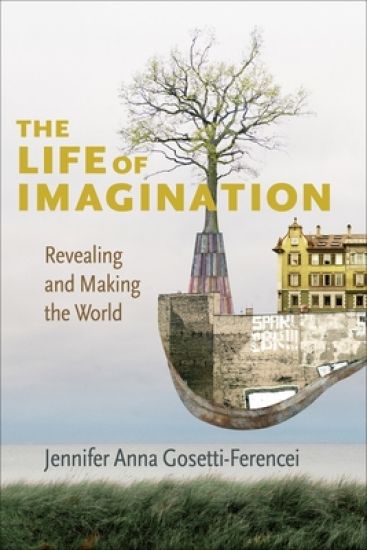
Imagination allows us to step out of the ordinary but also to transform it through our sense of wonder and play, artistic inspiration and innovation, or the eureka moment of a scientific breakthrough. In this book, Jennifer Anna Gosetti-Ferencei offers a groundbreaking new understanding of its place in everyday experience as well as the heights of creative achievement.The Life of Imagination delivers a new conception of imagination that places it at the heart of our engagement with the world—thinking, acting, feeling, making, and being. Gosetti-Ferencei reveals imagination’s roots in embodied human cognition and its role in shaping our cognitive ecology. She demonstrates how imagination arises from our material engagements with the world and at the same time endows us with the sense of an inner life, how it both allows us to escape from reality and aids us in better understanding it. Drawing from philosophy, cognitive science, evolutionary anthropology, developmental psychology, literary theory, and aesthetics, Gosetti-Ferencei engages a spectacular range of examples from ordinary thought processes and actions to artistic, scientific, and literary feats to argue that, like consciousness itself, imagination resists reductive explanation. The Life of Imagination offers a vital account of transformative thinking that shows how imagination will be essential in cultivating a future conducive to human flourishing and to that of the life around us.
The Ecstatic Quotidian

The Ecstatic Quotidian

Jennifer Anna Gosetti-Ferencei

Pennsylvania State University Press
2010
pokkari
Fascination with quotidian experience in modern art, literature, and philosophy promotes ecstatic forms of reflection on the very structure of the everyday world. Gosetti-Ferencei examines the ways in which modern art and literature enable a study of how we experience quotidian life. She shows that modernism, while exhibiting many strands of development, can be understood by investigating how its attentions to perception and expectation, to the common quality of things, or to childhood play gives way to experiences of ecstasis—the stepping outside of the ordinary familiarity of the world. While phenomenology grounds this study (through Husserl, Heidegger, Merleau-Ponty, and Bachelard), what makes this book more than a treatise on phenomenological aesthetics is the way in which modernity itself is examined in its relation to the quotidian. Through the works of artists and writers such as Benjamin, Cézanne, Frost, Klee, Newman, Pollock, Ponge, Proust, Rilke, Robbe-Grillet, Rothko, Sartre, and Twombly, the world of quotidian life can be seen to harbor a latent ecstasis. The breakdown of the quotidian through and after modernism then becomes an urgent question for understanding art and literature in its capacity to further human experience, and it points to the limits of phenomenological explications of the everyday.
Heidegger, Hölderlin, and the Subject of Poetic Language

Heidegger, Hölderlin, and the Subject of Poetic Language

Jennifer Anna Gosetti-Ferencei

Fordham University Press
2004
sidottu
Heidegger's interpretations of the poetry of Hölderlin are central to Heidegger's later philosophy and have determined the mainstream reception of Hölderlin's poetry. Gosetti-Ferencei argues that Heidegger has overlooked central elements in Hölderlin's poetics, such as a Kantian understanding of aesthetic subjectivity and a commitment to Enlightenment ideals. These elements, she argues, resist the more politically distressing aspects of Heidegger's interpretations, including Heidegger's nationalist valorization of the German language and sense of nationhood, or Heimat. In the context of Hölderlin's poetics of alienation, exile, and wandering, Gosetti-Ferencei draws a different model of poetic subjectivity, which engages Heidegger's later philosophy of Gelassenheit, calmness, or letting be. In so doing, she is able to pose a phenomenologically sensitive theory of poetic language and a "new poetics of Dasein," or being there.
Heidegger, Hölderlin, and the Subject of Poetic Language

Heidegger, Hölderlin, and the Subject of Poetic Language

Jennifer Anna Gosetti-Ferencei

Fordham University Press
2009
pokkari
Heidegger's interpretations of the poetry of Hölderlin are central to Heidegger's later philosophy and have determined the mainstream reception of Hölderlin's poetry. Gosetti-Ferencei argues that Heidegger has overlooked central elements in Hölderlin's poetics, such as a Kantian understanding of aesthetic subjectivity and a commitment to Enlightenment ideals. These elements, she argues, resist the more politically distressing aspects of Heidegger's interpretations, including Heidegger's nationalist valorization of the German language and sense of nationhood, or Heimat. In the context of Hölderlin's poetics of alienation, exile, and wandering, Gosetti-Ferencei draws a different model of poetic subjectivity, which engages Heidegger's later philosophy of Gelassenheit, calmness, or letting be. In so doing, she is able to pose a phenomenologically sensitive theory of poetic language and a "new poetics of Dasein," or being there.