Kirjojen hintavertailu. Mukana 12 390 323 kirjaa ja 12 kauppaa.

Kirjahaku

Etsi kirjoja tekijän nimen, kirjan nimen tai ISBN:n perusteella.

4 kirjaa tekijältä Jennifer Anne Boittin

Undesirable

Undesirable

Jennifer Anne Boittin

THE UNIVERSITY OF CHICAGO PRESS
2022
sidottu
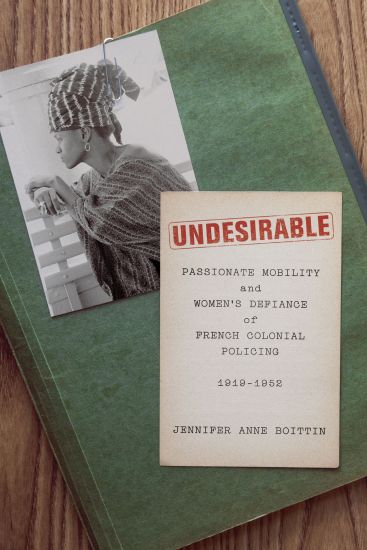
Archival research into policing and surveillance of migrant women illuminates pressing contemporary issues. Examining little-known policing archives in France, Senegal, and Cambodia, Jennifer Anne Boittin unearths the stories of hundreds of women labeled “undesirable” by the French colonial police and society in the early twentieth century. These “undesirables” were often women traveling alone, women who were poor or ill, women of color, or women whose intimate lives were deemed unruly. To refute the label and be able to move freely, they spoke out or wrote impassioned letters: some emphasized their “undesirable” qualities to suggest that they needed the care and protection of the state to support their movements, while others used the empire’s own laws around Frenchness and mobility to challenge state or societal interference. Tacking between advocacy and supplication, these women summoned intimate details to move beyond, contest, or confound surveillance efforts, bringing to life a practice that Boittin terms “passionate mobility.” In considering how ordinary women pursued autonomy, security, companionship, or simply a better existence in the face of surveillance and control, Undesirable illuminates pressing contemporary issues of migration and violence.
Undesirable

Undesirable

Jennifer Anne Boittin

THE UNIVERSITY OF CHICAGO PRESS
2022
nidottu
Archival research into policing and surveillance of migrant women illuminates pressing contemporary issues. Examining little-known policing archives in France, Senegal, and Cambodia, Jennifer Anne Boittin unearths the stories of hundreds of women labeled “undesirable” by the French colonial police and society in the early twentieth century. These “undesirables” were often women traveling alone, women who were poor or ill, women of color, or women whose intimate lives were deemed unruly. To refute the label and be able to move freely, they spoke out or wrote impassioned letters: some emphasized their “undesirable” qualities to suggest that they needed the care and protection of the state to support their movements, while others used the empire’s own laws around Frenchness and mobility to challenge state or societal interference. Tacking between advocacy and supplication, these women summoned intimate details to move beyond, contest, or confound surveillance efforts, bringing to life a practice that Boittin terms “passionate mobility.” In considering how ordinary women pursued autonomy, security, companionship, or simply a better existence in the face of surveillance and control, Undesirable illuminates pressing contemporary issues of migration and violence.
Colonial Metropolis

Colonial Metropolis

Jennifer Anne Boittin

University of Nebraska Press
2010
sidottu
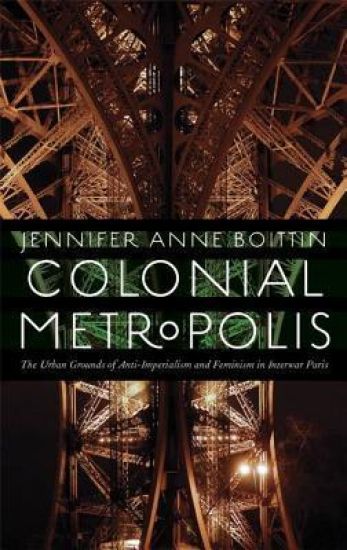
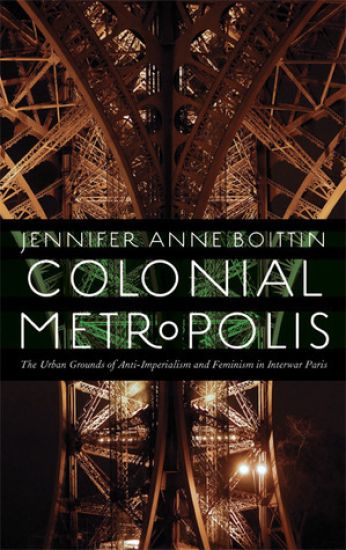
World War I gave colonial migrants and French women unprecedented access to the workplaces and nightlife of Paris. After the war they were expected to return without protest to their homes—either overseas or metropolitan. Neither group, however, was willing to be discarded. Between the world wars, the mesmerizing capital of France’s colonial empire attracted denizens from Africa, the Caribbean, and the United States. Paris became not merely their home but also a site for political engagement. Colonial Metropolis tells the story of the interactions and connections of these black colonial migrants and white feminists in the social, cultural, and political world of interwar Paris. It explores why and how both were denied certain rights, such as the vote, how they suffered from sensationalist depictions in popular culture, and how they pursued parity in ways that were often interpreted as politically subversive.
Colonial Metropolis

Colonial Metropolis

Jennifer Anne Boittin

University of Nebraska Press
2015
pokkari
World War I gave colonial migrants and French women unprecedented access to the workplaces and nightlife of Paris. After the war they were expected to return without protest to their homes—either overseas or metropolitan. Neither group, however, was willing to be discarded. Between the world wars, the mesmerizing capital of France's colonial empire attracted denizens from Africa, the Caribbean, and the United States. Paris became not merely their home but also a site for political engagement. Colonial Metropolis tells the story of the interactions and connections of these black colonial migrants and white feminists in the social, cultural, and political world of interwar Paris. It explores why and how both were denied certain rights, such as the vote, how they suffered from sensationalist depictions in popular culture, and how they pursued parity in ways that were often interpreted as politically subversive.