Kirjojen hintavertailu. Mukana 11 600 155 kirjaa ja 12 kauppaa.

Kirjahaku

Etsi kirjoja tekijän nimen, kirjan nimen tai ISBN:n perusteella.

3 kirjaa tekijältä Jennifer Clary-Lemon

Nestwork

Nestwork

Jennifer Clary-Lemon

Pennsylvania State University Press
2023
sidottu
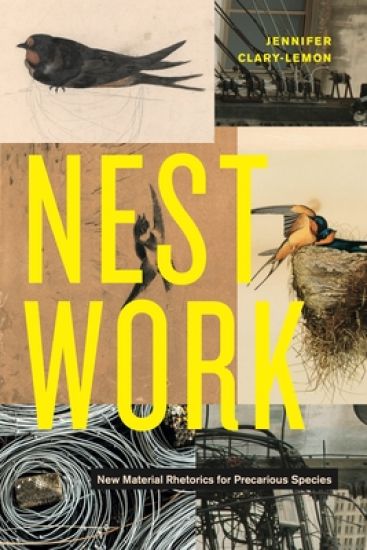
As more and more species fall under the threat of extinction, humans are not only taking action to protect critical habitats but are also engaging more directly with species to help mitigate their decline. Through innovative infrastructure design and by changing how we live, humans are becoming more attuned to nonhuman animals and are making efforts to live alongside them.Examining sites of loss, temporal orientations, and infrastructural mitigations, Nestwork blends rhetorical and posthuman sensibilities in service of the ecological care. In this innovative ethnographic study, rhetorician Jennifer Clary-Lemon examines human-nonhuman animal interactions, identifying forms of communication between species and within their material world. Looking in particular at nonhuman species that depend on human development for their habitat, Clary-Lemon examines the cases of the barn swallow, chimney swift, and bobolink. She studies their habitats along with the unique mitigation efforts taken by humans to maintain those habitats, including building “barn swallow gazebos” and artificial chimneys and altering farming practices to allow for nesting and breeding. What she reveals are fascinating forms of rhetoric not expressed through language but circulating between species and materials objects.Nestwork explores what are in essence nonlinguistic and decidedly nonhuman arguments within these local environments. Drawing on new materialist and Indigenous ontologies, the book helps attune our senses to the tragedy of species decline and to a new understanding of home and homemaking.
Nestwork

Nestwork

Jennifer Clary-Lemon

Pennsylvania State University Press
2024
pokkari
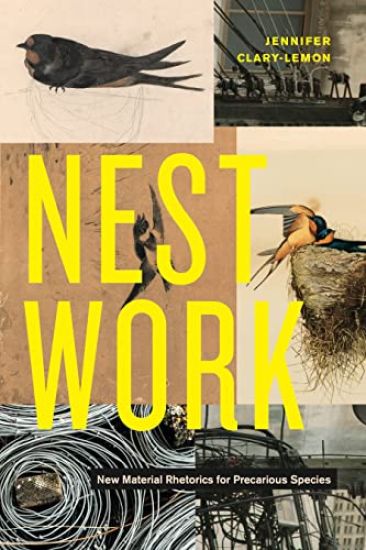
As more and more species fall under the threat of extinction, humans are not only taking action to protect critical habitats but are also engaging more directly with species to help mitigate their decline. Through innovative infrastructure design and by changing how we live, humans are becoming more attuned to nonhuman animals and are making efforts to live alongside them.Examining sites of loss, temporal orientations, and infrastructural mitigations, Nestwork blends rhetorical and posthuman sensibilities in service of the ecological care. In this innovative ethnographic study, rhetorician Jennifer Clary-Lemon examines human-nonhuman animal interactions, identifying forms of communication between species and within their material world. Looking in particular at nonhuman species that depend on human development for their habitat, Clary-Lemon examines the cases of the barn swallow, chimney swift, and bobolink. She studies their habitats along with the unique mitigation efforts taken by humans to maintain those habitats, including building “barn swallow gazebos” and artificial chimneys and altering farming practices to allow for nesting and breeding. What she reveals are fascinating forms of rhetoric not expressed through language but circulating between species and materials objects.Nestwork explores what are in essence nonlinguistic and decidedly nonhuman arguments within these local environments. Drawing on new materialist and Indigenous ontologies, the book helps attune our senses to the tragedy of species decline and to a new understanding of home and homemaking.
Planting the Anthropocene

Planting the Anthropocene

Jennifer Clary-Lemon

University Press of Colorado
2019
nidottu
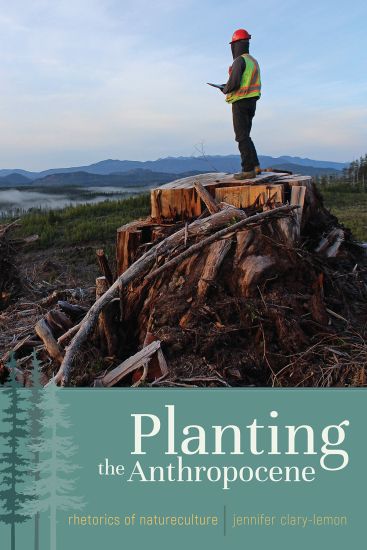
Planting the Anthropocene is a rhetorical look into the world of industrial tree planting in Canada that engages the themes of nature, culture, and environmental change. Bringing together the work of material ecocriticism and critical affect studies in service of a new materialist environmental rhetoric, Planting the Anthropocene forwards a frame that can be used to work through complex scenes of anthropogenic labor. Using the results of interviews with seasonal Canadian tree planters, Jennifer Clary-Lemon interrogates the complex and messy imbrication of nature-culture through the inadequate terminology used to describe the actual circumstances of the planters' work and lives--and offers alternative ways to conceptualize them. Although silvicultural workers do engage with the limiting rhetoric of efficiency and humanism, they also make rhetorical choices that break down the nature-culture divide and orient them on a continuum that blurs the boundaries between the given and the constructed, the human and nonhuman. Tree-planting work is approached as a site of a deep-seated materiality--a continued re-creation of the land's "disturbance"--rather than a simplistic form of doing good that further separates humans from landscapes. Jennifer Clary-Lemon's view of nature and the Anthropocene through the lens of material rhetorical studies is thoroughly original and will be of great interest to students and scholars of rhetoric and composition, especially those focused on the environment.