Kirjojen hintavertailu. Mukana 12 016 292 kirjaa ja 12 kauppaa.

Kirjahaku

Etsi kirjoja tekijän nimen, kirjan nimen tai ISBN:n perusteella.

10 kirjaa tekijältä Jennifer Coates

The Semantics of the Modal Auxiliaries (RLE Linguistics B: Grammar)
This book is a report of an investigation into the meanings of the modal auxiliaries in modern British English. The investigation took the form of a large-scale corpus-based project, looking at modal auxiliaries in both written and spoken language, and taking into account stylistic variation. The analysis of a corpus of a ‘real’ language brings the analyst face-to-face with a problem which has frequently been avoided or ignored in theoretical semantics: language is not an orderly phenomenon, and, as far as meaning is concerned, indeterminacy seems to be a feature of all languages. But it is one thing to recognise the existence of indeterminacy, and another to deal with it adequately. Semantic analysis conventionally consists in distinguishing one meaning from another, in recognising discrete categories, but the acknowledgement of indeterminacy explicitly denies the existence of such discrete categories. This book examines in detail this problem and its relationship to a study of modals.
Women Talk

Women Talk

Jennifer Coates

JOHN WILEY AND SONS LTD
1996
nidottu
This book challenges the age-old myth that women's talk is trivial and unimportant. Drawing on a corpus of spontaneous conversation between friends, Jennifer Coates demonstrates the richness and complexity of the language used in such talk, focusing on women's use of hedges, questions and repetition.
Men Talk

Men Talk

Jennifer Coates

Blackwell Publishers
2002
nidottu
Men Talk draws on rich conversational material from a wide range of contexts to illuminate our understanding of men and masculinities at the turn of the millennium. Draws on rich conversational material to illuminate our understanding of men and masculinities at the turn of the millennium.Collects data from a wide range of conversations, including garage mechanics on a break, carpenters at the pub after work, and university academics chatting after hours.Focuses on stories, which occur within all-male conversations.Makes a distinctive contribution to our understanding of the intersection of language and masculinity.
Women, Men and Language

Women, Men and Language

Jennifer Coates

Routledge
2015
sidottu
Women, Men and Language has long been established as a seminal text in the field of language and gender, providing an account of the many ways in which language and gender intersect. In this pioneering book, bestselling author Jennifer Coates explores linguistic gender differences, introducing the reader to a wide range of sociolinguistic research in the field.Written in a clear and accessible manner, this book introduces the idea of gender as a social construct, and covers key topics such as conversational practice, same sex talk, conversational dominance, and children’s acquisition of gender-differentiated language, discussing the social and linguistic consequences of these patterns of talk.Here reissued as a Routledge Linguistics Classic, this book contains a brand new preface which situates this text in the modern day study of language and gender, covering the postmodern shift in the understanding of gender and language, and assessing the book’s impact on the field. Women, Men and Language continues to be essential reading for any student or researcher working in the area of language and gender.
Women, Men and Language

Women, Men and Language

Jennifer Coates

Routledge
2015
nidottu
Women, Men and Language has long been established as a seminal text in the field of language and gender, providing an account of the many ways in which language and gender intersect. In this pioneering book, bestselling author Jennifer Coates explores linguistic gender differences, introducing the reader to a wide range of sociolinguistic research in the field.Written in a clear and accessible manner, this book introduces the idea of gender as a social construct, and covers key topics such as conversational practice, same sex talk, conversational dominance, and children’s acquisition of gender-differentiated language, discussing the social and linguistic consequences of these patterns of talk.Here reissued as a Routledge Linguistics Classic, this book contains a brand new preface which situates this text in the modern day study of language and gender, covering the postmodern shift in the understanding of gender and language, and assessing the book’s impact on the field. Women, Men and Language continues to be essential reading for any student or researcher working in the area of language and gender.
The Semantics of the Modal Auxiliaries (RLE Linguistics B: Grammar)
This book is a report of an investigation into the meanings of the modal auxiliaries in modern British English. The investigation took the form of a large-scale corpus-based project, looking at modal auxiliaries in both written and spoken language, and taking into account stylistic variation. The analysis of a corpus of a ‘real’ language brings the analyst face-to-face with a problem which has frequently been avoided or ignored in theoretical semantics: language is not an orderly phenomenon, and, as far as meaning is concerned, indeterminacy seems to be a feature of all languages. But it is one thing to recognise the existence of indeterminacy, and another to deal with it adequately. Semantic analysis conventionally consists in distinguishing one meaning from another, in recognising discrete categories, but the acknowledgement of indeterminacy explicitly denies the existence of such discrete categories. This book examines in detail this problem and its relationship to a study of modals.

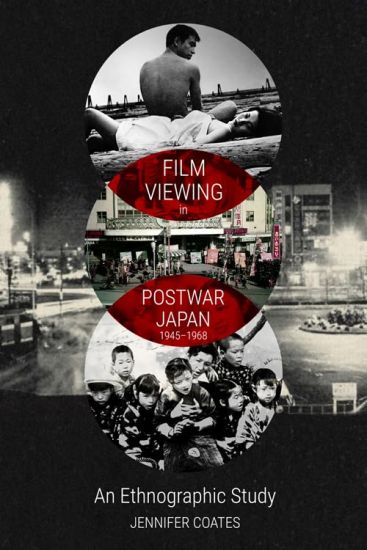
Film Viewing in Postwar Japan, 1945-1968: an Ethnographic Study
Combining film studies and ethnographic research methods within a memory studies framework, Coates examines the impact of cinema cultures on the everyday lives of viewers. Film Viewing in Postwar Japan draws from four years of interviews, participant observation, questionnaire surveys, and written communications with over 100 study participants in the Kansai region of Western Japan. This is an in-depth study of memories of cinema-going among the generations who regularly attended film theatres between 1945-1968, the peak period of production and cinema attendance in Japan. Through investigating the role of film viewership, broadly conceived, in the formation of a postwar sense of self, the reader will benefit from rare access to the voices of grass-roots viewers, who often tell a different version of cinema history and its effects than that available in extant scholarship.
Film Viewing in Postwar Japan, 1945-1968: an Ethnographic Study
Combining film studies and ethnographic research methods within a memory studies framework, Coates examines the impact of cinema cultures on the everyday lives of viewers. Film Viewing in Postwar Japan draws from four years of interviews, participant observation, questionnaire surveys, and written communications with over 100 study participants in the Kansai region of Western Japan. This is an in-depth study of memories of cinema-going among the generations who regularly attended film theatres between 1945-1968, the peak period of production and cinema attendance in Japan. Through investigating the role of film viewership, broadly conceived, in the formation of a postwar sense of self, the reader will benefit from rare access to the voices of grass-roots viewers, who often tell a different version of cinema history and its effects than that available in extant scholarship.
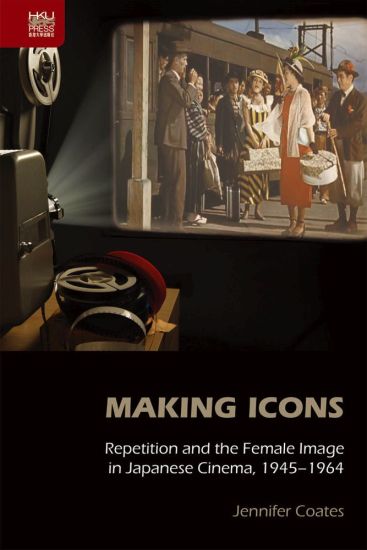
Making Icons – Repetition and the Female Image in Japanese Cinema, 1945–1964
One distinctive feature of post-war Japanese cinema is the frequent recurrence of imagistic and narrative tropes and formulaic characterizations in female representations. These repetitions are important, Jennifer Coates asserts, because sentiments and behaviors forbidden during the war and post-war social and political changes were often articulated by or through the female image. Moving across major character types, from mothers to daughters, and schoolteachers to streetwalkers, Making Icons studies the role of the media in shaping the attitudes of the general public. Japanese cinema after the defeat is shown to be an important ground where social experiences were explored, reworked, and eventually accepted or rejected by the audience emotionally invested in these repetitive materials. An examination of 600 films produced and distributed between 1945 and 1964, as well as numerous Japanese-language sources, forms the basis of this rigorous study. Making Icons draws on an art-historical iconographic analysis to explain how viewers derive meanings from images during this peak period of film production and attendance in Japan.