Kirjojen hintavertailu. Mukana 11 699 587 kirjaa ja 12 kauppaa.

Kirjahaku

Etsi kirjoja tekijän nimen, kirjan nimen tai ISBN:n perusteella.

3 kirjaa tekijältä Jennifer Fay

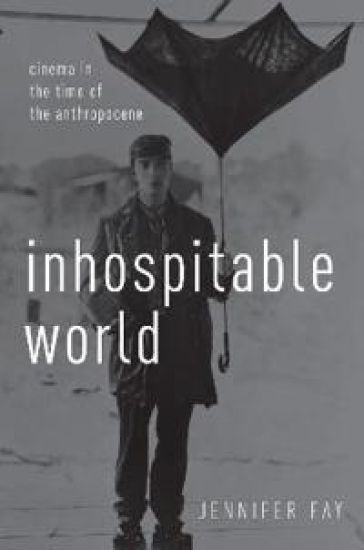
Inhospitable World

Inhospitable World

Jennifer Fay

Oxford University Press Inc
2018
sidottu
In recent years, environmental and human rights advocates have suggested that we have entered the first new geological epoch since the end of the ice age: the Anthropocene. In this new epoch, humans have come to reshape unwittingly both the climate and natural world; humankind has caused mass extinctions of plant and animal species, polluted the oceans, and irreversibly altered the atmosphere. Ironically, our efforts to make the planet more hospitable to ourselves seem to be driving us toward our inevitable extinction. A force of nature, humanity is now decentered as the agent of history. As Jennifer Fay argues, this new situation is to geological science what cinema has always been to human culture. Film, like the Anthropocene, is a product of the industrial revolution, but arises out of a desire to preserve life and master time and space. It also calls for the creation of artificial worlds, unnatural weather, and deadly environments for entertainment, scientific study, and devising military strategy. Filmmaking stages, quite literally, the process by which worlds and weather come into being and meaning, and it mimics the forces that are driving this new planetary inhospitality. Cinema, in other words, provides an image of "nature" in the age of its mechanical reproducability. Fay argues that cinema exemplifies the philosophical, political, and perhaps even logistical processes by which we can adapt to these forces and also imagine a world without humans in it. Whereas standard ecological criticism attends to the environmental crisis as an unraveling of our natural state, this book looks to film (from Buster Keaton, to Jia Zhangke, to films of atomic testing and early polar exploration) to consider how it reflects upon the creation and destruction of human environments. What are the implications of ecological inhospitality? What role might cinema and media theory play in challenging our presumed right to occupy and populate the world? As an art form, film enjoys a unique relationship to the material, elemental world it captures and produces. Through it, we may appreciate the ambitions to design an unhomely planet that may no longer accommodate us.
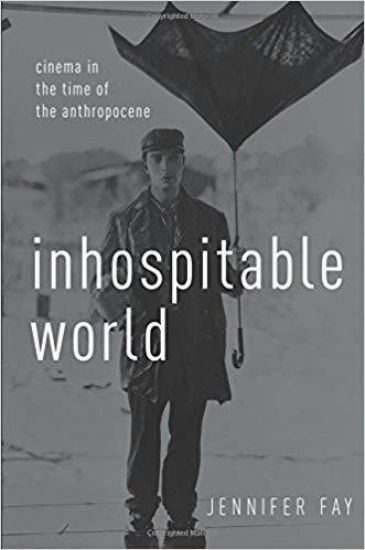
Inhospitable World

Inhospitable World

Jennifer Fay

Oxford University Press Inc
2018
nidottu
In recent years, environmental and human rights advocates have suggested that we have entered the first new geological epoch since the end of the ice age: the Anthropocene. In this new epoch, humans have come to reshape unwittingly both the climate and natural world; humankind has caused mass extinctions of plant and animal species, polluted the oceans, and irreversibly altered the atmosphere. Ironically, our efforts to make the planet more hospitable to ourselves seem to be driving us toward our inevitable extinction. A force of nature, humanity is now decentered as the agent of history. As Jennifer Fay argues, this new situation is to geological science what cinema has always been to human culture. Film, like the Anthropocene, is a product of the industrial revolution, but arises out of a desire to preserve life and master time and space. It also calls for the creation of artificial worlds, unnatural weather, and deadly environments for entertainment, scientific study, and devising military strategy. Filmmaking stages, quite literally, the process by which worlds and weather come into being and meaning, and it mimics the forces that are driving this new planetary inhospitality. Cinema, in other words, provides an image of "nature" in the age of its mechanical reproducability. Fay argues that cinema exemplifies the philosophical, political, and perhaps even logistical processes by which we can adapt to these forces and also imagine a world without humans in it. Whereas standard ecological criticism attends to the environmental crisis as an unraveling of our natural state, this book looks to film (from Buster Keaton, to Jia Zhangke, to films of atomic testing and early polar exploration) to consider how it reflects upon the creation and destruction of human environments. What are the implications of ecological inhospitality? What role might cinema and media theory play in challenging our presumed right to occupy and populate the world? As an art form, film enjoys a unique relationship to the material, elemental world it captures and produces. Through it, we may appreciate the ambitions to design an unhomely planet that may no longer accommodate us.
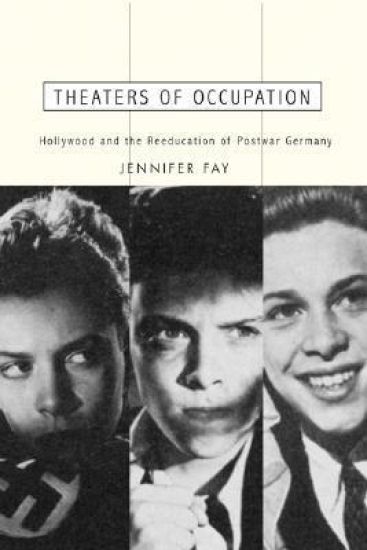
Theaters of Occupation

Theaters of Occupation

Jennifer Fay

University of Minnesota Press
2008
nidottu
In the aftermath of total war and unconditional surrender, Germans found themselves receiving instruction from their American occupiers. It was not a conventional education. In their effort to transform German national identity and convert a Nazi past into a democratic future, the Americans deployed what they perceived as the most powerful and convincing weapon-movies. In a rigorous analysis of the American occupation of postwar Germany and the military’s use of “soft power,” Jennifer Fay considers how Hollywood films, including Ninotchka, Gaslight, and Stagecoach, influenced German culture and cinema. In this cinematic pedagogy, dark fantasies of American democracy and its history were unwittingly played out on-screen. Theaters of Occupation reveals how Germans responded to these education efforts and offers new insights about American exceptionalism and virtual democracy at the dawn of the cold war. Fay’s innovative approach examines the culture of occupation not only as a phase in U.S.–German relations but as a distinct space with its own discrete cultural practices. As the American occupation of Germany has become a paradigm for more recent military operations, Fay argues that we must question its efficacy as a mechanism of cultural and political change. Jennifer Fay is associate professor and codirector of film studies in the Department of English at Michigan State University.