Kirjojen hintavertailu. Mukana 11 717 486 kirjaa ja 12 kauppaa.

Kirjahaku

Etsi kirjoja tekijän nimen, kirjan nimen tai ISBN:n perusteella.

4 kirjaa tekijältä Jennifer L. Fleissner

Women, Compulsion, Modernity

Women, Compulsion, Modernity

Jennifer L. Fleissner

University of Chicago Press
2004
sidottu
The 1890s have long been thought one of the most male-oriented eras in American history. But in reading such writers as Frank Norris with Mary Wilkins Freeman and Charlotte Perkins Gilman with Stephen Crane, Jennifer L. Fleissner boldly argues that feminist claims in fact shaped the period's cultural mainstream. ?Women, Compulsion, Modernity? reopens a moment when the young American woman embodied both the promise and threat of a modernizing world. Fleissner shows that this era's expanding opportunities for women were inseparable from the same modern developments--industrialization, consumerism--typically believed to constrain human freedom. With ?Women, Compulsion, and Modernity?, Fleissner creates a new language for the strange way the writings of the time both broaden and question individual agency.
Women, Compulsion, Modernity

Women, Compulsion, Modernity

Jennifer L. Fleissner

University of Chicago Press
2004
nidottu
The 1890s have long been thought one of the most male-oriented eras in American history. But in reading such writers as Frank Norris with Mary Wilkins Freeman and Charlotte Perkins Gilman with Stephen Crane, Jennifer L. Fleissner boldly argues that feminist claims in fact shaped the period's cultural mainstream. ?Women, Compulsion, Modernity? reopens a moment when the young American woman embodied both the promise and threat of a modernizing world. Fleissner shows that this era's expanding opportunities for women were inseparable from the same modern developments--industrialization, consumerism--typically believed to constrain human freedom. With ?Women, Compulsion, and Modernity?, Fleissner creates a new language for the strange way the writings of the time both broaden and question individual agency.
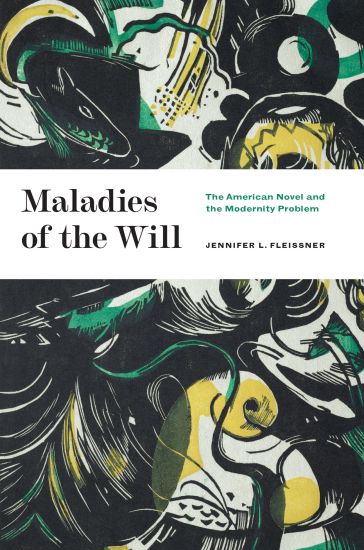
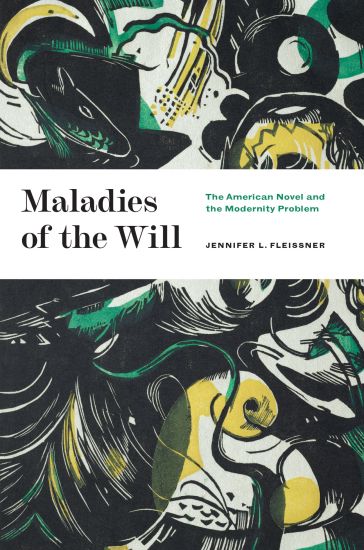
Maladies of the Will

Maladies of the Will

Jennifer L. Fleissner

THE UNIVERSITY OF CHICAGO PRESS
2022
sidottu
An examination of the nineteenth-century American novel that argues for a new genealogy of the concept of the will. What if the modern person were defined not by reason or sentiment, as Enlightenment thinkers hoped, but by will? Western modernity rests on the ideal of the autonomous subject, charting a path toward self-determination. Yet novelists have portrayed the will as prone to insufficiency or excess—from indecision to obsession, wild impulse to melancholic inertia. Jennifer Fleissner’s ambitious book shows how the novel’s attention to the will’s maladies enables an ongoing interrogation of modern premises from within. Maladies of the Will reveals the nineteenth-century American novel’s relation to a wide-ranging philosophical tradition, highly relevant to our own tumultuous present. In works from Moby-Dick and The Scarlet Letter to Elizabeth Stoddard’s The Morgesons and Charles W. Chesnutt’s The Marrow of Tradition, the will’s grandeur and its perversity emerge as it alternately aligns itself with and pits itself against a bigger Will—whether of God, the state, society, history, or life itself. Today, when invocations of autonomy appear beside the medicalization of many behaviors, and democracy’s tenet of popular will has come into doubt, Maladies of the Will provides a map to how we got here, and how we might think these vital dilemmas anew.
Maladies of the Will

Maladies of the Will

Jennifer L. Fleissner

THE UNIVERSITY OF CHICAGO PRESS
2022
nidottu
An examination of the nineteenth-century American novel that argues for a new genealogy of the concept of the will. What if the modern person were defined not by reason or sentiment, as Enlightenment thinkers hoped, but by will? Western modernity rests on the ideal of the autonomous subject, charting a path toward self-determination. Yet novelists have portrayed the will as prone to insufficiency or excess—from indecision to obsession, wild impulse to melancholic inertia. Jennifer Fleissner’s ambitious book shows how the novel’s attention to the will’s maladies enables an ongoing interrogation of modern premises from within. Maladies of the Will reveals the nineteenth-century American novel’s relation to a wide-ranging philosophical tradition, highly relevant to our own tumultuous present. In works from Moby-Dick and The Scarlet Letter to Elizabeth Stoddard’s The Morgesons and Charles W. Chesnutt’s The Marrow of Tradition, the will’s grandeur and its perversity emerge as it alternately aligns itself with and pits itself against a bigger Will—whether of God, the state, society, history, or life itself. Today, when invocations of autonomy appear beside the medicalization of many behaviors, and democracy’s tenet of popular will has come into doubt, Maladies of the Will provides a map to how we got here, and how we might think these vital dilemmas anew.