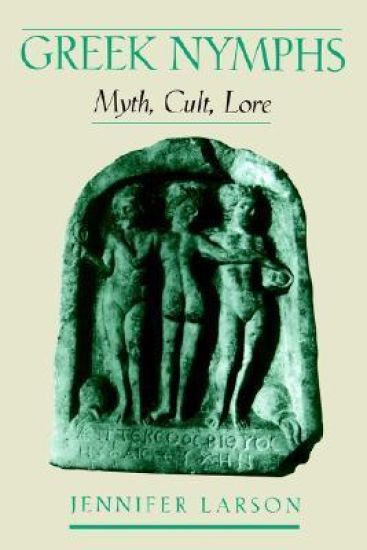
Greek Nymphs: Myths, Cult, Lore is the first comprehensive study of the nymph in the ancient Greek world. This well-illustrated book examines nymphs as both religious and mythopoetic figures, tracing their development and significance in Greek culture from Homer through the Hellenistic period. Drawing upon a broad range of literary and archaeological evidence, Jennifer Larson discusses sexually powerful nymphs in ancient and modern Greek folklore, the use of dolls representing nymphs in the socialization of girls, the phenomenon of nympholepsy, the nymphs' relations with other deities in the Greek pantheon, and the nymphs' role in mythic narratives of city-founding and colonization. The book includes a survey of the evidence for myths and cults of the nymphs arranged by geographical region, and a special section of the worship of nymphs in caves throughout the Greek world.
Using archaeological, epigraphic, and literary sources; and incorporating current scholarly theories, this volume will serve as an excellent companion to any introduction to Greek mythology, showing a side of the Greek gods to which most students are rarely exposed.Detailed enough to be used as a quick reference tool or text, and providing a readable account focusing on the oldest, most widespread, and most interesting religious practices of the ancient Greek world in the Archaic and Classical periods, Ancient Greek Cults surveys ancient Greek religion through the cults of its gods and goddesses, heroes and heroines.Jennifer Larson conveniently summarizes a vast amount of material in many languages, normally inaccessible to undergrad students, and explores, in detail, the variety of cults celebrated by the Greeks, how these cults differed geographically, and how each deity was conceptualized in local cult titles and rituals.Including an introductory chapter on sources and methods, and suggestions for further reading this book will allow readers to gain a fresh perspective on Greek religion.
Using archaeological, epigraphic, and literary sources; and incorporating current scholarly theories, this volume will serve as an excellent companion to any introduction to Greek mythology, showing a side of the Greek gods to which most students are rarely exposed.Detailed enough to be used as a quick reference tool or text, and providing a readable account focusing on the oldest, most widespread, and most interesting religious practices of the ancient Greek world in the Archaic and Classical periods, Ancient Greek Cults surveys ancient Greek religion through the cults of its gods and goddesses, heroes and heroines.Jennifer Larson conveniently summarizes a vast amount of material in many languages, normally inaccessible to undergrad students, and explores, in detail, the variety of cults celebrated by the Greeks, how these cults differed geographically, and how each deity was conceptualized in local cult titles and rituals.Including an introductory chapter on sources and methods, and suggestions for further reading this book will allow readers to gain a fresh perspective on Greek religion.
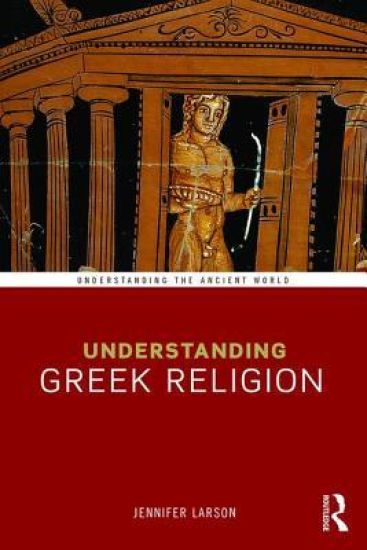
Understanding Greek Religion is one of the first attempts to fully examine any religion from a cognitivist perspective, applying methods and findings from the cognitive science of religion to the ancient Greek world. In this book, Jennifer Larson shows that many of the fundamentals of Greek religion, such as anthropomorphic gods, divinatory procedures, purity beliefs, reciprocity, and sympathetic magic arise naturally as by-products of normal human cognition. Drawing on evidence from across the ancient Greek world, Larson provides detailed coverage of Greek theology and local pantheons, rituals including processions, animal sacrifice and choral dance, and afterlife beliefs as they were expressed through hero worship and mystery cults. Eighteen in-depth essays illustrate the theoretical discussion with primary sources and include case studies of key cult inscriptions from Kyrene, Kos, and Miletos. This volume features maps, tables, and over twenty images to support and expand on the text, and will provide conceptual tools for understanding the actions and beliefs that constitute a religion. Additionally, Larson offers the first detailed discussion of cognition and memory in the transmission of Greek religious beliefs and rituals, as well as a glossary of terms and a bibliographical essay on the cognitive science of religion.Understanding Greek Religion is an essential resource for both undergraduate and postgraduate students of Greek culture and ancient Mediterranean religions.
Understanding Greek Religion is one of the first attempts to fully examine any religion from a cognitivist perspective, applying methods and findings from the cognitive science of religion to the ancient Greek world. In this book, Jennifer Larson shows that many of the fundamentals of Greek religion, such as anthropomorphic gods, divinatory procedures, purity beliefs, reciprocity, and sympathetic magic arise naturally as by-products of normal human cognition. Drawing on evidence from across the ancient Greek world, Larson provides detailed coverage of Greek theology and local pantheons, rituals including processions, animal sacrifice and choral dance, and afterlife beliefs as they were expressed through hero worship and mystery cults. Eighteen in-depth essays illustrate the theoretical discussion with primary sources and include case studies of key cult inscriptions from Kyrene, Kos, and Miletos. This volume features maps, tables, and over twenty images to support and expand on the text, and will provide conceptual tools for understanding the actions and beliefs that constitute a religion. Additionally, Larson offers the first detailed discussion of cognition and memory in the transmission of Greek religious beliefs and rituals, as well as a glossary of terms and a bibliographical essay on the cognitive science of religion.Understanding Greek Religion is an essential resource for both undergraduate and postgraduate students of Greek culture and ancient Mediterranean religions.
Since the publication of Foucault's History of Sexuality the volume of Classical scholarship on gender, sexuality and the body has steadily increased in tandem with the expansion of these topics in other areas of the Humanities. This volume will provide readers with a substantial selection of primary sources documenting sexualities, sexual behaviors, and perceptions of sex, sexuality, gender, and the body among people in the ancient Greco-Roman world. The coverage will begin with Homer in the eighth century BCE and will focus most heavily on Classical Greece and Rome from the Republic to the early Empire, though sources reflecting societal changes in later antiquity and a selection of Jewish and Christian readings will also be included. Authors will include Hippocrates, Plato, Aristotle, Galen, Ovid and Plutarch, with each chapter including one or two substantial 'focal' readings. The materials will include poetry, history, oratory, medical and philosophical writings, letters, and inscriptions, both public and private.
Since the publication of Foucault's History of Sexuality the volume of Classical scholarship on gender, sexuality and the body has steadily increased in tandem with the expansion of these topics in other areas of the Humanities. This volume will provide readers with a substantial selection of primary sources documenting sexualities, sexual behaviors, and perceptions of sex, sexuality, gender, and the body among people in the ancient Greco-Roman world. The coverage will begin with Homer in the eighth century BCE and will focus most heavily on Classical Greece and Rome from the Republic to the early Empire, though sources reflecting societal changes in later antiquity and a selection of Jewish and Christian readings will also be included. Authors will include Hippocrates, Plato, Aristotle, Galen, Ovid and Plutarch, with each chapter including one or two substantial 'focal' readings. The materials will include poetry, history, oratory, medical and philosophical writings, letters, and inscriptions, both public and private.
Exploration and analysis of the innovative screenplays and novels by an award-winning playwright. Understanding Suzan-Lori Parks is a critical study of a playwright and screenwriter who was the first African American woman to receive the Pulitzer Prize for Drama. Suzan-Lori Parks is also the recipient of a MacArthur Genius Award, a Whiting Writers Award, a CalArts/Alpert Award in the Arts, two Obie Awards, and a Eugene McDermott Award in the Arts. In this book Jennifer Larson examines how Parks, through the innovative language and narratives of her extensive body of work, investigates and invigorates literary and cultural history.Larson discusses all of Parks's genres—play, screenplay, essay, and novel—closely reading key texts from Parks's more experimental earlier pieces as well as her more linear later narratives. Larson's study begins with a survey of Parks's earliest and most difficult texts including Imperceptible Mutabilities in the Third Kingdom and The Death of the Last Black Man in the Whole Entire World. Larson then analyses Venus, In the Blood, and the Lincoln Plays: The America Play and the Pulitzer Prize–winning TopDog/Underdog.Larson also discusses two of Parks's most important screenplays, Girl 6 and Their Eyes Were Watching God. In interpreting these screenplays, Larson examines film's role in the popularisation and representation of African American culture and history. These essays suggest an approach to all genres of literature and blend creativity, form, culture, and history into a revisionary aesthetic that allows for no identity or history to remain fixed, with Parks arguing that in order to be relevant they must all be dynamic and democratic.
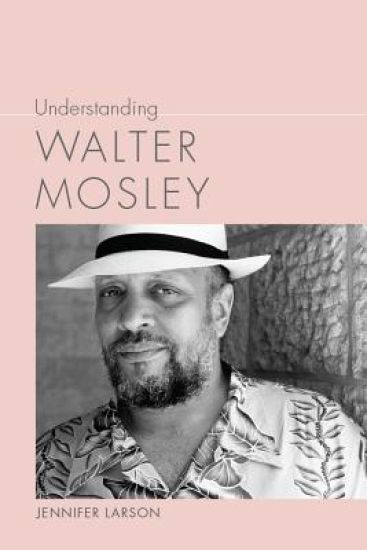
Walter Mosley is perhaps best known for his first published mystery, Devil in a Blue Dress, which became the basis for the 1995 movie of the same name featuring Denzel Washington. Mosley has since written more than forty books across an impressive expanse of genres including, but not limited to, nonfiction, science fiction, drama, and even young adult fiction, garnering him many honors including an O’Henry Award, an Anisfield-Wolf Book Award, a Grammy Award, a Pen Center Lifetime Achievement Award, and two NAACP Image Awards for Outstanding Literary Work in Fiction. In Understanding Walter Mosley, Jennifer Larson considers Mosley’s corpus as a whole to help readers more fully understand the evolution of his literary agenda.All Mosley’s texts feature his trademark accessibility as well as his penchant for creating narratives that both entertain and instruct. Larson examines how Mosley’s writing interrogates, complicates, and contextualizes recurring moral, social, and even personal questions. She also considers the possible roots of Mosley’s enduring popularity with a diverse group of readers. Larson then traces key themes and claims throughout the Easy Rawlins series to show how Mosley’s beloved hero offers unique perspectives on race, class, and masculinity in the mid– to late twentieth century; explores the ways in which Fearless Jones, Mosley’s second detective, both builds on and diverges from his predecessor’s character; and looks at how the works featuring Leonid McGill, Mosley’s junior detective, center on understanding the complex relationship between present-day social dilemmas and the personal as well as the communal past.Regarding Mosley’s other genres, Larson argues that the science fiction works together portray a future in which race, class, and gender are completely reimagined, yet still subject to an oppressive power dynamic, while his erotica asks readers to reconsider the dynamics of power and control but in a more personal, even intimate, context. Similarly, in Mosley’s nongenre fiction, stories are revived through a reconnection with the past, a reclaiming of cultural heritage and lineage, and a rejection of classist visions of power. Finally, Mosley’s nonfiction, which persuades his audience to act through writing, humanitarian efforts, or social uprising, offers a mix of lessons aimed at guiding readers through the same questions that inform his fiction writing.
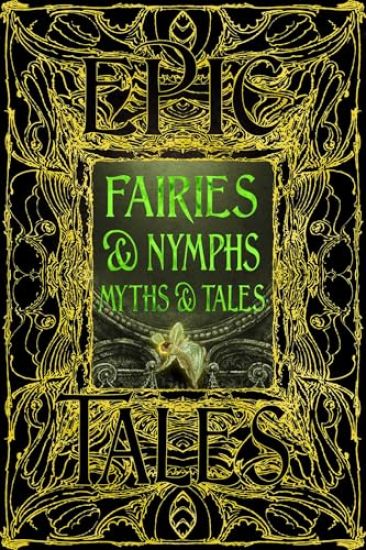
With their enchanting, natural powers and often fragile beauty, faeries and nymphs can be found in myths and tales from around the world. These captivating stories invoke their roots in nature and magic, as well as their turbulent interactions with the human world. Faeries and nymphs are both mythical beings, but they have distinct characteristics. Nymphs can be found in Greek mythology and are considered to be nature spirits. They inhabit various natural environments such as mountains, groves, springs, rivers, valleys, and grottoes. Some nymphs are also connected to trees (Dryads) or bodies of water like seas, rivers, and springs (Oceanids, Nereids, and Naiads). Faeries, on the other hand, have a broader mythology. They appear in folklore and literature from various cultures, ranging from Chinese to Roman, slavic to Korean. In some traditions, fairies are known as the "Fair Folk", a term encompassing various magical beings with supernatural qualities. They can be good or bad, benevolent or mischievous but are generally depicted with magical abilities, such as enchantment, shape-shifting, and flying. This truly is a wonderful collection of tales which brings together these two enchanting supernatural forces. The Flame Tree Gothic Fantasy, Classic Stories and Epic Tales collections bring together the entire range of myth, folklore and modern short fiction. Highlighting the roots of suspense, supernatural, science fiction and mystery stories the books in Flame Tree Collections series are beautifully presented, perfect as a gift and offer a lifetime of reading pleasure.