Kirjojen hintavertailu. Mukana 11 627 067 kirjaa ja 12 kauppaa.

Kirjahaku

Etsi kirjoja tekijän nimen, kirjan nimen tai ISBN:n perusteella.

13 kirjaa tekijältä Jennifer Nelson

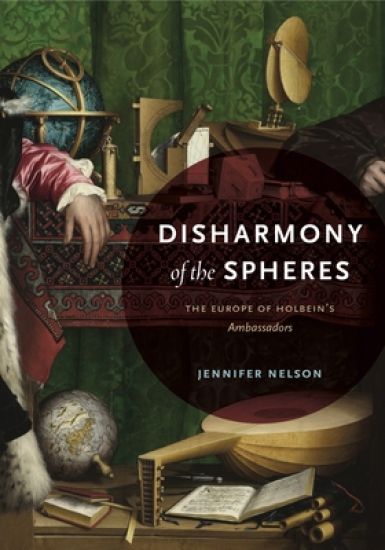
Disharmony of the Spheres

Disharmony of the Spheres

Jennifer Nelson

Pennsylvania State University Press
2019
sidottu
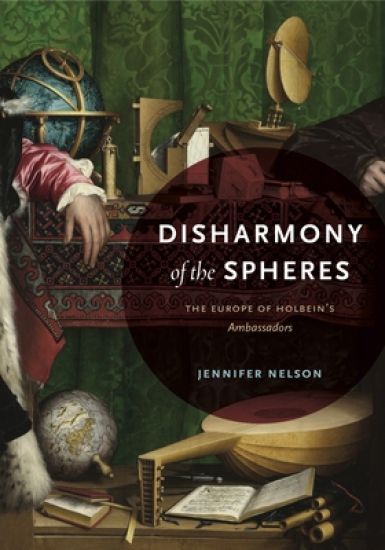
Anxious about the threat of Ottoman invasion and a religious schism that threatened Christianity from within, sixteenth-century northern Europeans increasingly saw their world as disharmonious and full of mutual contradictions. Examining the work of four unusual but influential northern Europeans as they faced Europe’s changing identity, Jennifer Nelson reveals the ways in which these early modern thinkers and artists grappled with the problem of cultural, religious, and cosmological difference in relation to notions of universals and the divine.Focusing on northern Europe during the first half of the sixteenth century, this book proposes a complementary account of a Renaissance and Reformation for which epistemology is not so much destabilized as pluralized. Addressing a wide range of media—including paintings, etchings and woodcuts, university curriculum regulations, clocks, sundials, anthologies of proverbs, and astrolabes—Nelson argues that inconsistency, discrepancy, and contingency were viewed as fundamental features of worldly existence. Taking as its starting point Hans Holbein’s famously complex double portrait The Ambassadors, and then examining Philipp Melanchthon’s measurement-minded theology of science, Georg Hartmann’s modular sundials, and Desiderius Erasmus’s eclectic Adages, Disharmony of the Spheres is a sophisticated and challenging reconsideration of sixteenth-century northern European culture and its discomforts.Carefully researched and engagingly written, Disharmony of the Spheres will be of vital interest to historians of early modern European art, religion, science, and culture.
Disharmony of the Spheres

Disharmony of the Spheres

Jennifer Nelson

Pennsylvania State University Press
2020
pokkari
Anxious about the threat of Ottoman invasion and a religious schism that threatened Christianity from within, sixteenth-century northern Europeans increasingly saw their world as disharmonious and full of mutual contradictions. Examining the work of four unusual but influential northern Europeans as they faced Europe’s changing identity, Jennifer Nelson reveals the ways in which these early modern thinkers and artists grappled with the problem of cultural, religious, and cosmological difference in relation to notions of universals and the divine.Focusing on northern Europe during the first half of the sixteenth century, this book proposes a complementary account of a Renaissance and Reformation for which epistemology is not so much destabilized as pluralized. Addressing a wide range of media—including paintings, etchings and woodcuts, university curriculum regulations, clocks, sundials, anthologies of proverbs, and astrolabes—Nelson argues that inconsistency, discrepancy, and contingency were viewed as fundamental features of worldly existence. Taking as its starting point Hans Holbein’s famously complex double portrait The Ambassadors, and then examining Philipp Melanchthon’s measurement-minded theology of science, Georg Hartmann’s modular sundials, and Desiderius Erasmus’s eclectic Adages, Disharmony of the Spheres is a sophisticated and challenging reconsideration of sixteenth-century northern European culture and its discomforts.Carefully researched and engagingly written, Disharmony of the Spheres will be of vital interest to historians of early modern European art, religion, science, and culture.

Women of Color and the Reproductive Rights Movement

Women of Color and the Reproductive Rights Movement

Jennifer Nelson

New York University Press
2003
sidottu
Uncovers the truth behind the ideas, struggles, and eventually success of Black and Puerto Rican Nationalists regarding key feminist issues of the 1960s, 1970s, and 1980s While most people believe that the movement to secure voluntary reproductive control for women centered solely on abortion rights, for many women abortion was not the only, or even primary, focus. Jennifer Nelson tells the story of the feminist struggle for legal abortion and reproductive rights in the 1960s, 1970s, and early 1980s through the particular contributions of women of color. She explores the relationship between second-wave feminists, who were concerned with a woman's right to choose, Black and Puerto Rican Nationalists, who were concerned that Black and Puerto Rican women have as many children as possible "for the revolution," and women of color themselves, who negotiated between them. Contrary to popular belief, Nelson shows that women of color were able to successfully remake the mainstream women's liberation and abortion rights movements by appropriating select aspects of Black Nationalist politics—including addressing sterilization abuse, access to affordable childcare and healthcare, and ways to raise children out of poverty—for feminist discourse.
Women of Color and the Reproductive Rights Movement

Women of Color and the Reproductive Rights Movement

Jennifer Nelson

New York University Press
2003
pokkari
Uncovers the truth behind the ideas, struggles, and eventually success of Black and Puerto Rican Nationalists regarding key feminist issues of the 1960s, 1970s, and 1980s While most people believe that the movement to secure voluntary reproductive control for women centered solely on abortion rights, for many women abortion was not the only, or even primary, focus. Jennifer Nelson tells the story of the feminist struggle for legal abortion and reproductive rights in the 1960s, 1970s, and early 1980s through the particular contributions of women of color. She explores the relationship between second-wave feminists, who were concerned with a woman's right to choose, Black and Puerto Rican Nationalists, who were concerned that Black and Puerto Rican women have as many children as possible "for the revolution," and women of color themselves, who negotiated between them. Contrary to popular belief, Nelson shows that women of color were able to successfully remake the mainstream women's liberation and abortion rights movements by appropriating select aspects of Black Nationalist politics—including addressing sterilization abuse, access to affordable childcare and healthcare, and ways to raise children out of poverty—for feminist discourse.
More Than Medicine

More Than Medicine

Jennifer Nelson

New York University Press
2015
sidottu
In 1948, the Constitution of the World Health Organization declared, "Health is a state of complete physical, mental and social well-being and not merely the absence of disease or infirmity." Yet this idea was not predominant in the United States immediately after World War II, especially when it came to women's reproductive health. Both legal and medical institutions—and the male legislators and physicians who populated those institutions—reinforced women's second class social status and restricted their ability to make their own choices about reproductive health care. In More Than Medicine, Jennifer Nelson reveals how feminists of the '60s and '70s applied the lessons of the new left and civil rights movements to generate a women's health movement. The new movement shifted from the struggle to revolutionize health care to the focus of ending sex discrimination and gender stereotypes perpetuated in mainstream medical contexts. Moving from the campaign for legal abortion to the creation of community clinics and feminist health centers, Nelson illustrates how these activists revolutionized health care by associating it with the changing social landscape in which women had power to control their own life choices. More Than Medicine poignantly reveals how social justice activists in the United States gradually transformed the meaning of health care, pairing traditional notions of medicine with less conventional ideas of "healthy" social and political environments.
More Than Medicine

More Than Medicine

Jennifer Nelson

New York University Press
2015
pokkari
In 1948, the Constitution of the World Health Organization declared, "Health is a state of complete physical, mental and social well-being and not merely the absence of disease or infirmity." Yet this idea was not predominant in the United States immediately after World War II, especially when it came to women's reproductive health. Both legal and medical institutions—and the male legislators and physicians who populated those institutions—reinforced women's second class social status and restricted their ability to make their own choices about reproductive health care. In More Than Medicine, Jennifer Nelson reveals how feminists of the '60s and '70s applied the lessons of the new left and civil rights movements to generate a women's health movement. The new movement shifted from the struggle to revolutionize health care to the focus of ending sex discrimination and gender stereotypes perpetuated in mainstream medical contexts. Moving from the campaign for legal abortion to the creation of community clinics and feminist health centers, Nelson illustrates how these activists revolutionized health care by associating it with the changing social landscape in which women had power to control their own life choices. More Than Medicine poignantly reveals how social justice activists in the United States gradually transformed the meaning of health care, pairing traditional notions of medicine with less conventional ideas of "healthy" social and political environments.
Razing Africville

Razing Africville

Jennifer Nelson

University of Toronto Press
2009
pokkari
In the 1960s, the city of Halifax razed the black community of Africville under a program of urban renewal and 'slum clearance.' The city defended its actions by citing the deplorable living conditions in Africville, ignoring its own role in the creation of these conditions through years of neglect and the refusal of essential services. In the 1980s, the city created a park on Africville's former site, which has been a place of protest and commemoration for black citizens since its opening. As yet, however, the city has not issued a formal apology to Africville residents and has paid no further compensation. Razing Africville examines this history as the prolonged eviction of a community from its own space. By examining a variety of sources - urban planning texts, city council documents, news media, and academic accounts - Jennifer J. Nelson illustrates how Africville went from a slum to a problem to be solved and, more recently, to a public space in which past violence is rendered invisible. Reading historical texts as a critical map of decision-making, she argues that the ongoing measures taken to regulate black bodies and spaces amount to a 'geography of racism.' Through a geographic lens, therefore, she manages to analyse ways in which race requires space and how the control of space is a necessary component of delineating and controlling people. A much needed re-examination of an important historical example, Razing Africville applies contemporary spatial theory to the situation in Africville and offers critical observations about the function of racism.
Airbrushed Nation

Airbrushed Nation

Jennifer Nelson

Seal Press
2012
pokkari
Glamour. Cosmo. SELF. Ladies' Home Journal. Vogue. In an industry that has been in a downward spiral for years, these magazines,and other women,focused magazines like them,have not only retained their readership, they've increased it. Every month, five million-plus women peel back the slick cover of their favourite magazine to thumb through pages filled with tidings and advice about fashion, beauty, sex, relationships, dieting, health, and lifestyle. But do women's magazines offer valuable information, or do they merely peddle fluff and fantasy,and in either case, do women take their messages to heart?In Airbrushed Nation, Jennifer Nelson,a longtime industry insider,exposes the naked truth behind the glossy pages of women's magazines, both good and bad. Nelson delves deep into the world of glossies, explaining the ways in which these magazines have been positive for women, highlighting the ways in which their agendas have been misguided, and asking the questions that have long gone unasked: What do women think and believe about the retouched photos, the ubiquitous sex advice, the constant offensive on aging, and the fantasy fashion spreads featuring unaffordable clothing and accessories? Do the unrealistic ads, images, and ideals that permeate glossies damage women's self-esteem . . . and is it intentional?
Teaching with Heart

Teaching with Heart

Jennifer Nelson

She Writes Press
2023
nidottu
Why are so many teachers leaving the profession? They're burned out; they feel disrespected, and unsupported. After teaching remotely during a pandemic, they're returning to classrooms with under-socialized and sometimes out-of-control kids. What to do? Teaching with Heart chronicles the journey of a journalist-turned-teacher determined to make teaching work - despite its difficulties. Peek into Madame Nelson's classroom to see her trying to reach teens who dance, cry, and hit each other in French class; administrators who laud the latest pedagogical trends and testing regime; and parents who sometimes support - and sometimes interfere with - their children's education. Meet colleagues who save her from quitting, and her children who provide advice. Along the journey, she evolves from an aloof elitist into an empathetic listener to all sorts of teens. Isn't it time we create schools in which teachers want to stay and new ones enter? Without committed teachers, how can we prepare students to run our world? Teaching with Heart illuminates why it's so hard to hold on to classroom teachers these days - and what can be done to better the situation.
Saturday Night at the Movies

Saturday Night at the Movies

Jennifer Nelson

Elliott Thompson Limited
2018
sidottu
Discover the remarkable stories behind some of the most popular film music of all time; From Jurassic Park to The Lord of the Rings, Vertigo to Titanic, a powerful score can make a movie truly extraordinary. The alchemy between composer and director creates pure cinematic magic, with songs and melodies that are instantly recognisable and eternally memorable. So what is their secret?; Saturday Night at the Movies goes behind the scenes to reveal twelve remarkable partnerships, and how they have created the music that has moved millions. Discover how these collaborations began and what makes them so effective: the dynamic personalities, the creative chemistry, the flashes of genius. The best scores come from sound and image working together to bring the director’s vision to life, but many scores also stand alone as towering achievements of composition that have shaped the face of modern music.; Featuring such luminaries as Alfred Hitchcock and Bernard Herrmann, Christopher Nolan and Hans Zimmer, and James Horner and James Cameron, Saturday Night at the Movies explores the creation of film favourites such as Back to the Future, Fargo, Edward Scissorhands and many, many more.; Includes:; J.J. Abrams & Michael Giacchino; Kenneth Branagh & Patrick Doyle; Tim Burton & Danny Elfman; James Cameron & James Horner; The Coen Brothers & Carter Burwell; Alfred Hitchcock & Bernard Herrmann; Peter Jackson & Howard Shore; David Lean & Maurice Jarre; Sam Mendes & ¬Thomas Newman; Christopher Nolan & Hans Zimmer; Steven Spielberg & John Williams; Robert Zemeckis & Alan Silvestri
Lucas Cranach

Lucas Cranach

Jennifer Nelson

REAKTION BOOKS
2024
sidottu
This captivating biography brings Lucas Cranach the Elder into the spotlight for the twenty-first century. The illuminating narrative unveils an artist whose vision transcended personal brilliance as he sought to elevate a nascent nation and foster a sense of community with his work. Perhaps Cranach’s most remarkable achievement lay in forging a robust Lutheran community, endowed with a resounding message of salvation.Using prints, the prevailing medium of mass communication, and multiple versions of paintings, he developed an intricate and appealing symbolism that resonated with the populace in early modern Germany. Along with Cranach’s more well-known works, Jennifer Nelson explores his extensive repertoire of female nudes, and shows how these seductive artworks not only tantalized his patrons but constructed a deep history of Germany’s notional connections with ancient Greece and Rome.
Harm Eden

Harm Eden

Jennifer Nelson

Ugly Duckling Presse
2022
nidottu
HARM EDEN is about how our fucked-up present-day civilization is built on originary and timeless systemic damage. The fantasy of nature and/or art as echoes of a purer creation reinforces this foundation all the more. This book attempts to think through and simultaneously away from this evil fantasy and the civilization it upholds by exploiting the tension between history and poetry.Poetry.