

Kirjahaku
Etsi kirjoja tekijän nimen, kirjan nimen tai ISBN:n perusteella.
6 kirjaa tekijältä Jennifer Robertson


This expertly crafted ethnography examines the ways in which native and new citizens of Kodaira, a Tokyo suburb, have both remade the past and imagined the future of their city in a quest for an "authentic" Japanese community.
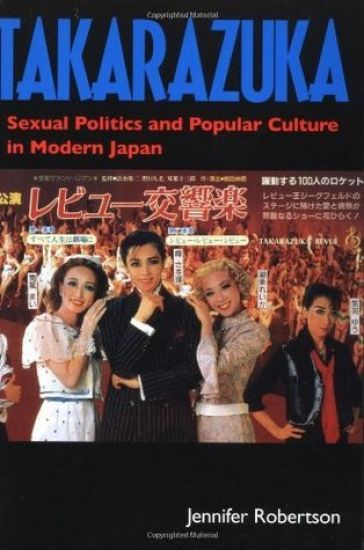
The all-female Takarazuka Revue is world-famous today for its rococo musical productions, including gender-bending love stories, torridly romantic liaisons in foreign settings, and fanatically devoted fans. But that is only a small part of its complicated and complicit performance history. In this sophisticated and historically grounded analysis, anthropologist Jennifer Robertson draws from over a decade of fieldwork and archival research to explore how the Revue illuminates discourses of sexual politics, nationalism, imperialism, and popular culture in twentieth-century Japan. The Revue was founded in 1913 as a novel counterpart to the all-male Kabuki theater. Tracing the contradictory meanings of Takarazuka productions over time, with special attention to the World War II period, Robertson illuminates the intricate web of relationships among managers, directors, actors, fans, and social critics, whose clashes and compromises textured the theater and the wider society in colorful and complex ways. Using Takarazuka as a key to understanding the 'logic' of everyday life in Japan and placing the Revue squarely in its own social, historical, and cultural context, she challenges both the stereotypes of 'the Japanese' and the Eurocentric notions of gender performance and sexuality.

Japan is arguably the first postindustrial society to embrace the prospect of human-robot coexistence. Over the past decade, Japanese humanoid robots designed for use in homes, hospitals, offices, and schools have become celebrated in the mass media and social media throughout the world. In Robo sapiens japanicus, Jennifer Robertson casts a critical eye on press releases and public relations videos that misrepresent actual robots as being as versatile and agile as their science fiction counterparts. An ethnography and sociocultural history of governmental and academic discourses of human-robot relations in Japan, this book explores how actual robots-humanoids, androids, animaloids-are "imagineered" in ways that reinforce the conventional sex/gender system and political-economic status quo. In addition, Robertson interrogates the notion of human exceptionalism as she considers whether "civil rights" should be granted to robots. Similarly, she juxtaposes how robots and robotic exoskeletons reinforce a conception of the "normal" body with a deconstruction of the much-invoked Theory of the Uncanny Valley.
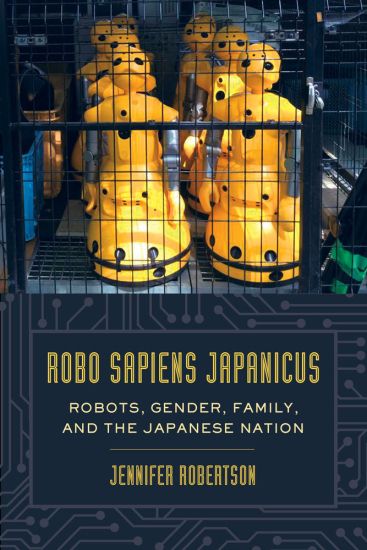
Japan is arguably the first postindustrial society to embrace the prospect of human-robot coexistence. Over the past decade, Japanese humanoid robots designed for use in homes, hospitals, offices, and schools have become celebrated in the mass media and social media throughout the world. In Robo sapiens japanicus, Jennifer Robertson casts a critical eye on press releases and public relations videos that misrepresent actual robots as being as versatile and agile as their science fiction counterparts. An ethnography and sociocultural history of governmental and academic discourses of human-robot relations in Japan, this book explores how actual robots-humanoids, androids, animaloids-are "imagineered" in ways that reinforce the conventional sex/gender system and political-economic status quo. In addition, Robertson interrogates the notion of human exceptionalism as she considers whether "civil rights" should be granted to robots. Similarly, she juxtaposes how robots and robotic exoskeletons reinforce a conception of the "normal" body with a deconstruction of the much-invoked Theory of the Uncanny Valley.