Kirjojen hintavertailu. Mukana 11 244 527 kirjaa ja 12 kauppaa.

Kirjahaku

Etsi kirjoja tekijän nimen, kirjan nimen tai ISBN:n perusteella.

4 kirjaa tekijältä Jennifer Scappettone

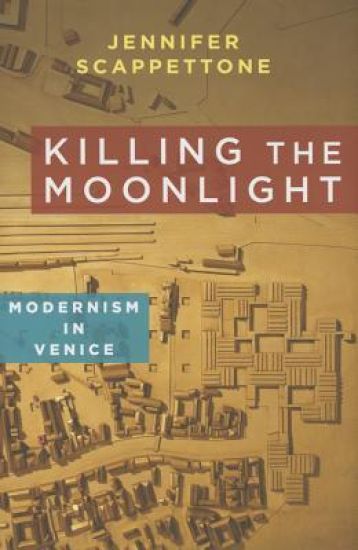
Killing the Moonlight

Killing the Moonlight

Jennifer Scappettone

Columbia University Press
2014
sidottu
As a city that seems to float between Europe and Asia, removed by a lagoon from the tempos of terra firma, Venice has long seduced the Western imagination. Since the 1797 fall of the Venetian Republic, fantasies about the sinking city have engendered an elaborate series of romantic cliches, provoking conflicting responses: some modern artists and intellectuals embrace the resistance to modernity manifest in Venice's labyrinthine premodern form and temporality, whereas others aspire to modernize by "killing the moonlight" of Venice, in the Futurists' notorious phrase. Spanning the history of literature, art, and architecture-from John Ruskin, Henry James, and Ezra Pound to Manfredo Tafuri, Italo Calvino, Jeanette Winterson, and Robert Coover-Killing the Moonlight tracks the pressures that modernity has placed on the legacy of romantic Venice, and the distinctive strains of aesthetic invention that resulted from the clash. In Venetian incarnations of modernism, the anachronistic urban fabric and vestigial sentiment that both the nation-state of Italy and the historical avant-garde would cast off become incompletely assimilated parts of the new. Killing the Moonlight brings Venice into the geography of modernity as a living city rather than a metaphor for death, and presents the archipelago as a crucible for those seeking to define and transgress the conceptual limits of modernism. In strategic detours from the capitals of modernity, the book redrafts the confines of modernist culture in both geographical and historical terms.
Killing the Moonlight

Killing the Moonlight

Jennifer Scappettone

Columbia University Press
2016
pokkari
As a city that seems to float between Europe and Asia, removed by a lagoon from the tempos of terra firma, Venice has long seduced the Western imagination. Since the 1797 fall of the Venetian Republic, fantasies about the sinking city have engendered an elaborate series of romantic cliches, provoking conflicting responses: some modern artists and intellectuals embrace the resistance to modernity manifest in Venice's labyrinthine premodern form and temporality, whereas others aspire to modernize by "killing the moonlight" of Venice, in the Futurists' notorious phrase. Spanning the history of literature, art, and architecture-from John Ruskin, Henry James, and Ezra Pound to Manfredo Tafuri, Italo Calvino, Jeanette Winterson, and Robert Coover-Killing the Moonlight tracks the pressures that modernity has placed on the legacy of romantic Venice, and the distinctive strains of aesthetic invention that resulted from the clash. In Venetian incarnations of modernism, the anachronistic urban fabric and vestigial sentiment that both the nation-state of Italy and the historical avant-garde would cast off become incompletely assimilated parts of the new. Killing the Moonlight brings Venice into the geography of modernity as a living city rather than a metaphor for death, and presents the archipelago as a crucible for those seeking to define and transgress the conceptual limits of modernism. In strategic detours from the capitals of modernity, the book redrafts the confines of modernist culture in both geographical and historical terms.
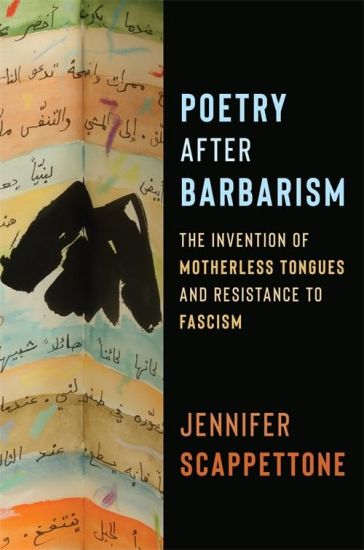
Poetry After Barbarism

Poetry After Barbarism

Jennifer Scappettone

Columbia University Press
2025
sidottu
Against a backdrop of xenophobic and ethnonationalist fantasies of linguistic purity, Poetry After Barbarism uncovers a stateless, polyglot poetry of resistance—the poetry of motherless tongues. Departing from the national and global paradigms that dominate literary history, Jennifer Scappettone traces the aesthetic and geopolitical resonance of “xenoglossic” poetics: poetry composed in the space of contestation between national languages, concretizing dreams of mending the ruptures traced to the story of Babel. As global migration, aerial bombardment, and the wireless telegraph shrank distances with brute force during the twentieth century, visions of transcultural communication emerged in the hopes of bridging linguistic difference. At the same time, evolving Fascist ideologies denied the reality of cultural admixture and the humanity of the stranger.Authors who write xenoglossic verse occupy languages without a perceived birthright or sanctioned education; they compose in ecstatic “orphan tongues” that rebuff nationalist ideologies, on the one hand, and globalization, on the other, uprooting notions of belonging ensconced in nativist metaphors of milk, blood, and soil while rendering the reactionary category of the barbarian obsolete. Raised within or in the wake of fascism, these poets practice strategic forms of literary and linguistic barbarism, proposing modes of collectivity that exceed geopolitical definitions. Studying experiments between languages by immigrant, refugee, and otherwise stateless authors—from Baroness Elsa von Freytag-Loringhoven to Emilio Villa, Amelia Rosselli, Etel Adnan, LaTasha N. Nevada Diggs, Chika Sagawa, and Sawako Nakayasu—this book explores how poetry can both represent and jumpstart metamorphosis of the shape and sound of citizenship, modeling paths toward alternative republics in which poetry might assume a central agency.
Poetry After Barbarism

Poetry After Barbarism

Jennifer Scappettone

Columbia University Press
2025
pokkari
Against a backdrop of xenophobic and ethnonationalist fantasies of linguistic purity, Poetry After Barbarism uncovers a stateless, polyglot poetry of resistance—the poetry of motherless tongues. Departing from the national and global paradigms that dominate literary history, Jennifer Scappettone traces the aesthetic and geopolitical resonance of “xenoglossic” poetics: poetry composed in the space of contestation between national languages, concretizing dreams of mending the ruptures traced to the story of Babel. As global migration, aerial bombardment, and the wireless telegraph shrank distances with brute force during the twentieth century, visions of transcultural communication emerged in the hopes of bridging linguistic difference. At the same time, evolving Fascist ideologies denied the reality of cultural admixture and the humanity of the stranger.Authors who write xenoglossic verse occupy languages without a perceived birthright or sanctioned education; they compose in ecstatic “orphan tongues” that rebuff nationalist ideologies, on the one hand, and globalization, on the other, uprooting notions of belonging ensconced in nativist metaphors of milk, blood, and soil while rendering the reactionary category of the barbarian obsolete. Raised within or in the wake of fascism, these poets practice strategic forms of literary and linguistic barbarism, proposing modes of collectivity that exceed geopolitical definitions. Studying experiments between languages by immigrant, refugee, and otherwise stateless authors—from Baroness Elsa von Freytag-Loringhoven to Emilio Villa, Amelia Rosselli, Etel Adnan, LaTasha N. Nevada Diggs, Chika Sagawa, and Sawako Nakayasu—this book explores how poetry can both represent and jumpstart metamorphosis of the shape and sound of citizenship, modeling paths toward alternative republics in which poetry might assume a central agency.