Kirjojen hintavertailu. Mukana 11 244 527 kirjaa ja 12 kauppaa.

Kirjahaku

Etsi kirjoja tekijän nimen, kirjan nimen tai ISBN:n perusteella.

7 kirjaa tekijältä Jennifer T. Roberts

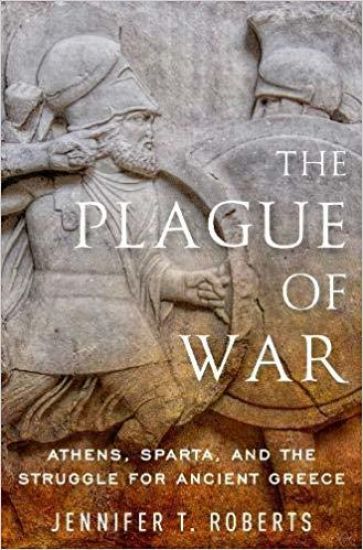
The Plague of War

The Plague of War

Jennifer T. Roberts

Oxford University Press Inc
2019
nidottu
In 431 BC, the long simmering rivalry between the city-states of Athens and Sparta erupted into open warfare, and for more than a generation the two were locked in a life-and-death struggle. The war embroiled the entire Greek world, provoking years of butchery previously unparalleled in ancient Greece. Whole cities were exterminated, their men killed, their women and children enslaved. While the war is commonly believed to have ended with the capture of the Athenian navy in 405 and the subsequent starvation of Athens, fighting in Greece would continue for several decades. Sparta's authority was challenged in the so-called Corinthian War (395-387) when Persian gold helped unite Athens with Sparta's former allies. The war did not truly end until, in 371, Thebes' crack infantry resoundingly defeated Sparta at Leuctra, forever shattering the myth of Spartan military supremacy. Jennifer Roberts' rich narrative of this famous conflict is the first general history to tell the whole story, from the war's origins down to Sparta's defeat at Leuctra. In her masterful account, this long and bloody war affected every area of life in Athens, exacerbated divisions between rich and poor in Sparta, and sparked civil strife throughout the Greek world. Yet despite the biting sorrows the fighting occasioned, it remains a gripping saga of plots and counter-plots, murders and lies, thrilling sea chases and desperate overland marches, missed opportunities and last-minute reprieves, and, as the war's first historian Thucydides had hoped, lessons for a less bellicose future. In addition, Roberts considers the impact of the war on Greece's cultural life, including the great masterworks of tragedy and comedy performed at this time and, most infamously, the trial and execution of Socrates. A fast-paced narrative of one of antiquity's most famous clashes, The Plague of War is a must-read for history enthusiasts of all ages.
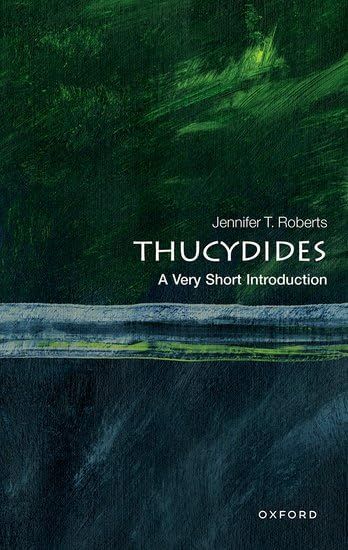
Thucydides

Thucydides

Jennifer T. Roberts

Oxford University Press
2024
nidottu
Very Short Introductions: Brilliant, Sharp, Inspiring In 432 BCE the powerful city-state of Sparta on the peninsula of the Peloponnesus in southwestern Greece declared war on Athens, head of a mighty naval coalition. The war would last until Sparta finally brough Athens to its knees in 404. The Athenian aristocrat Thucydides, suspecting the magnitude of the conflict that was unfolding before his eyes, at once undertook to record its history, exploring the causes and course of the war in the context of his great interest: human nature. An introduction to Thucydides' thought and background, this book examines Thucydides' account of the war in the context both of the international situation in the classical Greek world and of the intellectual traditions of the fifth century BCE, exploring the historian's connection to prose writers like Herodotus as well as poets like Homer and the tragedians, and investigating the complex dynamics of the war that changed the Greek world forever. ABOUT THE SERIES: The Very Short Introductions series from Oxford University Press contains hundreds of titles in almost every subject area. These pocket-sized books are the perfect way to get ahead in a new subject quickly. Our expert authors combine facts, analysis, perspective, new ideas, and enthusiasm to make interesting and challenging topics highly readable.
Herodotus

Herodotus

Jennifer T. Roberts

Oxford University Press
2011
nidottu
Herodotus has come to be respected by most scholars as a responsible and important historian. Herodotus was both a critical thinker and a lively storyteller, a traveller who was both tourist and anthropologist. Like Homer, he set out to memorialize great deeds in words; more narrowly, he determined to discover the causes of the wars between Greece and Persia and to explain them to his fellow Greeks. In his hands, the Greeks' unforeseeable defeat of the Persian kings Darius and Xerxes, with their vast hosts, made for fascinating storytelling. Influenced by the work of the natural scientists and philosophers of his own and earlier eras, Herodotus also brought his literary talents to bear on a vast, unruly mass of information gathered from many interviews throughout his travels and left behind him the longest work that had ever been written in Greek - the first work of history, and one which continues to be read with enjoyment today. Herodotus: A Very Short Introduction introduces readers to what little is known of Herodotus's life and goes on to discuss all aspects of his work, including his fascination with his origins; his travels; his view of the world in relation to boundaries and their transgressions; and his interest in seeing the world and learning about non-Greek civilizations. We also explore the recurring themes of his work, his beliefs in dreams, oracles, and omens, the prominence of women in his work, and his account of the battles of the Persian Wars. ABOUT THE SERIES: The Very Short Introductions series from Oxford University Press contains hundreds of titles in almost every subject area. These pocket-sized books are the perfect way to get ahead in a new subject quickly. Our expert authors combine facts, analysis, perspective, new ideas, and enthusiasm to make interesting and challenging topics highly readable.
The Plague of War

The Plague of War

Jennifer T. Roberts

Oxford University Press Inc
2017
sidottu
The life-and-death struggle between Athens and Sparta that embroiled all of the Greek world for an entire generation was a war that almost did not happen. Both sides entered it with hesitation, and the fortunes of war swung back and forth so wildly that at many junctures either side could have won. The plague that visited Athens in the war's early years was entirely unforeseen, as was the death in 429 of their leading statesman Pericles, who was expected to guide Athens through the war until the Spartans acquiesced. The war could have concluded many times before the conventional ending of open hostilities in 404 BCE, even as early as 425 when a team of crack Spartan troops, marooned on an island off the coast of the Peloponnesus, laid down their arms and surrendered, something that had never happened before. Sparta sought peace to regain its men, but the Athenians thought they could get better terms and kept fighting. After 27 years of butchery on land and at sea previously unparalleled in Greece, nothing had really been gained by either side, not even by the Spartan "victors," who seemed to be as capable of winning a war as of losing a peace. War without Victory provides a superlative narrative of this famous conflict, authoritatively examining its origins and its impact on the culture and social structure of the participants. Jennifer Roberts' history will be distinguished for placing the war in a wider historical context, continuing the story down to the outbreak of the so-called Corinthian War in 395, when gold from the Persian king made it possible for Sparta's former allies to join Athens in making war on them. It will therefore include one of the most infamous episodes in Greek history, which was partly a direct consequence of the war: the trial and execution of Socrates. Finally, it will treat the events leading up to the stunning defeat of Sparta by its former ally Thebes at the battle of Leuctra in 371, a defeat which effectively ended Sparta's martial dominance forever. Including a discussion of Greece's rich cultural life of the period, this book promises to be just as masterful an account as Donald Kagan's condensed one-volume history.
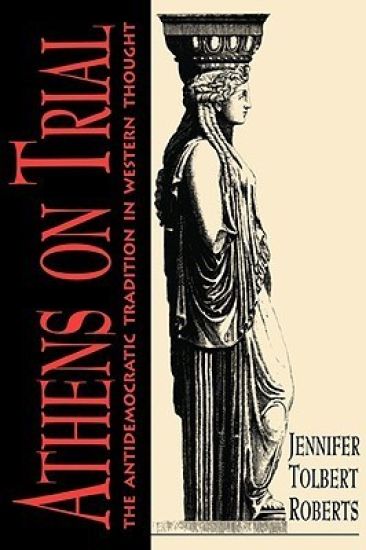
Athens on Trial

Athens on Trial

Jennifer T. Roberts

Princeton University Press
1997
pokkari
The Classical Athenians were the first to articulate and implement the notion that ordinary citizens of no particular affluence or education could make responsible political decisions. For this reason, reactions to Athenian democracy have long provided a prime Rorschach test for political thought. Whether praising Athens's government as the legitimizing ancestor of modern democracies or condemning it as mob rule, commentators throughout history have revealed much about their own notions of politics and society. In this book, Jennifer Roberts charts responses to Athenian democracy from Athens itself through the twentieth century, exploring a debate that touches upon historiography, ethics, political science, anthropology, sociology, philosophy, gender studies, and educational theory.
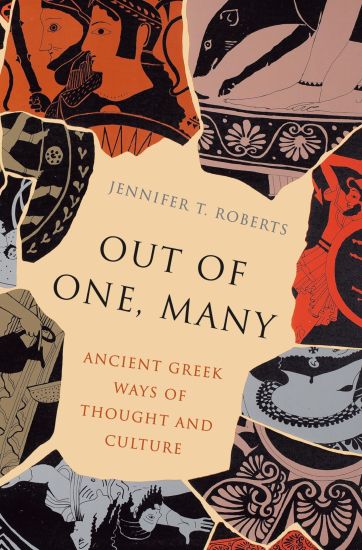
Out of One, Many

Out of One, Many

Jennifer T. Roberts

PRINCETON UNIVERSITY PRESS
2024
sidottu
A sweeping new account of ancient Greek culture and its remarkable diversityCovering the whole of the ancient Greek experience from its beginnings late in the third millennium BCE to the Roman conquest in 30 BCE, Out of One, Many is an accessible and lively introduction to the Greeks and their ways of living and thinking. In this fresh and witty exploration of the thought, culture, society, and history of the Greeks, Jennifer Roberts traces not only the common values that united them across the seas and the centuries, but also the enormous diversity in their ideas and beliefs.Examining the huge importance to the Greeks of religion, mythology, the Homeric epics, tragic and comic drama, philosophy, and the city-state, the book offers shifting perspectives on an extraordinary and astonishingly creative people. Century after century, in one medium after another, the Greeks addressed big questions, many of which are still very much with us, from whether gods exist and what happens after we die to what political system is best and how we can know what is real. Yet for all their virtues, Greek men set themselves apart from women and foreigners and profited from the unpaid labor of enslaved workers, and the book also looks at the mixed legacy of the ancient Greeks today.The result is a rich, wide-ranging, and compelling history of a fascinating and profoundly influential culture in all its complexity—and the myriad ways, good and bad, it continues to shape us today.
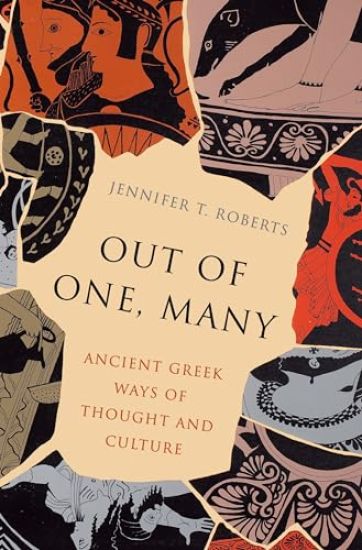
Out of One, Many

Out of One, Many

Jennifer T. Roberts

PRINCETON UNIVERSITY PRESS
2026
pokkari
A sweeping new account of ancient Greek culture and its remarkable diversity Covering the whole of the ancient Greek experience from its beginnings late in the third millennium BCE to the Roman conquest in 30 BCE, Out of One, Many is an accessible and lively introduction to the Greeks and their ways of living and thinking. In this fresh and witty exploration of the thought, culture, society, and history of the Greeks, Jennifer Roberts traces not only the common values that united them across the seas and the centuries, but also the enormous diversity in their ideas and beliefs. Examining the huge importance to the Greeks of religion, mythology, the Homeric epics, tragic and comic drama, philosophy, and the city-state, the book offers shifting perspectives on an extraordinary and astonishingly creative people. Century after century, in one medium after another, the Greeks addressed big questions, many of which are still very much with us, from whether gods exist and what happens after we die to what political system is best and how we can know what is real. Yet for all their virtues, Greek men set themselves apart from women and foreigners and profited from the unpaid labor of enslaved workers, and the book also looks at the mixed legacy of the ancient Greeks today. The result is a rich, wide-ranging, and compelling history of a fascinating and profoundly influential culture in all its complexity—and the myriad ways, good and bad, it continues to shape us today.