Kirjojen hintavertailu. Mukana 11 342 296 kirjaa ja 12 kauppaa.

Kirjahaku

Etsi kirjoja tekijän nimen, kirjan nimen tai ISBN:n perusteella.

4 kirjaa tekijältä Jennifer Wenzel

Bulletproof

Bulletproof

Jennifer Wenzel

University of Chicago Press
2009
sidottu
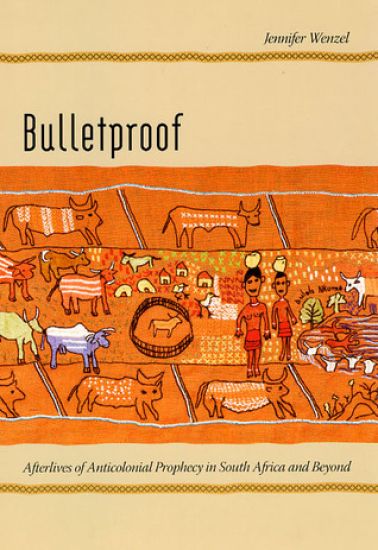
In 1856 and 1857, in response to a prophet's command, the Xhosa people of southern Africa killed their cattle and ceased planting crops; the resulting famine cost tens of thousands of lives. Much like other millenarian, anti colonial movements - such as the Ghost Dance in North America and the Birsa Munda uprising in India - these actions were meant to transform the world and liberate the Xhosa from oppression. Despite the movement's momentous failure to achieve that goal, the event has continued to exert a powerful pull on the South African imagination ever since. It is these afterlives of the prophecy that Jennifer Wenzel explores in "Bulletproof". Wenzel examines literary and historical texts to show how writers have manipulated images and ideas associated with the cattle killing - harvest, sacrifice, rebirth, devastation - to speak to their contemporary predicaments. Widening her lens, Wenzel also looks at how past failure can both inspire and constrain movements for justice in the present, and her brilliant insights into the cultural implications of prophecy will fascinate readers across a wide variety of disciplines.
Bulletproof

Bulletproof

Jennifer Wenzel

University of Chicago Press
2009
nidottu
In 1856 and 1857, in response to a prophet's command, the Xhosa people of southern Africa killed their cattle and ceased planting crops; the resulting famine cost tens of thousands of lives. Much like other millenarian, anti colonial movements - such as the Ghost Dance in North America and the Birsa Munda uprising in India - these actions were meant to transform the world and liberate the Xhosa from oppression. Despite the movement's momentous failure to achieve that goal, the event has continued to exert a powerful pull on the South African imagination ever since. It is these afterlives of the prophecy that Jennifer Wenzel explores in "Bulletproof". Wenzel examines literary and historical texts to show how writers have manipulated images and ideas associated with the cattle killing - harvest, sacrifice, rebirth, devastation - to speak to their contemporary predicaments. Widening her lens, Wenzel also looks at how past failure can both inspire and constrain movements for justice in the present, and her brilliant insights into the cultural implications of prophecy will fascinate readers across a wide variety of disciplines.
The Disposition of Nature

The Disposition of Nature

Jennifer Wenzel

Fordham University Press
2019
pokkari
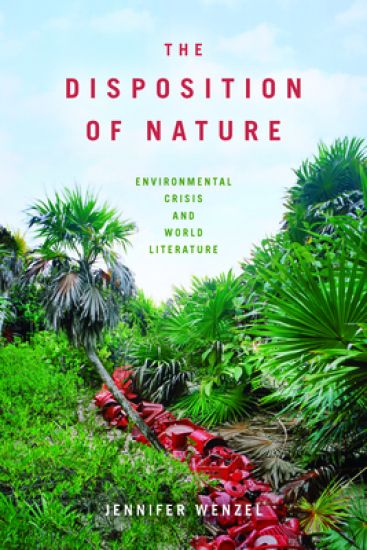
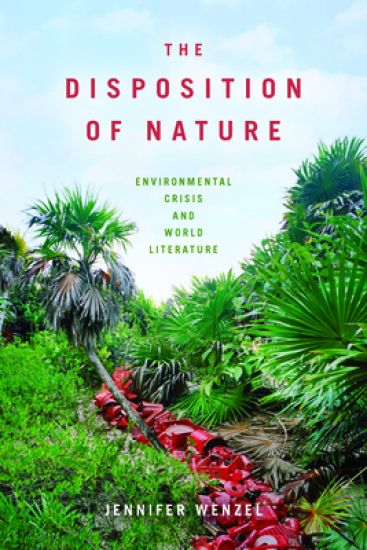
Finalist, 2022 Ecocriticism Book Prize, Association for the Study of Literature and the Environment Shortlisted, 2020 Book Prize, Association for the Study of the Arts of the Present How do literature and other cultural forms shape how we imagine the planet, for better or worse? In this rich, original, and long awaited book, Jennifer Wenzel tackles the formal innovations, rhetorical appeals, and sociological imbrications of world literature that might help us confront unevenly distributed environmental crises, including global warming. The Disposition of Nature argues that assumptions about what nature is are at stake in conflicts over how it is inhabited or used. Both environmental discourse and world literature scholarship tend to confuse parts and wholes. Working with writing and film from Africa, South Asia, and beyond, Wenzel takes a contrapuntal approach to sites and subjects dispersed across space and time. Reading for the planet, Wenzel shows, means reading from near to there: across experiential divides, between specific sites, at more than one scale. Impressive in its disciplinary breadth, Wenzel's book fuses insights from political ecology, geography, anthropology, history, and law, while drawing on active debates between postcolonial theory and world literature, as well as scholarship on the Anthropocene and the material turn. In doing so, the book shows the importance of the literary to environmental thought and practice, elaborating how a supple understanding of cultural imagination and narrative logics can foster more robust accounts of global inequality and energize movements for justice and livable futures.
The Disposition of Nature

The Disposition of Nature

Jennifer Wenzel

FORDHAM UNIVERSITY PRESS
2019
sidottu
Finalist, 2022 Ecocriticism Book Prize, Association for the Study of Literature and the Environment Shortlisted, 2020 Book Prize, Association for the Study of the Arts of the Present How do literature and other cultural forms shape how we imagine the planet, for better or worse? In this rich, original, and long awaited book, Jennifer Wenzel tackles the formal innovations, rhetorical appeals, and sociological imbrications of world literature that might help us confront unevenly distributed environmental crises, including global warming. The Disposition of Nature argues that assumptions about what nature is are at stake in conflicts over how it is inhabited or used. Both environmental discourse and world literature scholarship tend to confuse parts and wholes. Working with writing and film from Africa, South Asia, and beyond, Wenzel takes a contrapuntal approach to sites and subjects dispersed across space and time. Reading for the planet, Wenzel shows, means reading from near to there: across experiential divides, between specific sites, at more than one scale. Impressive in its disciplinary breadth, Wenzel's book fuses insights from political ecology, geography, anthropology, history, and law, while drawing on active debates between postcolonial theory and world literature, as well as scholarship on the Anthropocene and the material turn. In doing so, the book shows the importance of the literary to environmental thought and practice, elaborating how a supple understanding of cultural imagination and narrative logics can foster more robust accounts of global inequality and energize movements for justice and livable futures.