
Kirjojen hintavertailu. Mukana 11 244 527 kirjaa ja 12 kauppaa.

Kirjahaku

Etsi kirjoja tekijän nimen, kirjan nimen tai ISBN:n perusteella.

5 kirjaa tekijältä Jerald Walker

Magically Black and Other Essays

Magically Black and Other Essays

Jerald Walker

HARPERCOLLINS PUBLISHERS INC
2025
nidottu
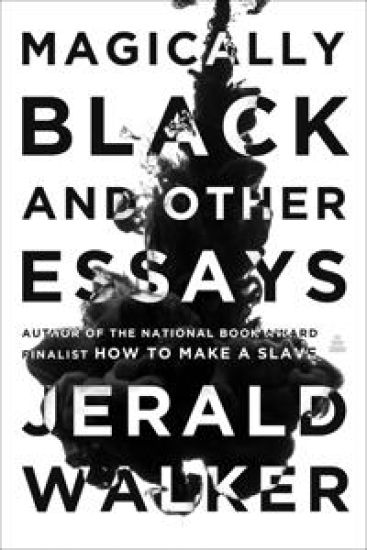
*** Finalist for the PEN/Diamonstein-Spielvogel Award for the Art of the Essay****In this engaging follow up to How to Make a Slave and Other Essays, the recipient of PEN New England Award for nonfiction and finalist for the National Book Award sharply examines and explains Black life and culture with equal parts candor and humor.In Magically Black and Other Essays Jerald Walker elegantly blends personal revelation and cultural critique to create a bracing and often humorous examination of Black American life. He thoughtfully addresses the inherent complexities of topics as eclectic as incarceration, home renovations, gentrification, the crip walk, pimping, and the rise of the MAGA movement, approaching them through various Black perspectives, including husband, father, teacher, and writer. The collection’s overarching theme is captured in the titular essay, which examines the culture of heroic action African Americans created in response to their enslavement and oppression, giving proof to Albert Murray’s observation that the “fire in the forging process . . . for all its violence, does not destroy the metal that becomes the sword.”
Magically Black and Other Essays

Magically Black and Other Essays

Jerald Walker

HARPERCOLLINS PUBLISHERS INC
2024
sidottu
*** Finalist for the PEN/Diamonstein-Spielvogel Award for the Art of the Essay****In this engaging follow up to How to Make a Slave and Other Essays, the recipient of PEN New England Award for nonfiction and finalist for the National Book Award sharply examines and explains Black life and culture with equal parts candor and humor.In Magically Black and Other Essays Jerald Walker elegantly blends personal revelation and cultural critique to create a bracing and often humorous examination of Black American life. He thoughtfully addresses the inherent complexities of topics as eclectic as incarceration, home renovations, gentrification, the crip walk, pimping, and the rise of the MAGA movement, approaching them through various Black perspectives, including husband, father, teacher, and writer. The collection’s overarching theme is captured in the titular essay, which examines the culture of heroic action African Americans created in response to their enslavement and oppression, giving proof to Albert Murray’s observation that the “fire in the forging process . . . for all its violence, does not destroy the metal that becomes the sword.”
Street Shadows

Street Shadows

Jerald Walker

Bison Books
2012
pokkari
Street Shadows recounts Jerald Walker's renunciation of the "thug life" he had embraced as a teenager on the South Side of Chicago in favor of the education and middle-class life his parents had always dreamed of for their children. By turns ironic, humorous, angry, and poignant, Walker's narrative dramatically captures his pursuit and embodiment of the "American dream": the effort to rise above obstacles such as racism and poverty through hard work and determination.Walker explores questions of race and identity through the lens of personal choice—including decisions he made as a high school dropout, a drug and alcohol abuser, a returning student, a young academic, a visitor to Africa in search of his roots, and a husband and father, as well as the diverse choices made by his blind parents, his six siblings, and his wife and her family. He highlights the importance of education, the values of self-help and self-reliance, and his rejection of the victim mentality that many feel pervades black communities.Winner of the 2011 PEN New England/L. L. Winship Award for Nonfiction, Street Shadows is an eloquent account of how the past shadows but need not determine the present. It is also a stirring portrait of two Americas—one hopeless, the other inspirational—embodied within the same man.
The World in Flames

The World in Flames

Jerald Walker

Beacon Press
2017
pokkari
A memoir of growing up with blind, African-American parents in a segregated cult preaching the imminent end of the world When The World in Flames begins, in 1970, Jerry Walker is six years old. His consciousness revolves around being a member of a church whose beliefs he finds not only confusing but terrifying. Composed of a hodgepodge of requirements and restrictions (including a prohibition against doctors and hospitals), the underpinning tenet of Herbert W. Armstrong's Worldwide Church of God was that its members were divinely chosen and all others would soon perish in rivers of flames. The substantial membership was ruled by fear, intimidation, and threats. Anyone who dared leave the church would endure hardship for the remainder of this life and eternal suffering in the next. The next life, according to Armstrong, would arrive in 1975, three years after the start of the Great Tribulation. Jerry would be eleven years old. Jerry's parents were particularly vulnerable to the promise of relief from the world's hardships. When they joined the church, in 1960, they were living in a two-room apartment in a dangerous Chicago housing project with the first four of their seven children, and, most significantly, they both were blind, having lost their sight to childhood accidents. They took comfort in the belief that they had been chosen for a special afterlife, even if it meant following a religion with a white supremacist ideology and dutifully sending tithes to Armstrong, whose church boasted more than 100,000 members and more than $80 million in annual revenues at its height. When the prophecy of the 1972 Great Tribulation does not materialize, Jerry is considerably less disappointed than relieved. When the 1975 end-time prophecy also fails, he finally begins to question his faith and imagine the possibility of choosing a destiny of his own.
How to Make a Slave and Other Essays

How to Make a Slave and Other Essays

Jerald Walker

OHIO STATE UNIVERSITY PRESS
2020
pokkari
Finalist, National Book Award in Nonfiction Winner, Massachusetts Book Award A Book of the Year pick from Kirkus, BuzzFeed, and Literary Hub "The essays in this collection are restless, brilliant and short....The brevity suits not just Walker's style but his worldview, too....Keeping things quick gives him the freedom to move; he can alight on a truth without pinning it into place." -Jennifer Szalai, the New York Times For the black community, Jerald Walker asserts in How to Make a Slave, "anger is often a prelude to a joke, as there is broad understanding that the triumph over this destructive emotion lay in finding its punchline." It is on the knife's edge between fury and farce that the essays in this exquisite collection balance. Whether confronting the medical profession's racial biases, considering the complicated legacy of Michael Jackson, paying homage to his writing mentor James Alan McPherson, or attempting to break free of personal and societal stereotypes, Walker elegantly blends personal revelation and cultural critique. The result is a bracing and often humorous examination by one of America's most acclaimed essayists of what it is to grow, parent, write, and exist as a black American male. Walker refuses to lull his readers; instead his missives urge them to do better as they consider, through his eyes, how to be a good citizen, how to be a good father, how to live, and how to love.