Kirjojen hintavertailu. Mukana 12 016 292 kirjaa ja 12 kauppaa.

Kirjahaku

Etsi kirjoja tekijän nimen, kirjan nimen tai ISBN:n perusteella.

7 kirjaa tekijältä Jeremy Adelman

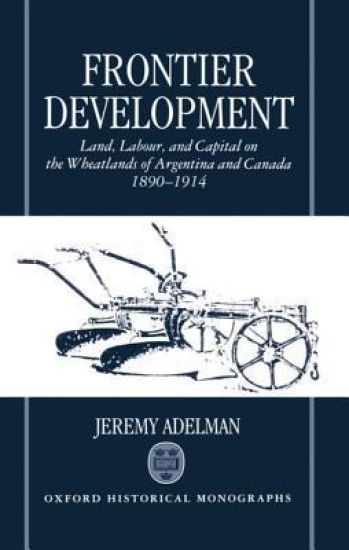
Frontier Development

Frontier Development

Jeremy Adelman

Clarendon Press
1994
sidottu
This is a scholarly and stimulating study of settlement and expansions on the frontier lands in Canada and Argentina during their `Golden Years' of the late nineteenth and early twentieth centuries. Jeremy Adelman challenges many of the assumptions made about the economic `success' of North America and the `failure' of Latin America. Based on extensive primary research in Argentina, Canada, and Britain, Dr Adelman's book points to the central importance of property relations in economic history. The distribution, control, and use of land, labour, and capital shaped these emerging economies. At the centre of the analysis is the development of family farming in Canada, and large estates in Argentina. Each system presented opportunities and posed costs - Argentine estates proving more efficient than hitherto argueed, while Canadian farms involved high social and economic costs. The approach taken here suggests directions for future research for comparative historians.

Sovereignty and Revolution in the Iberian Atlantic

Sovereignty and Revolution in the Iberian Atlantic

Jeremy Adelman

Princeton University Press
2009
pokkari
This book takes a bold new look at both Spain's and Portugal's New World empires in a trans-Atlantic context. It argues that modern notions of sovereignty in the Atlantic world have been unstable, contested, and equivocal from the start. It shows how much contemporary notions of sovereignty emerged in the Americas as a response to European imperial crises in the age of revolutions. Jeremy Adelman reveals how many modern-day uncertainties about property, citizenship, and human rights were forged in an epic contest over the very nature of state power in the eighteenth and early nineteenth centuries. Sovereignty and Revolution in the Iberian Atlantic offers a new understanding of Latin American and Atlantic history, one that blurs traditional distinctions between the "imperial" and the "colonial." It shows how the Spanish and Portuguese empires responded to the pressures of rival states and merchant capitalism in the eighteenth century. As empires adapted, the ties between colonies and mother countries transformed, recreating trans-Atlantic bonds of loyalty and interests. In the end, colonies repudiated their Iberian loyalties not so much because they sought independent nationhood. Rather, as European conflicts and revolutions swept across the Atlantic, empires were no longer viable models of sovereignty--and there was less to be loyal to. The Old Regimes collapsed before subjects began to imagine new ones in their place. The emergence of Latin American nations--indeed many of our contemporary notions of sovereignty--was the effect, and not the cause, of the breakdown of European empires.
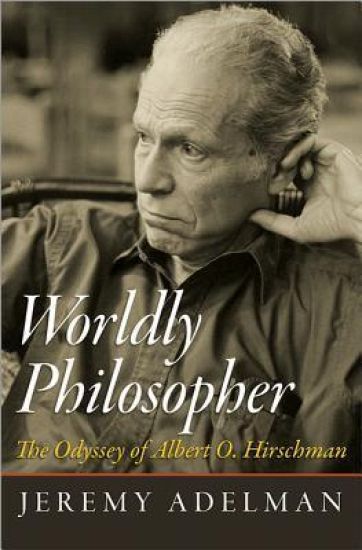
Worldly Philosopher

Worldly Philosopher

Jeremy Adelman

Princeton University Press
2013
sidottu
Worldly Philosopher chronicles the times and writings of Albert O. Hirschman, one of the twentieth century's most original and provocative thinkers. In this gripping biography, Jeremy Adelman tells the story of a man shaped by modern horrors and hopes, a worldly intellectual who fought for and wrote in defense of the values of tolerance and change. This is the first major account of Hirschman's remarkable life, and a tale of the twentieth century as seen through the story of an astute and passionate observer. Adelman's riveting narrative traces how Hirschman's personal experiences shaped his unique intellectual perspective, and how his enduring legacy is one of hope, open-mindedness, and practical idealism.
Worldly Philosopher

Worldly Philosopher

Jeremy Adelman

Princeton University Press
2014
pokkari
Worldly Philosopher chronicles the times and writings of Albert O. Hirschman, one of the twentieth century's most original and provocative thinkers. In this gripping biography, Jeremy Adelman tells the story of a man shaped by modern horrors and hopes, a worldly intellectual who fought for and wrote in defense of the values of tolerance and change. This is the first major account of Hirschman's remarkable life, and a tale of the twentieth century as seen through the story of an astute and passionate observer. Adelman's riveting narrative traces how Hirschman's personal experiences shaped his unique intellectual perspective, and how his enduring legacy is one of hope, open-mindedness, and practical idealism.
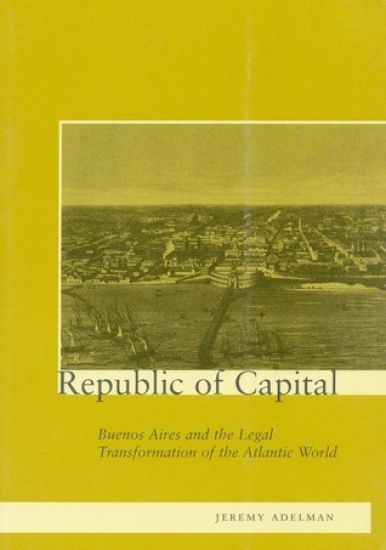
Republic of Capital

Republic of Capital

Jeremy Adelman

Stanford University Press
1999
sidottu
This book is a political history of economic life. Through a description of the convulsions of long-term change from colony to republic in Buenos Aires, Republic of Capital explores Atlantic world transformations in the eighteenth and nineteenth centuries. Tracing the transition from colonial Natural Law to instrumental legal understandings of property, the book shows that the developments of constitutionalism and property law were more than coincidences: the polity shaped the rituals and practices arbitrating economic justice, while the crisis of property animated the support for a centralized and executive-dominated state. In dialectical fashion, politics shaped private law while the effort to formalize the domain of property directed the course of political struggles. In studying the legal and political foundations of Argentine capitalism, the author shows how merchants and capitalists coped with massive political upheaval and how political writers and intellectuals sought to forge a model of liberal republicanism. Among the topics examined are the transformation of commercial law, the evolution of liberal political credos, and the saga of political and constitutional turmoil after the collapse of Spanish authority. By the end of the nineteenth century, statemakers, capitalists, and liberal intellectuals settled on a model of political economy that aimed for open markets but closed the polity to widespread participation. The author concludes by exploring the long-term consequences of nineteenth-century statehood for the following century's efforts to promote sustained economic growth and democratize the political arena, and argues that many of Argentina's recent problems can be traced back to the framework and foundations of Argentine statehood in the nineteenth century.
Republic of Capital

Republic of Capital

Jeremy Adelman

Stanford University Press
2002
pokkari
This book is a political history of economic life. Through a description of the convulsions of long-term change from colony to republic in Buenos Aires, Republic of Capital explores Atlantic world transformations in the eighteenth and nineteenth centuries. Tracing the transition from colonial Natural Law to instrumental legal understandings of property, the book shows that the developments of constitutionalism and property law were more than coincidences: the polity shaped the rituals and practices arbitrating economic justice, while the crisis of property animated the support for a centralized and executive-dominated state. In dialectical fashion, politics shaped private law while the effort to formalize the domain of property directed the course of political struggles. In studying the legal and political foundations of Argentine capitalism, the author shows how merchants and capitalists coped with massive political upheaval and how political writers and intellectuals sought to forge a model of liberal republicanism. Among the topics examined are the transformation of commercial law, the evolution of liberal political credos, and the saga of political and constitutional turmoil after the collapse of Spanish authority. By the end of the nineteenth century, statemakers, capitalists, and liberal intellectuals settled on a model of political economy that aimed for open markets but closed the polity to widespread participation. The author concludes by exploring the long-term consequences of nineteenth-century statehood for the following century's efforts to promote sustained economic growth and democratize the political arena, and argues that many of Argentina's recent problems can be traced back to the framework and foundations of Argentine statehood in the nineteenth century.
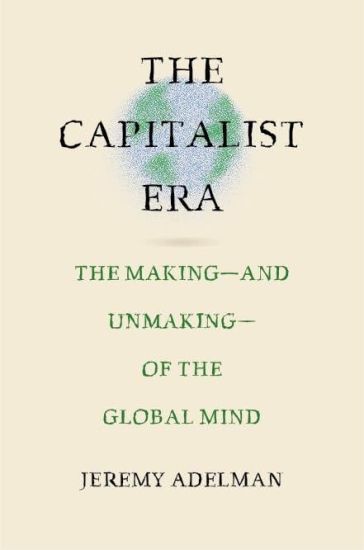
The Capitalist Era

The Capitalist Era

Jeremy Adelman

PRINCETON UNIVERSITY PRESS
2026
sidottu
A sweeping history of global interdependence from the late-eighteenth to the twenty-first century—with essential lessons for today In The Capitalist Era, leading global historian Jeremy Adelman puts the world’s current unwinding in much-needed historical perspective. Combining political, economic, intellectual, and environmental history, the book tells the epic story of the forces that, since the late eighteenth century, have transformed the world into a single but fractured survival unit that is integrated by exchange and flow yet divided by suspicion and fear. It is a story of hopes for universal peace, panics over planetary destruction, and debates, policies, and media that have shaped how people see each other across distances and borders. The Capitalist Era chronicles how global integration compelled people from different parts of the world to reckon with what it means to need each other for resources or recognition without knowing each other—and describes the confrontations and experiments that have shaped the world through periods of integration and disintegration over the past two centuries. As trade, migration, and new technologies brought people closer together in search of wealth, security, and survival, huge clashes and collisions were set off, involving writers and soldiers, biologists and economists, photographers and missionaries. Strangers—are they partners or rivals, liberators or oppressors? As The Capitalist Era shows, this is perhaps the biggest question hanging over our past, present, and future. To understand our world, it’s essential to grasp how strangers have regarded each other as they decided to welcome or exclude, to respect or dominate. Rejecting simplistic determinisms about inevitable peace or inescapable doom, this book illuminates the brittle unity of the world today.