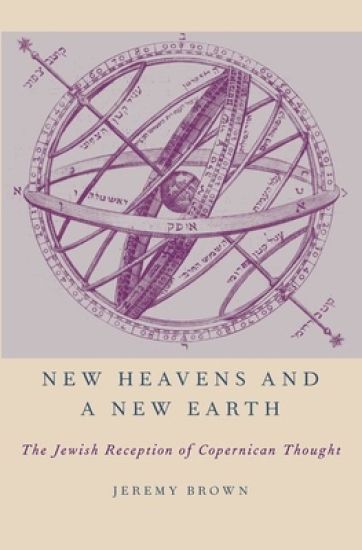
In this ground-breaking study of the Jewish reception of the Copernican revolution, Jeremy Brown examines four hundred years of Jewish writings on the Copernican model. Brown shows the ways in which Jews ignored, rejected, or accepted the Copernican model, and the theological and societal underpinnings of their choices. Throughout New Heavens and a New Earth are deft historical studies of such colorful figures as Joseph Delmedigo, the first Jewish Copernican and a student of Galileo; Tuviah Cohen, who called Copernicus the "Son of Satan;" Zelig Slonimski, author of a collection of essays on Halley's Comet; and contemporary Jewish thinkers who use Einstein's Theory of Relativity to argue that the Earth does not actually revolve around the sun. Brown also provides insightful comparisons of concurrent Jewish and Christian writings on Copernicus, demonstrating that the Jewish reception of Copernicus was largely dependent on local factors and responses.
A physician and historian of science and medicine at the National Institute of Health tells the hidden story of how plagues and pandemics shaped the history of the Jewish people. Plagues, pandemics, and infectious diseases have shaped the history of the Jewish people. Of course, there were the ten biblical plagues that famously smote the Egyptians--from the rain of frogs to the deaths of the firstborn--but that is just the start of the story. For the Talmudic Sages infectious diseases were part of the fundamental fabric of God's created world. In later times, however, disease was often thought to be caused by malign spells and incantations. A counter-magic developed to combat them. Amulets were deployed and miracle workers sought out. Surprisingly, Jeremy Brown shows, Jews sometimes even visited Christian shrines and beseeched the intervention of their saints. In 1348, when the Black Death swept through Europe, Jews fell victim both to the disease, for which they were blamed, and to the anti-Semitic violence that followed. At least 235 Jewish communities were persecuted even as Pope Clement IV ruled that anyone joining or authorizing the persecution would be excommunicated. In The Eleventh Plague, Brown investigates the relation between Judaism and infectious diseases throughout the ages, from premodern and early-modern plagues, to rabbinic responses to smallpox and cholera, to the special vulnerabilities Jewish immigrants faced in the US as result of prejudice, and to the curious practice of “Black Weddings” in which two orphans are married in a cemetery. Popularized during the 1918 influenza pandemic the practice was revived in response to the Covid-19 pandemic, showing that the intriguing relationship between Judaism and infectious disease remains relevant today.
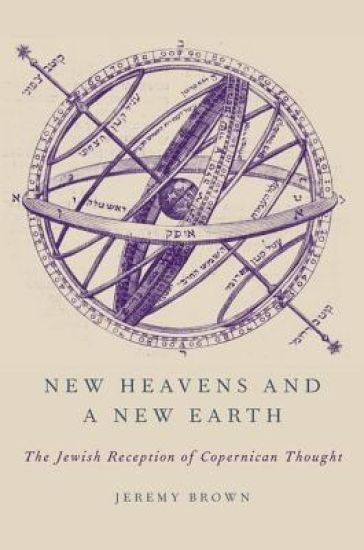
Jeremy Brown offers the first major study of the Jewish reception of the Copernican revolution, examining four hundred years of Jewish writings on the Copernican model. Brown shows the ways in which Jews ignored, rejected, or accepted the Copernican model, and the theological and societal underpinnings of their choices. Throughout New Heavens and a New Earth are deft historical studies of such colorful figures as Joseph Delmedigo, the first Jewish Copernican and a student of Galileo's; Tuviah Cohen, who called Copernicus the "Son of Satan; " Zelig Slonimski, author of a famed collection of essays on Halley's Comet and other astronomical phenomena; and the modern neo-goecentrists who use Einstein's Theory of Relativity to argue that the Earth does not actually revolve around the sun. Brown also provides insightful comparisons of concurrent Jewish and Christian writings on Copernicus, demonstrating that the Jewish reception of Copernicus was largely dependent on local factors and response. The book concludes by noting the important lessons that may be learned from the history of the Jewish reception of Copernican thought and showing how religions make room for new scientific descriptions of reality while upholding most cherished beliefs.
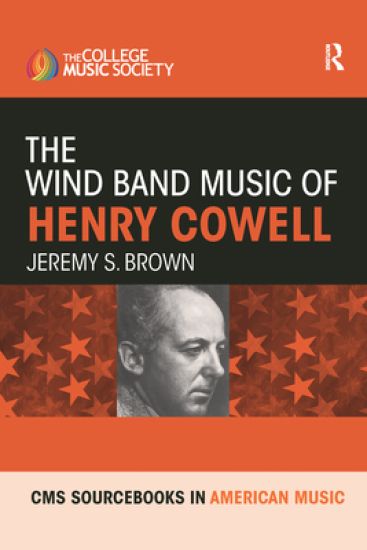
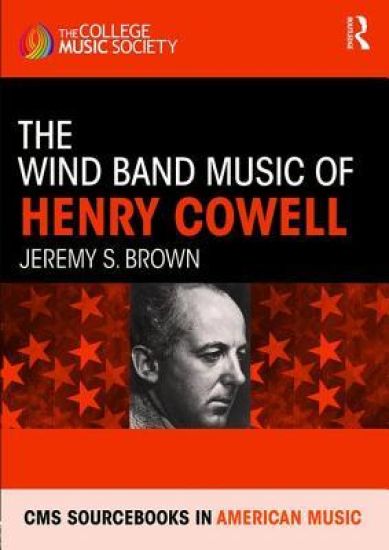
The Wind Band Music of Henry Cowell studies the compositions for wind band by twentieth-century composer Henry Cowell, a significant and prolific figure in American fine art music from 1914-1965. The composer is noteworthy and controversial because of his radical early works, his interest in non-Western musics, and his retrogressive mature style—along with notoriety for his imprisonment in San Quentin on a morals charge. Eleven chapters are organized both topically and chronologically. An introduction, conclusion, series of eight appendices, bibliography, and discography complete this comprehensive study, along with an audio playlist of representative works, hosted on the CMS website.
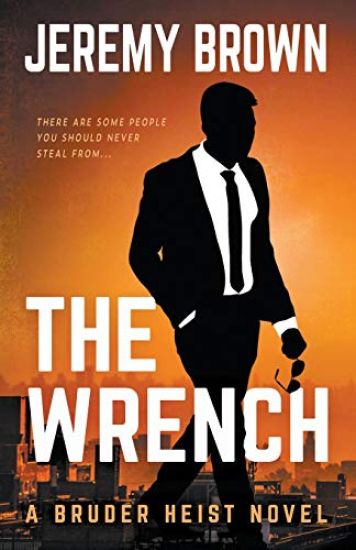
Former Delta operator Patrick Darwin leads Phalanx Security's best private security team, running protection details with Cal Wafer, former SEAL Team Six sniper, and Gabe Henderson, former Detroit SWAT assaulter. They're rotating out of Baghdad when VIP client Martin Lindy demands immediate protection along the Texas/Mexico border, where he and his crew are spending tax dollars building a virtual fence. Sounds like a paid vacation. Then they run into Maro, a Cuban expatriate trained by the Soviets to kill Afghans. Now he's a mercenary working for the Luna Cartel, protecting drug shipments and dismembering troublemakers with his Russian entrenching shovel. On the hostile line in the sand between Texas and Mexico, Maro fights for money and the hell of it, using brutal guerrilla tactics to get what he wants. No way these new boys are going to stop him. But he's never fought a crew like Darwin's before--Maro and his cartel lords better prepare for a level of professional warfare they have never seen.
The Wind Band Music of Henry Cowell studies the compositions for wind band by twentieth-century composer Henry Cowell, a significant and prolific figure in American fine art music from 1914-1965. The composer is noteworthy and controversial because of his radical early works, his interest in non-Western musics, and his retrogressive mature style—along with notoriety for his imprisonment in San Quentin on a morals charge. Eleven chapters are organized both topically and chronologically. An introduction, conclusion, series of eight appendices, bibliography, and discography complete this comprehensive study, along with an audio playlist of representative works, hosted on the CMS website.
Yakuza. Sex slaves. Blood vendettas.Can't a guy just punch faces in peace?Woody is back for the second round of the knockout Woodshed Wallace series, and this time he's forced to protect a scumbag fight promoter from a Yakuza family sworn to collect his debt in blood. Woody is on the brink of becoming a legitimate professional fighter, kicking his criminal past for good, and earning the respect of the woman he loves-all he has to do is survive long enough to enjoy it.Hook and Shoot is the second book in the superb Woodshed Wallace series, which also includes Suckerpunch and Anaconda Choke. If you love raucous thrillers full of non-stop action, hilarious characters, and terrifying enemies, get in the cage and grab your copies now
How do you punch a god in the face?Woody isn't sure, but it probably starts with good footwork.The heavyweight brawler is back for the third round of the killer Woodshed Wallace series, and he's headed to Rio de Janeiro for a reunion with the Arcoverde clan and a fight against his toughest opponent yet: a Brazilian Jiu Jitsu master who counts down before snapping an elbow or knee.Marcela and the Arcoverdes do their best to let Woody focus on the fight, but his instincts are too sharp: the family is in trouble. The crime lord of the deadliest favela in Rio believes he is the embodiment of an Exu, a spirit driven by lust, vice, and crime, and Exu believes Marcela is his queen. He will have her, dead or alive.Under the burning MMA spotlights and within the brutal labyrinths of Rio's slums, Woody must discover what he cherishes most-what he's willing to kill and die for-before it is gone forever.Anaconda Choke is the third book in the superb Woodshed Wallace series, which also includes Suckerpunch and Hook and Shoot. If you love raucous thrillers full of non-stop action, hilarious characters, and terrifying enemies, get in the cage and grab your copies now
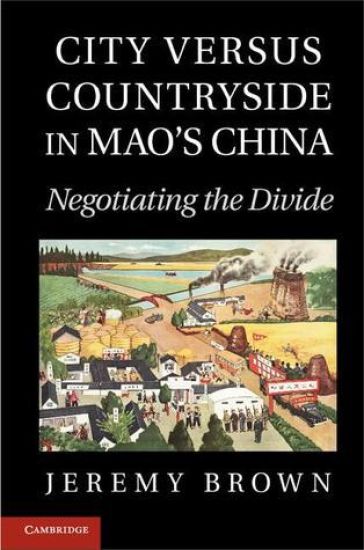
The gap between those living in the city and those in the countryside remains one of China's most intractable problems. As this powerful work of grassroots history argues, the origins of China's rural-urban divide can be traced back to the Mao Zedong era. While Mao pledged to remove the gap between the city worker and the peasant, his revolutionary policies misfired and ended up provoking still greater discrepancies between town and country, usually to the disadvantage of villagers. Through archival sources, personal diaries, untapped government dossiers and interviews with people from cities and villages in northern China, the book recounts their personal experiences, showing how they retaliated against the daily restrictions imposed on them while traversing between the city and the countryside. Vivid and harrowing accounts of forced and illicit migration, the staggering inequity of the Great Leap Famine and political exile during the Cultural Revolution reveal how Chinese people fought back against policies that pitted city dwellers against villagers.
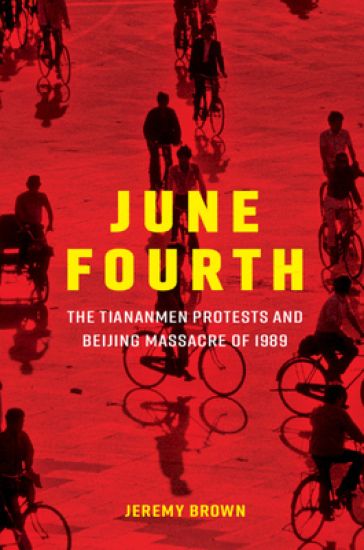
The Tiananmen protests and Beijing massacre of 1989 were a major turning point in recent Chinese history. In this new analysis of 1989, Jeremy Brown tells the vivid stories of participants and victims, exploring the nationwide scope of the democracy movement and the brutal crackdown that crushed it. At each critical juncture in the spring of 1989, demonstrators and decision makers agonized over difficult choices and saw how events could have unfolded differently. The alternative paths that participants imagined confirm that bloodshed was neither inevitable nor necessary. Using a wide range of previously untapped sources and examining how ordinary citizens throughout China experienced the crackdown after the massacre, this ambitious social history sheds fresh light on events that continue to reverberate in China to this day.
The gap between those living in the city and those in the countryside remains one of China's most intractable problems. As this powerful work of grassroots history argues, the origins of China's rural-urban divide can be traced back to the Mao Zedong era. While Mao pledged to remove the gap between the city worker and the peasant, his revolutionary policies misfired and ended up provoking still greater discrepancies between town and country, usually to the disadvantage of villagers. Through archival sources, personal diaries, untapped government dossiers and interviews with people from cities and villages in northern China, the book recounts their personal experiences, showing how they retaliated against the daily restrictions imposed on them while traversing between the city and the countryside. Vivid and harrowing accounts of forced and illicit migration, the staggering inequity of the Great Leap Famine and political exile during the Cultural Revolution reveal how Chinese people fought back against policies that pitted city dwellers against villagers.
The Tiananmen protests and Beijing massacre of 1989 were a major turning point in recent Chinese history. In this new analysis of 1989, Jeremy Brown tells the vivid stories of participants and victims, exploring the nationwide scope of the democracy movement and the brutal crackdown that crushed it. At each critical juncture in the spring of 1989, demonstrators and decision makers agonized over difficult choices and saw how events could have unfolded differently. The alternative paths that participants imagined confirm that bloodshed was neither inevitable nor necessary. Using a wide range of previously untapped sources and examining how ordinary citizens throughout China experienced the crackdown after the massacre, this ambitious social history sheds fresh light on events that continue to reverberate in China to this day.
Within seven chapters, the number 40 becomes a path, a portal to releasing wisdom from within. This wisdom is released via the Formula 40 Days and 40 Nights. Throughout points of faith, philosophy, and fulfillment, the number 40 has been the means to literal and figurative foundations upon which individuals have lived and died and in many ways, been resurrected both in lore and life. It is at the point of the spirit and mind that all people pass through different stages measured by points and time. At these benchmarks, people are assessed along certain degrees of innate and acquired knowledge. The division of 40 has proved to be a point of reasoning and duration upon which enlightenment, punishment, temptation, and redemption have become the focal point of human condition. We all have a purpose. We reach this purpose not solely through learned knowledge but through self-edification and the true meaning of education. Formula 40 Days and 40 Nights makes one consider the word edification rooted in aedificare, Latin for "to build, to erect, or instruct". Following this consideration, is the notion that education - educare comes from Latin meaning "to drive out". From these points, we see there is a clear path to peace of mind and the ease of heart through the interplay of gaining knowledge and sharing wisdom. What and how are we building and what we truly drive out is based in our innate and spiritual capacity to learn, analyze, synthesize, apply, and share. How we best come to this point of equilibrium and sense of community is based in our ability to reach back into the past in order to erect a greater future. This act is done through prayer or meditation. From this meaning of opening our deeper psyche and spiritual eye, we can better comprehend and experience the compensation of positive thinking, avoid negative influences, reward ourselves and celebrate our originality and accomplishments, serve others, and truly reap the benefits and growth generated via forgiveness. It is true that there are a variety of numbers that hold similar if not equal influence over world societies such as 3, 5, 7, 8, and 10, but it is the number 40 which has been influential in so many aspects of world civilization from science to religion to philosophy. 40's application goes from the most minute concepts to the most magnificent. 40 is a number that doesn't simply reveal divisions or levels, but grave amounts of time for growth through strife, triumph, and often times, forgiveness and reconciliation. Within the concept of Formula 40 Days and 40 Nights, there is the point of reaching goals through re-educating ourselves by way of the 4R's. These 4R's are to "Resist", to "Replace", to "Record", and to "Refresh". By following the process of Formula 40 Days and 40 Nights any bad habit can be transformed to the point that you will have to retrain your mind to develop the bad habit again.
Ray Kurt was one of the first guys to step into a sanctioned MMA fight - back when you scrapped four times a night and didn't wrap your hands until you got to the hospital afterward. Now he trains fighters in his Kalamazoo mixed martial arts gym, searching for someone he can take to the top.Young fighting phenom Tallis Dunbar might just be that someone, but Tallis comes attached to a whole lot of trouble. Detroit mob fixer Andru Harp wants Kurt to turn Tallis into an MMA beast tough enough to take on the Chicago mob's fearsome fighter, High Voltage - the same man who nearly killed Tallis' brother a year earlier.For Detroit and Chicago it's all about turf, but for Kurt and Tallis their lives and redemption are balanced on a razor's edge. Kurt is used to fighting with few rules, but now there is only one - survive...
"Highlights that influenza is still a real and present threat and demonstrates the power and limitations of modern medicine." --The Wall Street Journal "A surprisingly compelling and accessible story of one of the world's most deadly diseases. It is timely and interesting, engaging and sobering." --David Gregort, CNN political analyst and former moderator for NBC's Meet the Press A veteran ER doctor explores the troubling, terrifying, and complex history and present-day research of the flu virus, from the origins of the Great Flu that killed millions, to vexing questions such as: are we prepared for the next epidemic, should you get a flu shot, and how close are we to finding a cure?While influenza is now often thought of as a common but mild disease, it still kills more than thirty thousand people in the United States each year. Dr. Jeremy Brown, a veteran ER doctor and director of the Office of Emergency Care Research at the National Institutes of Health, talks with leading epidemiologists, policy makers, and the researcher who first sequenced the genetic building blocks of the original 1918 virus to offer both a comprehensive history and a road map to protect us from the next outbreak. Dr. Brown explores the terrifying and complex history of the flu virus and looks at the controversy over vaccinations and the federal government's role in preparing for pandemic outbreaks. Though a hundred years of advancement in medical research and technology have passed since the 1918 disaster, Dr. Brown warns that many of the most vital questions about the flu virus continue to confound even the leading experts.