In the last decade of his career, the French sociologist Pierre Bourdieu became involved in a series of high-profile political interventions, defending the cause of striking students and workers, speaking out in the name of illegal immigrants, the homeless and the unemployed, challenging the incursion of the market into the field of artistic and intellectual production.The first sustained analysis of Bourdieu's politics, this study seeks to assess the validity of his claims as to the distinctiveness and superiority of his own field theory as a tool of political analysis.
In the last decade of his career, the French sociologist Pierre Bourdieu became involved in a series of high-profile political interventions, defending the cause of striking students and workers, speaking out in the name of illegal immigrants, the homeless and the unemployed, challenging the incursion of the market into the field of artistic and intellectual production.The first sustained analysis of Bourdieu's politics, this study seeks to assess the validity of his claims as to the distinctiveness and superiority of his own field theory as a tool of political analysis.
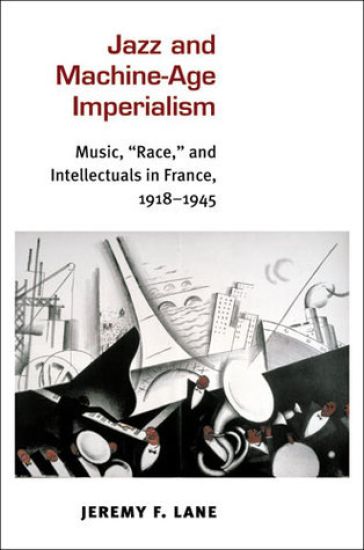
Jeremy F. Lane’s Jazz and Machine-Age Imperialism is a bold challenge to the existing homogenous picture of the reception of American jazz in world-war era France. Lane’s book closely examines the reception of jazz among French-speaking intellectuals between 1918 and 1945 and is the first study to consider the relationships, sometimes symbiotic, sometimes antagonistic, between early white French jazz critics and those French-speaking intellectuals of color whose first encounters with the music in those years played a catalytic role in their emerging black or Creole consciousness. Jazz’s first arrival in France in 1918 coincided with a series of profound shocks to received notions of French national identity and cultural and moral superiority. These shocks, characteristic of the era of machine-age imperialism, had been provoked by the first total mechanized war, the accelerated introduction of Taylorist and Fordist production techniques into European factories, and the more frequent encounters with primitive “Others” in the imperial metropolis engendered by interwar imperialism. Through close readings of the work of early white French jazz critics, alongside the essays and poems of intellectuals of color such as the Nardal sisters, Léon-Gontran Damas, Léopold Sédar Senghor, and René Ménil, Jazz and Machine-Age Imperialism highlights the ways in which the French reception of jazz was bound up with a series of urgent contemporary debates about primitivism, imperialism, anti-imperialism, black and Creole consciousness, and the effects of American machine-age technologies on the minds and bodies of French citizens.
'This beautifully written and lucidly argued study is the most persuasive account of Bourdieu's work yet to be published. Lane illuminates much that can puzzle a foreign readership by expertly situating Bourdieu within a French context. At the same time he points to those aspects of Bourdieu's writing which are of particular relevance to contemporary debates on questions of citizenship and globalisation. He gives a fascinating account of Bourdieu's astonishingly prescient analyses of the impact of the expansion of higher education, the influence of the mass media, the growth of the culture industries, and the changing nature of political and social elites, not just in France, but in the western world.' - Professor Jill Forbes, Queen Mary and Westfield, University of London
Over recent decades concerns at the increased scarcity and precarity of salaried employment have dominated political struggles, theoretical debates and cultural representations in France. This study argues that such concerns are evidence of a profound shift in contemporary French economy, culture and society. Engaging with work in political economy and sociology, the book sketches a new interpretative framework, the better to understand the nature and implications of these profound changes. It examines the challenges such changes have posed to fundamental French republican values, arguing they have opened up a rift between older notions of French republican citizenship and the precarious forms of subjectivity characteristic of post-Fordist labour. The book traces the symptoms of this rift in a range of cinematic and literary representations of the contemporary workplace, as these depict the dilemmas faced, the trajectories followed, and the geographical regions inhabited by French workers of different ages, sexes, social classes, and ethnicities.
Over recent decades concerns at the increased scarcity and precarity of salaried employment have dominated political struggles, theoretical debates and cultural representations in France. This study argues that such concerns are evidence of a profound shift in contemporary French economy, culture and society. Engaging with work in political economy and sociology, the book sketches a new interpretative framework, the better to understand the nature and implications of these profound changes. It examines the challenges such changes have posed to fundamental French republican values, arguing they have opened up a rift between older notions of French republican citizenship and the precarious forms of subjectivity characteristic of post-Fordist labour. The book traces the symptoms of this rift in a range of cinematic and literary representations of the contemporary workplace, as these depict the dilemmas faced, the trajectories followed, and the geographical regions inhabited by French workers of different ages, sexes, social classes, and ethnicities.
Jacques Rancière is almost unique amongst contemporary thinkers in his consistent hostility to sociologically informed modes of interpretation. This hostility is not limited to his detailed critiques of Pierre Bourdieu—it characterises his thinking about politics, emancipation, democracy, history, aesthetics, and social class; it extends into a rejection of Marxist or marxisant modes of analysis. For Rancière’s harshest critics, this hostility to sociology reflects an interpretative negligence on his part, an intellectual, political, or moral flaw. Even his more favorable commentators typically upbraid him for failing to specify the historical conditions of possibility of democratic emancipation. This book argues that such reactions are fundamentally mistaken and fail to grasp what is at stake in Rancière’s rejection of sociological modes of enquiry. This rejection is attributable neither to his negligence nor to some moral flaw, and nor is it merely incidental to his thought. On the contrary, Rancière understands sociology to constitute a problematic, a set of assumptions and interpretative procedures whose blind spots must be identified and thought through in order that the possibility of intellectual and political emancipation, of democracy, and of history can be thought at all. Rancière’s thought thus represents a counter-sociology and his rejection of the sociological problematic serves as the positive condition of possibility of his theory of democracy, equality, and emancipation. This new study both clarifies the nature of Rancière’s critique of the sociological problematic and shows what his counter-sociology allows him to think in the domains of politics, history, and education.