
Kirjojen hintavertailu. Mukana 12 390 323 kirjaa ja 12 kauppaa.

Kirjahaku

Etsi kirjoja tekijän nimen, kirjan nimen tai ISBN:n perusteella.

8 kirjaa tekijältä Jeremy Gilbert, Ewan Pearson

Discographies

Discographies

Jeremy Gilbert; Ewan Pearson

Routledge
1999
sidottu
Experiencing disco, hip hop, house, techno, drum 'n' bass and garage, Discographies plots a course through the transatlantic dance scene of the last last twenty-five years. It discusses the problems posed by contemporary dance culture of both academic and cultural study and finds these origins in the history of opposition to music as a source of sensory pleasure.Discussing such issues as technology, club space. drugs, the musical body, gender, sexuality and pleasure, Discographies explores the ecstatic experiences at the heart of contemporary dance culture. It suggests why politicians and agencies as diverse as the independent music press and public broadcasting should be so hostile to this cultural phenomenon.

Discographies

Discographies

Jeremy Gilbert; Ewan Pearson

Routledge
1999
nidottu
Experiencing disco, hip hop, house, techno, drum 'n' bass and garage, Discographies plots a course through the transatlantic dance scene of the last last twenty-five years. It discusses the problems posed by contemporary dance culture of both academic and cultural study and finds these origins in the history of opposition to music as a source of sensory pleasure.Discussing such issues as technology, club space. drugs, the musical body, gender, sexuality and pleasure, Discographies explores the ecstatic experiences at the heart of contemporary dance culture. It suggests why politicians and agencies as diverse as the independent music press and public broadcasting should be so hostile to this cultural phenomenon.
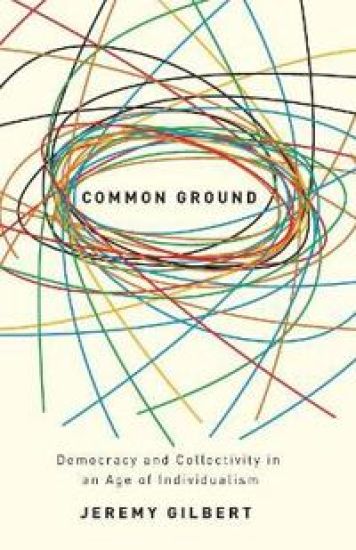
Common Ground

Common Ground

Jeremy Gilbert

Pluto Press
2013
pokkari
Under neoliberalism the cult of individualism reigns supreme, forced upon us through culture, media and politics, it fatally limits our capacity to escape the current crisis of democratic politics. In Common Ground, Jeremy Gilbert asks us to reimagine the philosophical relationship between individuality, collectivity, affect and agency, proposing a radically non-individualist mode of imagining social life. The book considers how opponents of neoliberal hegemony, and of the individualist tradition in Western thought, might protect collective creativity and democratic possibility. Examination of the historical roots of individualism's 'Leviathan logic' and fresh readings of theorists such as Hobbes, Lazzarato, Simondon, Lyotard, Laclau and Deleuze and Guattari, force us to confront longstanding assumptions about the nature of the individual and of collectivity. Exploration of this fundamental faultline in contemporary politics is accompanied by analysis of the different ideas and practices of collectivity, from conservative notions of hierarchical and patriarchal communities to the politics of 'horizontality' and 'the commons' which lie at the heart of radical movements today. Through an understanding of the philosophy shaping contemporary relations and disrupting hegemonic values, we can re-imagine the present moment.
Twenty-First Century Socialism

Twenty-First Century Socialism

Jeremy Gilbert

Polity Press
2020
sidottu
What causes climate change, social breakdown, rampant inequality and the creeping spread of ubiquitous surveillance? Capitalism. What is the only alternative to capitalism? Socialism. Socialism cannot, however, remain static if it is going to save civilisation from these catastrophes. In this urgent manifesto for a 21st century left, Jeremy Gilbert shows that we need a revitalised socialist politics that learns from the past to adapt to contemporary challenges. He argues that socialism must overcome its industrial origins and give priority to an environmental agenda. In an age of global networks, digital technology and instant communication, central government diktat and restrictions on free speech and movement must be jettisoned. We need to control the economy rather than let it control us - but we must do this by empowering workers, citizens and communities to run their world their way. It’s time to take back the wealth, the services and the platforms that our own energy has built. In the digital age, it’s time for a new socialism.
Twenty-First Century Socialism

Twenty-First Century Socialism

Jeremy Gilbert

Polity Press
2020
nidottu
What causes climate change, social breakdown, rampant inequality and the creeping spread of ubiquitous surveillance? Capitalism. What is the only alternative to capitalism? Socialism. Socialism cannot, however, remain static if it is going to save civilisation from these catastrophes. In this urgent manifesto for a 21st century left, Jeremy Gilbert shows that we need a revitalised socialist politics that learns from the past to adapt to contemporary challenges. He argues that socialism must overcome its industrial origins and give priority to an environmental agenda. In an age of global networks, digital technology and instant communication, central government diktat and restrictions on free speech and movement must be jettisoned. We need to control the economy rather than let it control us - but we must do this by empowering workers, citizens and communities to run their world their way. It’s time to take back the wealth, the services and the platforms that our own energy has built. In the digital age, it’s time for a new socialism.
Anticapitalism and Culture

Anticapitalism and Culture

Jeremy Gilbert

Berg Publishers
2008
sidottu
What does 'anticapitalism' really mean for the politics and culture of the twenty-first century?Anticapitalism is an idea which, despite going global, remains rooted in the local, persisting as a loose collection of grassroots movements and actions. Anticapitalism needs to develop a coherent and cohering philosophy, something which cultural theory and the intellectual legacy of the New Left can help to provide, notably through the work of key radical thinkers, such as Ernesto Laclau, Stuart Hall, Antonio Negri, Gilles Deleuze and Judith Butler. Anticapitalism and Culture argues that there is a strong relationship between the radical tradition of cultural studies and the new political movements which try to resist corporate globalization. Indeed, the two need each other: whilst theory can shape and direct the huge diversity of anticapitalist activism, the energy and sheer political engagement of the anticapitalist movement can breathe new life into cultural studies.
Anticapitalism and Culture

Anticapitalism and Culture

Jeremy Gilbert

Berg Publishers
2008
nidottu
What does 'anticapitalism' really mean for the politics and culture of the twenty-first century?Anticapitalism is an idea which, despite going global, remains rooted in the local, persisting as a loose collection of grassroots movements and actions. Anticapitalism needs to develop a coherent and cohering philosophy, something which cultural theory and the intellectual legacy of the New Left can help to provide, notably through the work of key radical thinkers, such as Ernesto Laclau, Stuart Hall, Antonio Negri, Gilles Deleuze and Judith Butler. Anticapitalism and Culture argues that there is a strong relationship between the radical tradition of cultural studies and the new political movements which try to resist corporate globalization. Indeed, the two need each other: whilst theory can shape and direct the huge diversity of anticapitalist activism, the energy and sheer political engagement of the anticapitalist movement can breathe new life into cultural studies.
Hegemony Now

Hegemony Now

Alex Williams; Jeremy Gilbert

Verso Books
2022
sidottu
Today power is in the hands of Wall Street and Silicon Valley. How do we understand this transformation in power? And what can we do about it?We cannot change anything until we have a better understanding of how power works, who holds it, and why that matters. Through upgrading the concept of hegemony-understanding the importance of passive consent; the complexity of political interests; and the structural force of technology-Jeremy Gilbert and Alex Williams offer us an updated theory of power for the twenty-first century.Hegemony Now explores how these forces came to control our world. The authors show how they have shaped the direction of politics and government as well as the neoliberal economy to benefit their own interests. However, this dominance is under threat. Following the 2008 financial crisis, a new order emerged in which the digital platform is the central new technology of both production and power. This offers new opportunities for counter hegemonic strategies to win back power. Hegemony Now outlines a dynamic socialist strategy for the twenty-first century.