Kirjojen hintavertailu. Mukana 11 627 220 kirjaa ja 12 kauppaa.

Kirjahaku

Etsi kirjoja tekijän nimen, kirjan nimen tai ISBN:n perusteella.

9 kirjaa tekijältä Jeremy Horder

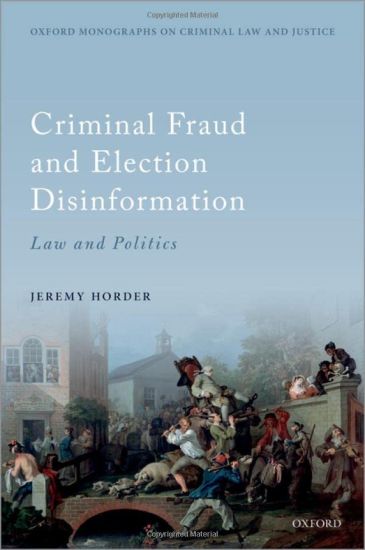
Criminal Fraud and Election Disinformation

Criminal Fraud and Election Disinformation

Jeremy Horder

Oxford University Press
2022
sidottu
Criminal Fraud and Election Disinformation is about the state's approach to fraud and distortion of the truth in politics, especially during election campaigns. Deliberate mischaracterisation of political opponents and their policies has always been a part of politics; however, lying, dishonesty, and distortion of the facts remain morally wrong and have the potential to obstruct important political interests. For example, a false or misleading claim publicised about an election candidate may lead someone to lose an election that they might otherwise have won. So, does-and should-the law seek to provide protection from the risk of this happening, by directly prohibiting the making of false or misleading political claims, or by obliging internet platforms to censor such content? In attempting to answer this question, Jeremy Horder draws a key distinction between what is called 'political viewpoint' fraud and 'electoral participation' fraud. In the interests of protecting freedom of speech, false or misleading claims (disinformation) involving political viewpoint content should be tolerated, not only by the criminal law but also by the internet platforms which host political content. By contrast, in the interests of preserving the integrity of democratic electoral processes, disinformation involving electoral participation information should be prohibited by the criminal law and censored by internet platforms. This book explains how the criminal law in various jurisdictions frequently prohibits false or misleading political claims falling into both categories of disinformation, instead of concentrating on electoral participation fraud. By contract, the right response to political viewpoint disinformation is the provision of more information that challenges people to question their beliefs and prejudices.
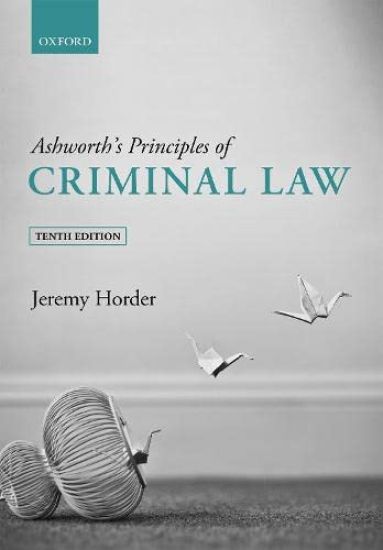
Ashworth's Principles of Criminal Law

Ashworth's Principles of Criminal Law

Jeremy Horder

Oxford University Press
2022
nidottu
Ashworth's Principles of Criminal Law, now in its tenth edition, takes a distinctive approach to the subject of criminal law, whilst still covering all of the vital topics found on criminal law courses. Uniquely theoretical, it begins with an exploration of the underlying principles and theoretical foundations of the criminal law, givng the reader the necessary context and tools to critically engage with and analyse the law in the later chapters. This is essential reading for students seeking a sophisticated and critically engaging exploration of the subject. Digital Formats The tenth edition is available for students and institutions to purchase in a variety of formats. The e-book offers a mobile experience and convenient access along with functionality tools, navigation features and links that offer extra learning support: www.oxfordtextbooks.co.uk/ebooks This edition is supported by online resources, including: - Additional chapters on bribery and money laundering, public order offences, and communication offences - Links to useful websites
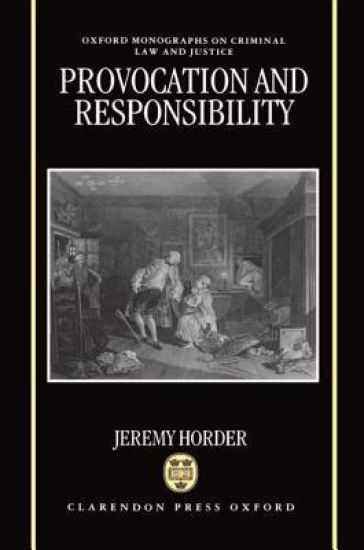
Provocation and Responsibility

Provocation and Responsibility

Jeremy Horder

Clarendon Press
1992
sidottu
Provocation and Responsibility breaks new ground by drawing on historical and philosophical sources not normally linked in analysis of the criminal law, to provide the first detailed study of the effect of provocation on culpability in morality and law. It traces the fascinating history and colourful development of the legal doctrine of provocation, right up to present-day controversies over the scope of the doctrine's application in murder cases. These developments are illuminated throughout by setting them in the context of the changing moral and philosophical understanding of anger, its effect on responsibility, and the role it plays in the human character.
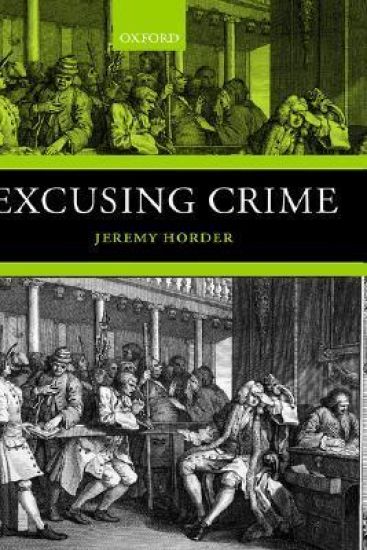
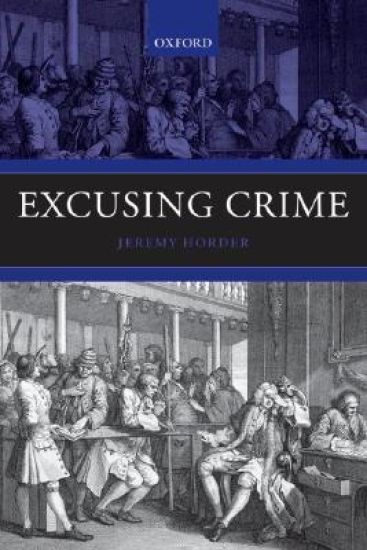
Excusing Crime

Excusing Crime

Jeremy Horder

Oxford University Press
2004
sidottu
When should someone who may have intentionally or knowingly committed criminal wrongdoing be excused? Excusing Crime examines what excusing conditions are, and why familiar excuses, such as duress, are thought to fulfil those conditions. The 'classical' view of excuses sees them as rational defects (such as mistake) in the motive force behind an action, but contrasts them with 'denials of responsibility', such as insanity, where the rational defect in that motive force is attributable to a mental defect in the agent him- or herself. This classical view of excuses has a long heritage, and is enshrined in different forms in many of the world's criminal codes, both liberal and non-liberal; however, in this book, Jeremy Horder contends that it is now time to move beyond it. Horder develops a 'liberal' account of excuses, arguing that the 'classical' distinction between rational defects and 'denials of responsibility' is too sharp, and also that the classical view of excuses is too narrow. He contends that it can be right to treat claims as excusatory even if they rely on a combination of elements of rational defect in the motive force behind the action, even if that defect is in part attributable to a mental deficiency in the agent him or herself ('diminished capacity'). Further, he argues that there can be a sound case for excuse even when people can give full rational assent to their actions, such as when they could not reasonably have been expected to do more than what they did to avoid committing wrongdoing ('due diligence'), or, more rarely, when their conscience understandably left them with no moral freedom to do other than commit the wrong ('demands-of-conscience').
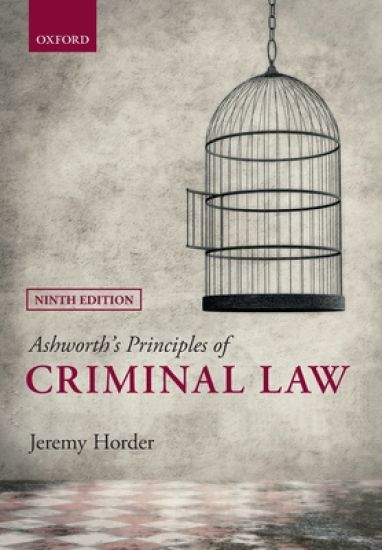
Ashworth's Principles of Criminal Law

Ashworth's Principles of Criminal Law

Jeremy Horder

Oxford University Press
2019
nidottu
Ashworth's Principles of Criminal Law, now in its ninth edition, takes a distinctive approach to the subject of criminal law, whilst still covering all of the vital topics found on criminal law courses. Uniquely theoretical, it seeks to enlighten the reader as to the underlying principles and theoretical foundations of the criminal law, critically engaging readers by contextualizing and analysing the law. This is essential reading for students seeking a sophisticated and critically engaging exploration of the subject. Online Resources The text is accompanied by online resources housing a full bibliography as well as a selection of useful web links.
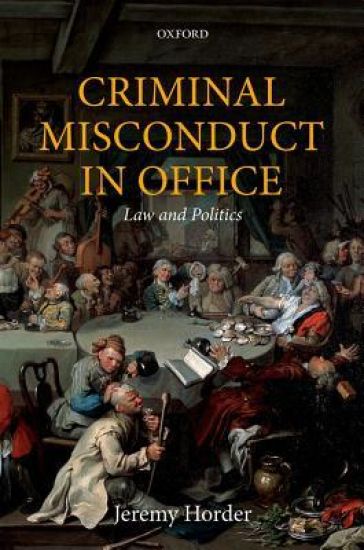
Criminal Misconduct in Office

Criminal Misconduct in Office

Jeremy Horder

Oxford University Press
2018
sidottu
Should the criminal law be used to deter and punish corruption in politics: from employing family members at public expense to improper spending on elections, lobbying, and cronyism? How did so many MPs avoid facing charges after the 2009 government expenses scandal? In this book, Jeremy Horder tackles these questions and more. As well as offering the first treatment of the history, philosophy, and politics of the application of the offence of misconduct in office to Members of Parliament in England and Wales, Horder explains how political corruption might be dealt with in future, and how politicians could be held accountable for their actions so that they are deterred from betraying the public's trust. Use of the criminal law should not be the sole or even the main way to remedy all corruption in politics. Nevertheless, for too long the offence of misconduct in a public office has had an ambiguous status in the political realm. If we are to preserve the good health of government it must be seen as a constitutional fundamental. A charge of misconduct provides a way in which corrupt conduct on the part of legislators can be punished with an appropriate label, holding them to account for the misuse of power by reference to the standards of ordinary people. When other - civil law or regulatory - means prove insufficient, it should be possible for ordinary members of a jury, and not for Parliamentarians or other officials, to decide whether, for example, the expenditure of public money on legislators' private income and benefits amounts to a criminal abuse of the public's trust. This book offers an authoritative and accessible account of a 'bottom-up' (jury standards-led), as opposed to a 'top-down' (officials applying their own standards), approach to the role of the criminal law in constitutional contexts.
Excusing Crime

Excusing Crime

Jeremy Horder

Oxford University Press
2007
nidottu
When should someone who may have intentionally or knowingly committed criminal wrongdoing be excused? Excusing Crime examines what excusing conditions are, and why familiar excuses, such as duress, are thought to fulfil those conditions. The 'classical' view of excuses sees them as rational defects (such as mistake) in the motive force behind an action, but contrasts them with 'denials of responsibility', such as insanity, where the rational defect in that motive force is attributable to a mental defect in the agent him- or herself. This classical view of excuses has a long heritage, and is enshrined in different forms in many of the world's criminal codes, both liberal and non-liberal; however, in this book, Jeremy Horder contends that it is now time to move beyond it. Horder develops a 'liberal' account of excuses, arguing that the 'classical' distinction between rational defects and 'denials of responsibility' is too sharp, and also that the classical view of excuses is too narrow. He contends that it can be right to treat claims as excusatory even if they rely on a combination of elements of rational defect in the motive force behind the action, even if that defect is in part attributable to a mental deficiency in the agent him or herself ('diminished capacity'). Further, he argues that there can be a sound case for excuse even when people can give full rational assent to their actions, such as when they could not reasonably have been expected to do more than what they did to avoid committing wrongdoing ('due diligence'), or, more rarely, when their conscience understandably left them with no moral freedom to do other than commit the wrong ('demands-of-conscience').
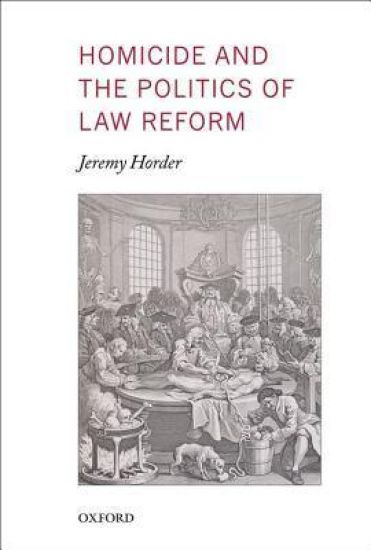
Homicide and the Politics of Law Reform

Homicide and the Politics of Law Reform

Jeremy Horder

Oxford University Press
2012
sidottu
What makes murder, murder? How should we understand the difference between intentional and reckless killing? Should offenders be punished differently according to the perceived severity of their crime and when should they be excused? These questions are the topic of intense debate within legal circles and beyond in the UK, the US, and the rest of world. Jeremy Horder's role as the Law Commissioner for England and Wales on criminal law has given him unique insight into these questions and the debates surrounding them. Here he analyses the recent political and legal reform movements, offering a political history of homicide law reform from the 19th century to the modern era. Using homicide as a starting point, Horder raises deeper questions of who is and should be responsible for making and changing the law. What role should there be for expert bodies, judges, and politicians? What role should there be for the general public? These questions invoke strong emotional responses. Horder argues that comprehensive research into, and a degree of difference to, public opinion on the scope of homicide is essential to the reform process. It is essential principally as a means of conferring true legitimacy on homicide reform in a democracy. Elite or expert opinion alone will never authentically secure such legitimacy. Offering an insider's view into the processes of achieving law reform, Horder expresses criticism of a system that excludes the vast majority of people from consultation on reform of the laws that govern them.
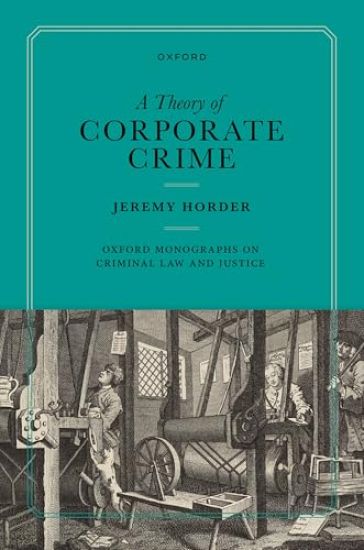
A Theory of Corporate Crime

A Theory of Corporate Crime

Jeremy Horder

Oxford University Press
2026
sidottu
How should criminal law be used to address corporate misconduct effectively? Through a doctrinal and theoretical analysis, A Theory of Corporate Crime puts forward a defence of the 'failure to prevent' model of corporate liability and its liberal-welfarist framework, as a key part of the answer to that question. Delving into its conceptual and moral foundations, this book contrasts the failure-to-prevent model with the traditional identification doctrine and other rival theories, revealing its relative advantages for addressing wrongdoing associated with medium and large-sized companies. It critically evaluates recent legislative developments, including the Economic Crime and Corporate Transparency Act 2023, and traces the shift in emphasis from classical liberal principles towards a liberal-welfarist framework. Subsequent chapters analyze key defenses to corporate crime and the attribution of wrongdoing to corporate entities. A Theory of Corporate Crime argues that addressing serious corporate wrongdoing requires more than punitive sanctions. Instead of relying solely on punishment, legal systems should prioritize rehabilitating the corporation and promoting its reintegration as a socially responsible corporate citizen.