Kirjojen hintavertailu. Mukana 11 504 992 kirjaa ja 12 kauppaa.

Kirjahaku

Etsi kirjoja tekijän nimen, kirjan nimen tai ISBN:n perusteella.

16 kirjaa tekijältä Jeremy Rifkin

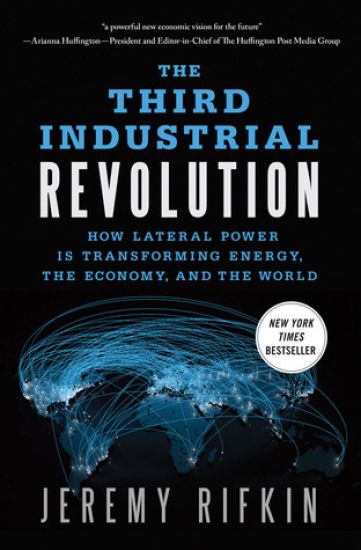
The Third Industrial Revolution

The Third Industrial Revolution

Jeremy Rifkin

Palgrave Macmillan
2015
nidottu
With the KeystonePipelinedominating the news, and America's addiction to oil showing no signs of waning, it is more urgent than ever that we reconsider our energy needs in light of economic reality. In this New York Times bestseller, Jeremy Rifkin explores how Internet technology and renewable energy are merging to create a powerful new engine of economic growth, wherein hundreds of millions of people will produce their own green energy in their homes, offices, and factories and share it with each other in an "energy Internet." This process will usher in a fundamental reordering of human relationships, from hierarchical to lateral, that will impact the way we conduct commerce, govern society, educate our children, and engage in civic life. The Third Industrial Revolution is an insider's account of the next great economic era, including a look into the personalities and players - heads of state, global CEOs, social entrepreneurs, and NGOs - who are pioneering its implementation around the world.
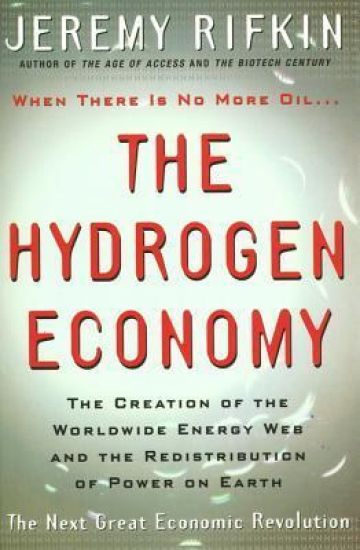
The Hydrogen Economy

The Hydrogen Economy

Jeremy Rifkin

JOHN WILEY AND SONS LTD
2002
sidottu
In The Hydrogen Economy, best-selling author Jeremy Rifkin takes us on an eye-opening journey into the next great commercial era in history. He envisions the dawn of a new economy powered by hydrogen that will fundamentally change the nature of our market, political and social institutions, just as coal and steam power did at the beginning of the industrial age. Rifkin observes that we are fast approaching a critical watershed for the fossil-fuel era, with potentially dire consequences for industrial civilization. Experts had been saying that we had another forty or so years of cheap available crude oil left. Now, however, some of the world’s leading petroleum geologists are suggesting that global oil production could peak and begin a steep decline much sooner, as early as the end of this decade, sending oil prices through the roof. While the fossil fuel era is entering its sunset years, a new energy regime is being born that has the potential to remake civilization. Hydrogen is the most basic and ubiquitous element in the universe. It is the stuff of the stars and of our sun and, when properly harnessed, it is the “forever fuel.” It never runs out and produces no harmful CO2 emissions. Commercial fuel-cells powered by hydrogen are just now being introduced into the market for home, office and industrial use. The major automakers have spent more than two billion dollars developing hydrogen cars, buses, and trucks, and the first mass-produced vehicles are expected to be on the road in just a few years. In the new era, says Rifkin, every human being could become the producer as well as the consumer of his or her own energy – so called “distributed generation.” When millions of end-users connect their fuel-cells into local, regional, and national hydrogen energy webs (HEWs), using the same design principles and smart technologies that made possible the World Wide Web, they can begin to share energy – peer-to-peer – creating a new decentralized form of energy use. Hydrogen has the potential to end the world’s reliance on imported oil and help diffuse the dangerous geopolitical game being played out between Muslim militants and Western nations. It will dramatically cut down on carbon dioxide emissions and mitigate the effects of global warming. And because hydrogen is so plentiful and exists everywhere on earth, every human being could be “empowered,” making it the first truly democratic energy regime in history.
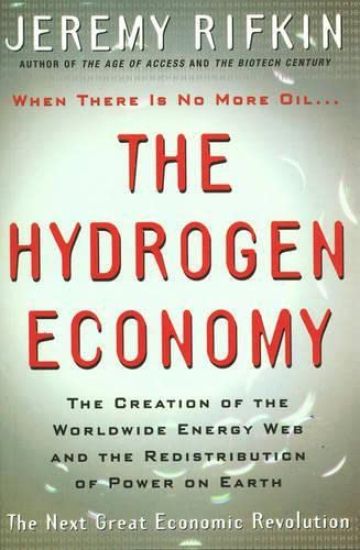
The Hydrogen Economy

The Hydrogen Economy

Jeremy Rifkin

JOHN WILEY AND SONS LTD
2002
nidottu
In The Hydrogen Economy, best-selling author Jeremy Rifkin takes us on an eye-opening journey into the next great commercial era in history. He envisions the dawn of a new economy powered by hydrogen that will fundamentally change the nature of our market, political and social institutions, just as coal and steam power did at the beginning of the industrial age. Rifkin observes that we are fast approaching a critical watershed for the fossil-fuel era, with potentially dire consequences for industrial civilization. Experts had been saying that we had another forty or so years of cheap available crude oil left. Now, however, some of the world’s leading petroleum geologists are suggesting that global oil production could peak and begin a steep decline much sooner, as early as the end of this decade, sending oil prices through the roof. While the fossil fuel era is entering its sunset years, a new energy regime is being born that has the potential to remake civilization. Hydrogen is the most basic and ubiquitous element in the universe. It is the stuff of the stars and of our sun and, when properly harnessed, it is the “forever fuel.” It never runs out and produces no harmful CO2 emissions. Commercial fuel-cells powered by hydrogen are just now being introduced into the market for home, office and industrial use. The major automakers have spent more than two billion dollars developing hydrogen cars, buses, and trucks, and the first mass-produced vehicles are expected to be on the road in just a few years. In the new era, says Rifkin, every human being could become the producer as well as the consumer of his or her own energy – so called “distributed generation.” When millions of end-users connect their fuel-cells into local, regional, and national hydrogen energy webs (HEWs), using the same design principles and smart technologies that made possible the World Wide Web, they can begin to share energy – peer-to-peer – creating a new decentralized form of energy use. Hydrogen has the potential to end the world’s reliance on imported oil and help diffuse the dangerous geopolitical game being played out between Muslim militants and Western nations. It will dramatically cut down on carbon dioxide emissions and mitigate the effects of global warming. And because hydrogen is so plentiful and exists everywhere on earth, every human being could be “empowered,” making it the first truly democratic energy regime in history.
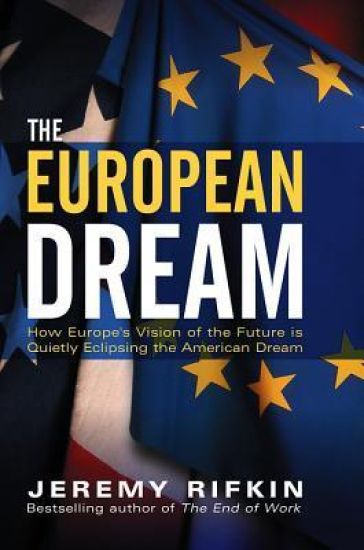
The European Dream

The European Dream

Jeremy Rifkin

Polity Press
2004
nidottu
At one time the American Dream was the ideal and envy of the world. But today, at the dawn of the new Millennium, Europe is pointing a new way to the future. In this major new book, best-selling author Jeremy Rifkin argues that Europe has a vision of its own and is overtaking America as the world’s next superpower. The American Dream was based on economic growth, personal wealth and independence. It was synonymous with love of country and patriotism, frontier mentality and the unbridled exercise of power. Yet what were once considered prime virtues - cherished and idealised not only in America but throughout the world - are increasingly seen by many as drawbacks and even impediments. But while the American Dream tires and languishes in the past, a new European Dream is being born. Today we see a new set of values emerging which are focused on sustainable development, quality of life and multilateralism. More cosmopolitan and less concerned with the brute exercise of power, the European Dream is better positioned to accommodate the many forces that are propelling us into a more interconnected and interdependent world. Where does Britain fit into this story? The British find themselves betwixt and between a fading American Dream and a newly emerging European Dream which is gaining the upper hand in our contemporary global age. Rifkin argues that Britain is uniquely positioned to play a bridge role between Europe and America and has the potential to help create a synergy between the two superpowers of the 21st century. But in order to exercise any real influence in world affairs, Britain must choose to be part of a larger political entity. In a globally connected world, no people can exist any longer as an island unto themselves. The only question for Britain is whether it will make its home with America or with Europe.
The Empathic Civilization

The Empathic Civilization

Jeremy Rifkin

Polity Press
2010
sidottu
In this sweeping new interpretation of the history of civilization, bestselling author Jeremy Rifkin looks at the evolution of empathy and the profound ways that it has shaped our development-and is likely to determine our fate as a species. Today we face unparalleled challenges in an energy-intensive and interconnected world that will demand an unprecedented level of mutual understanding among diverse peoples and nations. Do we have the capacity and collective will to come together in a way that will enable us to cope with the great challenges of our time? In this remarkable book Jeremy Rifkin tells the dramatic story of the extension of human empathy from the rise of the first great theological civilizations, to the ideological age that dominated the 18th and 19th centuries, the psychological era that characterized much of the 20th century and the emerging dramaturgical period of the 21st century. The result is a new social tapestry-The Empathic Civilization-woven from a wide range of fields. Rifkin argues that at the very core of the human story is the paradoxical relationship between empathy and entropy. At various times in history new energy regimes have converged with new communication revolutions, creating ever more complex societies that heightened empathic sensitivity and expanded human consciousness. But these increasingly complicated milieus require extensive energy use and speed us toward resource depletion. The irony is that our growing empathic awareness has been made possible by an ever-greater consumption of the Earth's resources, resulting in a dramatic deterioration of the health of the planet. If we are to avert a catastrophic destruction of the Earth's ecosystems, the collapse of the global economy and the possible extinction of the human race, we will need to change human consciousness itself-and in less than a generation. Rifkin challenges us to address what may be the most important question facing humanity today: Can we achieve global empathy in time to avoid the collapse of civilization and save the planet? One of the most popular social thinkers of our time, Jeremy Rifkin is the bestselling author of The European Dream, The Hydrogen Economy¸ The End of Work, The Biotech Century, and The Age of Access. He is the president of the Foundation on Economic Trends in Washington, D.C.
The Empathic Civilization

The Empathic Civilization

Jeremy Rifkin

Polity Press
2010
nidottu
In this sweeping new interpretation of the history of civilization, bestselling author Jeremy Rifkin looks at the evolution of empathy and the profound ways that it has shaped our development-and is likely to determine our fate as a species. Today we face unparalleled challenges in an energy-intensive and interconnected world that will demand an unprecedented level of mutual understanding among diverse peoples and nations. Do we have the capacity and collective will to come together in a way that will enable us to cope with the great challenges of our time? In this remarkable book Jeremy Rifkin tells the dramatic story of the extension of human empathy from the rise of the first great theological civilizations, to the ideological age that dominated the 18th and 19th centuries, the psychological era that characterized much of the 20th century and the emerging dramaturgical period of the 21st century. The result is a new social tapestry-The Empathic Civilization-woven from a wide range of fields. Rifkin argues that at the very core of the human story is the paradoxical relationship between empathy and entropy. At various times in history new energy regimes have converged with new communication revolutions, creating ever more complex societies that heightened empathic sensitivity and expanded human consciousness. But these increasingly complicated milieus require extensive energy use and speed us toward resource depletion. The irony is that our growing empathic awareness has been made possible by an ever-greater consumption of the Earth's resources, resulting in a dramatic deterioration of the health of the planet. If we are to avert a catastrophic destruction of the Earth's ecosystems, the collapse of the global economy and the possible extinction of the human race, we will need to change human consciousness itself-and in less than a generation. Rifkin challenges us to address what may be the most important question facing humanity today: Can we achieve global empathy in time to avoid the collapse of civilization and save the planet? One of the most popular social thinkers of our time, Jeremy Rifkin is the bestselling author of The European Dream, The Hydrogen Economy¸ The End of Work, The Biotech Century, and The Age of Access. He is the president of the Foundation on Economic Trends in Washington, D.C.
Biotech Century

Biotech Century

Jeremy Rifkin

Tarcher/Putnam,US
1999
nidottu
In this seminal book, Jeremy Rifkin explores the epic marriage between computer technology and genetic engineering, and the historic transition into the Age of Biotechnology. Already, Rifkin explains, our economy is undergoing a massive shift away from the Industrial Age and into an era in which giant life-science corporations are fashioning a bioindustrial world. Humanity is on the brink of wielding greater control over the shape of life--how we are born; how our food supply is created; the traits our children may have--than has ever been imagined. But with each step into this new era, we must ask ourselves: At what cost?
The Age of Resilience: Reimagining Existence on a Rewilding Earth
A sweeping new interpretation of the history of civilization and a transformative vision of how our species will thrive on an unpredictable Earth.The viruses keep coming, the climate is warming, and the Earth is rewilding. Our human family has no playbook to address the mayhem unfolding around us. If there is a change to reckon with, argues the renowned economic and social theorist Jeremy Rifkin, it's that we are beginning to realize that the human race never had dominion over the Earth and that nature is far more formidable than we thought, while our species seems much smaller and less significant in the bigger picture of life on Earth, undermining our long-cherished worldview. The Age of Progress, once considered sacrosanct, is on a deathwatch while a powerful new narrative, the Age of Resilience, is ascending. In The Age of Resilience, Rifkin takes us on a new journey beginning with how we reconceptualize time and navigate space. During the Age of Progress, efficiency was the gold standard for organizing time, locking our species into the quest to optimize the expropriation, commodification, and consumption of the Earth's bounty, at ever-greater speeds and in ever-shrinking time intervals, with the objective of increasing the opulence of human society, but at the expense of the depletion of nature. Space, observes Rifkin, became synonymous with passive natural resources, while a principal role of government and the economy was to manage nature as property. This long adhered to temporal-spatial orientation, writes Rifkin, has taken humanity to the commanding heights as the dominant species on Earth and to the ruin of the natural world. In the emerging era, says Rifkin, efficiency is giving way to adaptivity as the all-encompassing temporal value while space is perceived as animated, self-organizing, and fluid. A younger generation, in turn, is pivoting from growth to flourishing, finance capital to ecological capital, productivity to regenerativity, Gross Domestic Product to Quality of Life Indicators, hyper-consumption to eco-stewardship, globalization to glocalization, geopolitics to biosphere politics, nation-state sovereignty to bioregional governance, and representative democracy to citizen assemblies and distributed peerocracy. Future generations, suggests Rifkin, will likely experience existence less as objects and structures and more as patterns and processes and come to understand that each of us is literally an ecosystem made up of the microorganisms and elements that comprise the hydrosphere, lithosphere, atmosphere, and biosphere. The autonomous self of the Age of Progress is giving way to the ecological self of the Age of Resilience. The now worn scientific method that underwrote the Age of Progress is also falling by the wayside, making room for a new approach to science called Complex Adaptive Systems modeling. Likewise, detached reason is losing cachet while empathy and biophilia become the norm. At a moment when the human family is deeply despairing of the future, Rifkin gives us a window into a promising new world and a radically different future that can bring us back into nature's fold, giving life a second chance to flourish on Earth.
The Green New Deal

The Green New Deal

Jeremy Rifkin

St Martin's Press
2019
sidottu
While the Green New Deal has become a lightning rod in the political sphere, there is a parallel movement emerging within the business community that will shake the very foundation of the global economy in coming years. The key sectors that make up the infrastructure of the economy are fast-decoupling from fossil fuels in favor of solar and wind energies that are becoming ever-cheaper. New studies are sounding the alarm about the prospect of 100 trillion dollars in stranded assets that are creating a carbon bubble likely to burst by 2028 - causing the collapse of the fossil fuel civilisation. The marketplace is speaking and governments will need to respond if they are to survive and prosper. In The Green New Deal, New York Times bestselling author and renowned economic theorist Jeremy Rifkin delivers the political narrative and economic plan for the Green New Deal that we need at this critical moment in history. The concurrence of a stranded fossil fuel assets bubble and a green political vision opens up the possibility of a massive shift to a post-carbon ecological era, in time to prevent a temperature rise that will tip us over the edge into runaway climate change. With twenty-five years of experience implementing Green New Deal-style transitions for both the European Union and the People’s Republic of China, Rifkin offers his vision for how to transform the global economy and save life on Earth.
The Green New Deal: Why the Fossil Fuel Civilization Will Collapse by 2028, and the Bold Economic Plan to Save Life on Earth
An urgent plan to confront climate change, transform the American economy, and create a green post-fossil fuel culture. A new vision for America's future is quickly gaining momentum. Facing a global emergency, a younger generation is spearheading a national conversation around a Green New Deal and setting the agenda for a bold political movement with the potential to revolutionize society. Millennials, the largest voting bloc in the country, are now leading on the issue of climate change. While the Green New Deal has become a lightning rod in the political sphere, there is a parallel movement emerging within the business community that will shake the very foundation of the global economy in coming years. Key sectors of the economy are fast-decoupling from fossil fuels in favor of ever cheaper solar and wind energies and the new business opportunities and employment that accompany them. New studies are sounding the alarm that trillions of dollars in stranded fossil fuel assets could create a carbon bubble likely to burst by 2028, causing the collapse of the fossil fuel civilization. The marketplace is speaking, and governments will need to adapt if they are to survive and prosper. In The Green New Deal, New York Times bestselling author and renowned economic theorist Jeremy Rifkin delivers the political narrative and economic plan for the Green New Deal that we need at this critical moment in history. The concurrence of a stranded fossil fuel assets bubble and a green political vision opens up the possibility of a massive shift to a post-carbon ecological era, in time to prevent a temperature rise that will tip us over the edge into runaway climate change. With twenty-five years of experience implementing Green New Deal-style transitions for both the European Union and the People's Republic of China, Rifkin offers his vision for how to transform the global economy and save life on Earth.
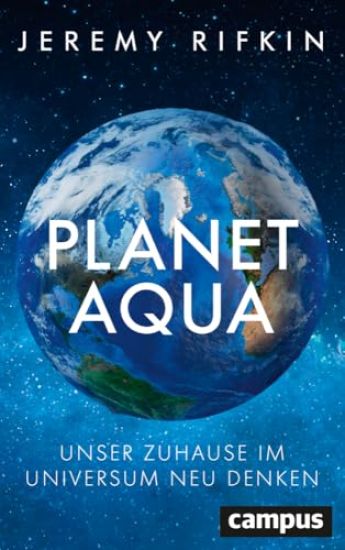
Planet Aqua

Planet Aqua

Jeremy Rifkin

JOHN WILEY AND SONS LTD
2024
sidottu
What would happen if we were to awaken one day and suddenly realize that the world we live in appeared eerily alien, as if we’d been teleported to some other distant world? That frightening prospect is now. Our planetary hydrosphere, which animates all of life on Earth, is rebelling in the wake of a global warming climate, spurring biblical spring floods, devastating summer droughts, heatwaves, and wildfires and powerful autumn hurricanes and typhoons, wreaking havoc on ecosystems and society.For too long we have misjudged the very nature of our existence and to what we owe our lifeline. We have come to believe that we live on a land planet when the reality is that we live on a water planet, and now the Earth’s hydrosphere is rewilding in the throes of a changing climate, taking our species and our fellow creatures into a mass extinction event as it searches for a new equilibrium.Jeremy Rifkin calls on us to rethink our place in the universe and realize that we live on Planet Aqua. He takes us on a new journey into the future where we will need to reassess every aspect of the way we live – how we engage nature, govern society, conceptualize economic life, educate our children, and even orient ourselves in time and space. The next stage in the human journey is to rebrand our home Planet Aqua and learn how to readapt to the waters of life.Underpinned by robust research, this major new work by one of the world’s leading public intellectuals aims to redefine the very core of our existence on Planet Aqua. Also available as an audiobook.
Age of Access

Age of Access

Jeremy Rifkin

Jeremy P Tarcher
2001
nidottu
Visionary activist and author Jeremy Rifkin exposes the real stakes of the new economy, delivering "the clearest summation yet of how the Internet is really changing our lives" (The Seattle Times).Imagine waking up one day to find that virtually every activity you engage in outside your immediate family has become a "paid-for" experience. It's all part of a fundamental change taking place in the nature of business, contends Jeremy Rifkin. After several hundred years as the dominant organizing paradigm of civilization, the traditional market system is beginning to deconstruct. On the horizon looms the Age of Access, an era radically different from any we have known.
The Age of Resilience

The Age of Resilience

Jeremy Rifkin

Swift Press
2023
pokkari
The Age of Resilience: Reimagining Existence on a Rewilding Earth is a wide-ranging look at the political, economic and cultural effects of the global shift from an economy based on efficiency to one based on resilience. Humans have long believed we could force the natural world to adapt to us; only now are we beginning to face the fact that it is we who will have to adapt to survive and thrive in an unpredictable natural world. A massive transformation of our economy (and with it the way we live our lives) has already begun. In The Age of Resilience, Jeremy Rifkin describes this great transformation and its profound effect on the way we think about the meaning of our existence, our economy, and how we govern ourselves as the earth rewilds around us. In The Age of Resilience, Jeremy Rifkin—a world-renowned expert and global governmental advisor on the impact of technological changes on human life and the environment—has written the defining work on the impact of climate change on the way humans organize their lives.