Kirjojen hintavertailu. Mukana 11 627 220 kirjaa ja 12 kauppaa.

Kirjahaku

Etsi kirjoja tekijän nimen, kirjan nimen tai ISBN:n perusteella.

12 kirjaa tekijältä Jeremy Seabrook

Children of Other Worlds

Children of Other Worlds

Jeremy Seabrook

Pluto Press
2001
pokkari
More than 40,000 children die daily in the developing world from avoidable sickness and disease. Tens of millions of children labour in mines, mills and sweatshops, or scavenge for a living on city streets and dumps. In the so-called developed world, children's lives are similarly blighted by drugs, alcohol, sexual abuse and violence. Children of the rich are unhealthily obsessed with consumerist desires while children of the poor suffer from lack of opportunity. The global market is responsible for both of these ills. In Children of Other Worlds Jeremy Seabrook examines the international exploitation of children and exposes the hypocrisy, piety and moral blindness that have informed so much of the debate in the West on the rights of the child. Seabrook insists that the whole question of protecting children's rights must take into consideration the structural abuses of humanity that are inherent in globalisation.
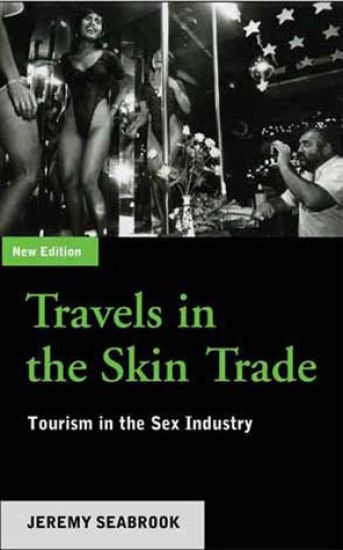
Travels in the Skin Trade

Travels in the Skin Trade

Jeremy Seabrook

Pluto Press
2001
pokkari
Through the words of sex workers and their clients, Jeremy Seabrook reconsiders the popular conception of sex tourism in Asia. Through its examination of the many paradoxes surrounding this controversial subject, Travels in the Skin Trade also sheds new light on the wider and problematic relationship between the North and the South. Press coverage of the sex trade routinely consists of ill-informed, moralising and sensationalist denunciations of the 'industry'. Through the words of sex workers and their clients, Seabrook reconsiders the popular conception of the sex industry and explores the complex relationship between sex and tourism. In so doing he presents an objective, sensitive view of the industry. Through its examination of the many paradoxes surrounding this controversial subject, Travels in the Skin Trade also sheds new light on the wider and problematic relationship between the North and the South.
A World Growing Old

A World Growing Old

Jeremy Seabrook

Pluto Press
2003
pokkari
For the first time in history, the world's population is ageing. For rich countries in the west, economies rely on youthful populations to provide for those who have retired. We face a profound economic and social crisis - how do we care for the elderly when pensions and social security systems are under threat, housing is short and fewer young people are entering the workplace? Yet this is only half the story. Populations in the poorer countries of the South are also ageing. Life-expectancy has increased due the availability of lifesaving medicine. Child mortality has decreased, so people are having smaller families. India will soon have one of the largest populations of over-sixties. The one-child policy in China will similarly lead to a severe imbalance in the age-profile of the people. In A World Grown Old, Jeremy Seabrook examines the real implications of the ageing phenomenon and challenges our preconceptions about how it should be tackled. Arguing that the accumulated skills of the elderly should be employed to enrich society, rather than being perceived as a 'burden', he calls for a radical rethinking of our attitude to population issues, migration, social structures and employment policy.
A World Growing Old

A World Growing Old

Jeremy Seabrook

Pluto Press
2003
sidottu
For the first time in history, the world's population is ageing. For rich countries in the west, economies rely on youthful populations to provide for those who have retired. We face a profound economic and social crisis - how do we care for the elderly when pensions and social security systems are under threat, housing is short and fewer young people are entering the workplace? Yet this is only half the story. Populations in the poorer countries of the South are also ageing. Life-expectancy has increased due the availability of lifesaving medicine. Child mortality has decreased, so people are having smaller families. India will soon have one of the largest populations of over-sixties. The one-child policy in China will similarly lead to a severe imbalance in the age-profile of the people. In A World Grown Old, Jeremy Seabrook examines the real implications of the ageing phenomenon and challenges our preconceptions about how it should be tackled. Arguing that the accumulated skills of the elderly should be employed to enrich society, rather than being perceived as a 'burden', he calls for a radical rethinking of our attitude to population issues, migration, social structures and employment policy.
Cut Out

Cut Out

Jeremy Seabrook

Pluto Press
2016
pokkari
Britain's welfare state, one of the greatest achievements of our post-war reconstruction, was regarded as the cornerstone of modern society. Today, that cornerstone is wilfully being dismantled by a succession of governments, with horrifying consequences. The establishment paints pictures of so-called 'benefit scroungers', the disabled, the sickly and the old. In Cut Out: Living Without Welfare, Jeremy Seabrook speaks to people whose support from the state - for whatever reason - is now being withdrawn, rendering their lives unsustainable. In turns disturbing, eye-opening, and ultimately humanistic, these accounts reveal the reality behind the headlines, and the true nature of British politics today. Published in partnership with the Left Book Club.
Private Worlds

Private Worlds

Jeremy Seabrook

PLUTO PRESS
2023
pokkari
*Shortlisted for The TLS Ackerley Prize 2024* 'Wonderful ... For anyone who has ever dreamt of leaving a small-town childhood behind them, this is going to wring your heart. It certainly did mine'– Neil Bartlett, author of Address Book In 1950s suburban England, a friendship bloomed between Jeremy Seabrook and Michael O’Neill – two gay men coming of age at a time when homosexuality was still a crime. Their relationship was inflected by secrecy and fear; the shadows that had distorted their adolescent years were never wholly dispelled long into their adult life. Lyrical, candid and poignant, this is a tale of sexual identity, working-class history and family drama. A memoir of unparalleled authenticity, Private Worlds is an elegy for a doomed friendship.
Victims of Development

Victims of Development

Jeremy Seabrook

Verso Books
1993
nidottu
This combination of analysis and first-hand reportage looks at the connections between development, economic growth, social justice and the environment-not in theory, but as this tangle of relationships affects people in their daily lives. It is rooted in the experience and struggles of people all over the world-in the Himalayas or on the islands of Malaysia, in the slums of Manila and Delhi or the tenements of Sao Paulo, as well as in the inner-city areas of Liverpool or the council estates of Cornwall. The author argues that the Western path of development has brought at least two intractable problems. The first is the widening chasm between rich and poor, within countries and internationally. The second is the damage to the resource-base of the earth, on which all economic systems depend. With the end of Communism, the dispossessed apparently no longer pose any threat to this kind of "development." Relieved of the threat from the poor, the rich, only too aware of the environmental menace to their well-being, may be tempted to resolve it at the poor's expense. Avoiding this harsh possiblity is the objective of those seeking another form of development: one based upon a decent sufficiency for all, within the limits of what the earth can bear. This book aims to illuminate and champion that struggle.
The Song of the Shirt

The Song of the Shirt

Jeremy Seabrook

C Hurst Co Publishers Ltd
2015
nidottu
Oh, Men, with Sisters dear! Oh, Men, with Mothers and Wives! It is not linen you re wearing out, But human creatures lives! Stitch stitch stitch, In poverty, hunger and dirt, Sewing at once, with a double thread, A Shroud as well as a Shirt. --from The Song of the Shirt by Thomas Hood (1843) Labour in Bangladesh flows like its rivers -- in excess of what is required. Often, both take a huge toll. Labour that costs $1.66 an hour in China and 52 cents in India can be had for a song in Bangladesh -- 18 cents. It is mostly women and children working in fragile, flammable buildings who bring in 70 per cent of the country s foreign exchange. Bangladesh today does not clothe the nakedness of the world, but provides it with limitless cheap garments -- through Primark, Walmart, Benetton, Gap. In elegiac prose, Jeremy Seabrook dwells upon the disproportionate sacrifices demanded by the manufacture of such throwaway items as baseball caps. He shows us how Bengal and Lancashire offer mirror images of impoverishment and affluence. In the eighteenth century, the people of Bengal were dispossessed of ancient skills and the workers of Lancashire forced into labour settlements.In a ghostly replay of traffic in the other direction, the decline of the British textile industry coincided with Bangladesh becoming one of the world s major clothing exporters. With capital becoming more protean than ever, it wouldn t be long before the global imperium readies to shift its sites of exploitation in its nomadic cultivation of profit.
Pauperland

Pauperland

Jeremy Seabrook

C Hurst Co Publishers Ltd
2015
nidottu
In 1797 Jeremy Bentham prepared a map of poverty in Britain, which he called 'Pauperland.' More than two hundred years later, poverty and social deprivation remain widespread in Britain.Yet despite the investigations into poverty by Mayhew, Booth, and in the 20th century, Townsend, it remains largely unknown to, or often hidden from, those who are not poor. Pauperland is Jeremy Seabrook's account of the mutations of poverty over time, historical attitudes to the poor, and the lives of the impoverished themselves, from early Poor Laws till today. He explains how in the medieval world, wealth was regarded as the greatest moral danger to society, yet by the industrial era, poverty was the most significant threat to social order. How did this change come about, and how did the poor, rather than the rich, find themselves blamed for much of what is wrong with Britain, including such familiar-and ancient-scourges as crime, family breakdown and addictions? How did it become the fate of the poor to be condemned to perpetual punishment and public opprobrium, the useful scapegoat of politicians and the media?Pauperland charts how such attitudes were shaped by ill-conceived and ill-executed private and state intervention, and how these are likely to frame ongoing discussions of and responses to poverty in Britain.
Orphans

Orphans

Jeremy Seabrook

C Hurst Co Publishers Ltd
2018
sidottu
Orphans have often been beneficiaries of charity and compassion--but society has also punished, abused and ill-treated them. Attitudes behind this maltreatment are rooted in ideas that those without parents are disruptive, malevolent, and in need of discipline. Drawing on historic documents, interviews and memoirs, Jeremy Seabrook charts history's changing and often loose definitions of 'orphans', and explores their many 'makers'--from natural or man-made catastrophes to the State, charity, and other social forces that have separated children, especially the poor, from their close kin. But this history is not only one of suffering: Orphans also reveals the uncounted millions taken in and loved by relatives, neighbours or strangers. Freed from constraints and driven by insecurity, many orphans--including Nelson Mandela, Marilyn Monroe and Steve Jobs--have led remarkable lives.
Love in a Different Climate

Love in a Different Climate

Jeremy Seabrook

Verso Books
1999
sidottu
In this carefully researched and finely written work, Jeremy Seabrook deals with subjects rarely discussed in Western narratives about South Asia. Going beyond a straightforward contextualisation of the gatoei (lady-boys) in Thailand and the hijara (eunuchs) of India, he unravels the less familiar and more complex territory of homosexual and homoerotic encounters in general, and asks how valid Western models of sexual identity are in the South Asian context, and how effective they might be in dealing with global issues of sexual health, HIV awareness and gender politics.Much of the book is based on interviews which reveal the extent of the complexity at play: wives who traditionally vacate the marital bed to accommodate their husbands' friends; kotis-"passive" male sex partners of men-many of whom will be married but see their relations with the kotis as fulfilling their destinies as males; the fundamentalist politicians who curse the Western influence of "gay liberation" and continue to justify the punishment of life imprisonment for homosexuality; and the activist groups who are working towards a clearer and more helpful understanding of contemporary issues.The first work of its kind on India, Love in a Different Climate reveals how a traditional shrouding in mystery of sexual difference is slowly but surely giving way to a more open and essentially local celebration of that difference.