Kirjojen hintavertailu. Mukana 11 342 296 kirjaa ja 12 kauppaa.

Kirjahaku

Etsi kirjoja tekijän nimen, kirjan nimen tai ISBN:n perusteella.

2 kirjaa tekijältä Jeremy Strick

Jitish Kallat

Jitish Kallat

Jeremy Strick

Yale University Press
2011
sidottu
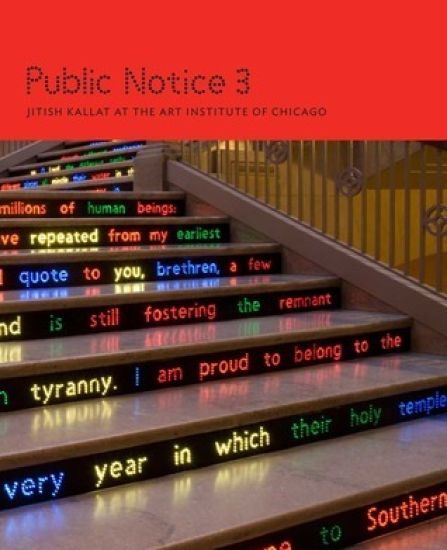
The Swami Vivekananda's speech to the World's Parliament of Religions in Chicago in 1893 is the centerpiece of Indian artist Jitish Kallat's new work, Public Notice 3. The installation went on view at the Art Institute of Chicago on September 11, 2010, exactly 108 years after Vivekananda delivered his groundbreaking address calling for an end to "bigotry and fanaticism." The text of the speech appears on the risers of the Art Institute of Chicago's Grand Staircase where it is illuminated in the five colors—red, orange, yellow, blue, and green—designated by the United States Homeland Security Advisory System to signify threat levels. This companion book, which documents the installation, is the first full-scale exploration of Kallat's work published by a North American institution. Along with an interview with the artist, essays contextualize Public Notice 3 within the space of the installation and evaluate Kallat's oeuvre within an international context.Distributed for the Art Institute of ChicagoExhibition Schedule:The Art Institute of Chicago(09/11/10-09/11/11)
Nairy Baghramian: Modèle Vivant

Nairy Baghramian: Modèle Vivant

Jeremy Strick

DISTRIBUTED ART PUBLISHERS
2024
sidottu
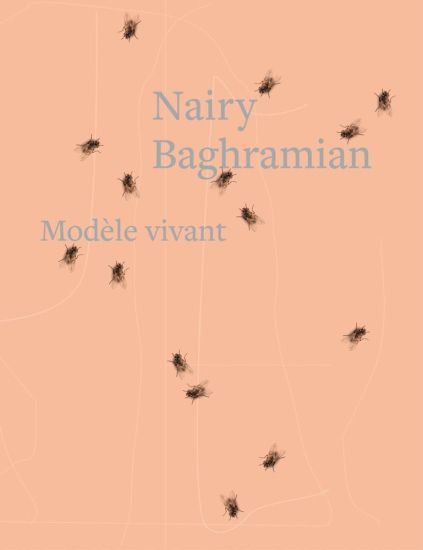
New sculptures and installations that critically examine the formal, social and linguistic roles of live models Over the past three decades, Iranian-born, German-based artist Nairy Baghramian (born 1971) has created sculptures and installations that upend expected modes of presentation and challenge the architectural, social, political and historical contexts that inform them. The new works featured in this publication explore the provisional body as the site of trauma—drawing inspiration from the tradition of the “modèle vivant,” the French term for a live model in an art class. In her "ambivalently abstract" works, the artist takes unconventional approaches to materials associated with sculptural traditions of casting, including aluminum, lead, steel and wax. In conversation with sculptures from the Nasher’s permanent collection by Louise Bourgeois, Henri Matisse, Pablo Picasso and others, Baghramian’s works offer new ways to think about representations of bodies and the unseen labor of models, as well as the linguistic play afforded by different meanings of the word “model” and its linguistic relatives, such as “modulate” and “modify.”