Kirjojen hintavertailu. Mukana 11 342 296 kirjaa ja 12 kauppaa.

Kirjahaku

Etsi kirjoja tekijän nimen, kirjan nimen tai ISBN:n perusteella.

30 kirjaa tekijältä Jeremy Tambling

Opera and the Culture of Fascism

Opera and the Culture of Fascism

Jeremy Tambling

Clarendon Press
1996
sidottu
This study looks at nineteenth - and early twentieth-century opera as part of a culture which produced fascism as a crisis-state, and threatened to extinguish the genre as an influential and contemporary high form of art altogether. Jeremy Tambling highlights the themes of the cultural crisis through a detailed discussion of some dozen operas and a general overview of the works of Wagner, Verdi, Puccini, Strauss, and others, drawing on the writings of Nietzsche, Adorno, Benjamin, and Heidegger, for an understanding of the ideological background. Reading fascism as a political, intellectual, and psychological phenomenon, the author draws on the works of Bataille, Theweleit, and Kristeva, for discussion of proto-fascist and fascist thought, and for its relation to gender-politics. Resisting the clichés about Wagner or Strauss's relationship to the Third Reich, Tambling takes the opera out the hermetically sealed-off state in which it is normally discussed, and presents it as both complicit in, and in opposition to, the reactionary and regressive pressures that made up the `culture of fascism', and those that tried to make opera part of the `fascism of culture'.
Dickens, Nicholas Nickleby, and the Dance of Death
This study of Nicholas Nickleby takes the Dickens novel which is perhaps the least critically discussed, though it is very popular, and examines its appeal and its significance, and finds it one of the most rewarding and powerful of Dickens’s texts.Nicholas Nickleby deals with the abduction and destruction of children, often with the collusion of their parents. It concentrates on this theme in a way which continues from Oliver Twist, describing such oppression, and the resistance to it, in the language of melodrama, of parody and comedy. With chapters on the school-system that Dickens attacks, and its grotesque embodiment in Squeers, and with discussion of how the novel reshapes eighteenth century literary traditions, and such topics as the novel’s comedy, and the concept of the ‘humorist’; and ‘theatricality’ and its debt to Carlyle,, the book delves into the way that the novel explores madness within the city in those whose lives have been fractured, or ruined, as so many have been, and considers the symptoms of hypocrisy in the lives of the oppressors and the oppressed alike; taking hypocrisy as a Dickensian subject which deserves further examination. Dickens, Nicholas Nickleby, and the Dance of Death explores ways in which Dickens draws on medieval and baroque traditions in how he analyses death and its grotesquerie, especially drawing on the visual tradition of the ‘dance of death’ which is referred to here and which is prevalent throughout Dickens’s novels. It shows these traditions to be at the heart of London, and aims to illuminate a strand within Dickens’s thinking from first to last. Drawing on the critical theory of Walter Benjamin, Freud, Nietzsche and Marx, and with close detailed readings of such well-known figures as Mrs Nickleby, Vincent Crummles and his theatrical troupe, and Mr Mantalini, and attention to Dickens’s description, imagery, irony, and sense of the singular, this book is a major study which will help in the revaluation of Dickens’s early novels.
Dickens, Nicholas Nickleby, and the Dance of Death
This study of Nicholas Nickleby takes the Dickens novel which is perhaps the least critically discussed, though it is very popular, and examines its appeal and its significance, and finds it one of the most rewarding and powerful of Dickens’s texts.Nicholas Nickleby deals with the abduction and destruction of children, often with the collusion of their parents. It concentrates on this theme in a way which continues from Oliver Twist, describing such oppression, and the resistance to it, in the language of melodrama, of parody and comedy. With chapters on the school-system that Dickens attacks, and its grotesque embodiment in Squeers, and with discussion of how the novel reshapes eighteenth century literary traditions, and such topics as the novel’s comedy, and the concept of the ‘humorist’; and ‘theatricality’ and its debt to Carlyle,, the book delves into the way that the novel explores madness within the city in those whose lives have been fractured, or ruined, as so many have been, and considers the symptoms of hypocrisy in the lives of the oppressors and the oppressed alike; taking hypocrisy as a Dickensian subject which deserves further examination. Dickens, Nicholas Nickleby, and the Dance of Death explores ways in which Dickens draws on medieval and baroque traditions in how he analyses death and its grotesquerie, especially drawing on the visual tradition of the ‘dance of death’ which is referred to here and which is prevalent throughout Dickens’s novels. It shows these traditions to be at the heart of London, and aims to illuminate a strand within Dickens’s thinking from first to last. Drawing on the critical theory of Walter Benjamin, Freud, Nietzsche and Marx, and with close detailed readings of such well-known figures as Mrs Nickleby, Vincent Crummles and his theatrical troupe, and Mr Mantalini, and attention to Dickens’s description, imagery, irony, and sense of the singular, this book is a major study which will help in the revaluation of Dickens’s early novels.
Allegory

Allegory

Jeremy Tambling

Routledge
2009
sidottu
Indispensable to an understanding of Medieval and Renaissance texts and a topic of controversy for the Romantic poets, allegory remains a site for debate and controversy in the twenty-first-century.In this useful guide, Jeremy Tambling: presents a concise history of allegory, providing numerous examples from Medieval forms to the present dayconsiders the relationship between allegory and symbolism analyses the use of allegory in modernist debate and deconstruction, looking at critics such as Walter Benjamin and Paul de Man provides a full glossary of technical terms and suggestions for further reading.Allegory offers an accessible, clear introduction to the history and use of this complex literary device. It is the ideal tool for all those seeking a greater understanding of texts that make use of allegory and of the significance of allegorical thinking to literature.
Allegory

Allegory

Jeremy Tambling

Routledge
2009
nidottu
Indispensable to an understanding of Medieval and Renaissance texts and a topic of controversy for the Romantic poets, allegory remains a site for debate and controversy in the twenty-first-century.In this useful guide, Jeremy Tambling: presents a concise history of allegory, providing numerous examples from Medieval forms to the present dayconsiders the relationship between allegory and symbolism analyses the use of allegory in modernist debate and deconstruction, looking at critics such as Walter Benjamin and Paul de Man provides a full glossary of technical terms and suggestions for further reading.Allegory offers an accessible, clear introduction to the history and use of this complex literary device. It is the ideal tool for all those seeking a greater understanding of texts that make use of allegory and of the significance of allegorical thinking to literature.
Dante and Difference

Dante and Difference

Jeremy Tambling

Cambridge University Press
2007
pokkari
This book presents an interesting approach to Dante's Divine Comedy, drawing on medieval theories of reading and understanding a text, and comparing them with modern critical theories of hermeneutics and approaches to the text associated with the work of Derrida. Dr Tambling rejects any attempt to identify a fundamental unity of thought in the poem and stresses the importance of opposition and divergence. This leads him to react against reductively 'allegorical' readings, and to ask in what way Christianity can be said to be articulated within the work. This important interpretation will be of value to all students and scholars of Dante, as well as to those whose work lies in the fields of general medieval literature, comparative literature and critical theory.
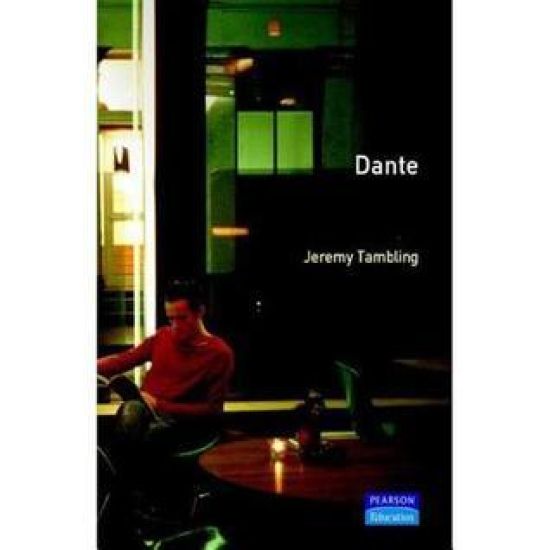
Dante

Dante

Jeremy Tambling

Longman
1998
nidottu
Dante's work has fascinated readers for seven hundred years and has provided key reference points for writing as diverse as that of Chaucer, the Renaissance poets, the English Romantics, Tennyson and the Pre-Raphaelites, American writers from Melville through to Eliot and Pound, Anglo-Irish Modernists from Joyce to Beckett, and contemporary poets such as Heaney and Walcott.In this volume, Jeremy Tambling has selected ten recent essays from the mass of Dante studies, and put the Divine Comedy - Dante's record of a journey to Hell, Purgatory and Paradise - into context for the modern reader. Topics such as Dante's allegory, his relationship to classical and modern poetry, his treatment of love and of sexuality, his attitudes to Florence and to his contemporary Italy, are explored and clarified through a selection of work by some of the best scholars in the field. An introduction and notes help the reader to situate the criticism, and to relate it to contemporary literary theory. In this anthology, Dante's relevance to both English and Italian literature is highlighted, and the significance of Dante for poetry in English is illuminated for the modern reader.This book provides students of English literature and Italian literature with the most comprehensive collection of important critical studies of Dante to date.
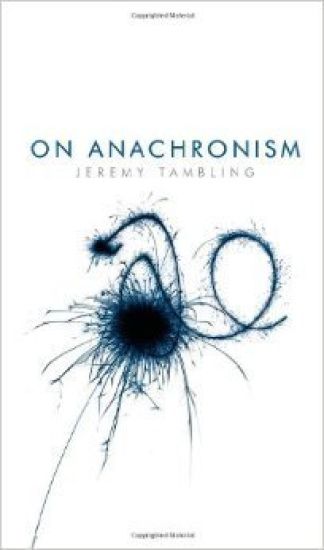
On Anachronism

On Anachronism

Jeremy Tambling

Manchester University Press
2010
sidottu
On Anachronism joins together Shakespeare and Proust as the great writers of love to show that love is always anachronistic, and never more so when it is homosexual. Drawing on Nietzsche, Freud, Heidegger, Derrida, Blanchot and Levinas and Deleuze, difficult but essential theorists of the subject of ‘being and time’ and ‘time and the other’ the book examines why speculation on time has become so crucial within modernity. Through the related term ‘anachorism’, it considers how discussion of time always turns into discussion of space, and how this, too, can never be quite defined. It speculates on chance and thinks of ways in which a quality of difference within time – heterogeneity, anachronicity – is essential to think of what is meant by ‘the other’.The book examines how contemporary theory considers the future and its relation to the past as that which is inescapable in the form of trauma. It considers what is meant by ‘the event’, that which is the theme of all post-Nietzschean theory and which breaks in two conceptions of time as chronological.
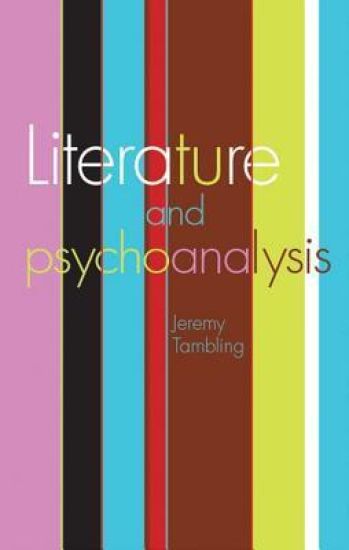
Literature and Psychoanalysis

Literature and Psychoanalysis

Jeremy Tambling

Manchester University Press
2012
sidottu
Literature and Psychoanalysis is an exciting, and compulsive working through of what Freud really said, and why it is so important, with a chapter on Melanie Klein and object relations theory, and two chapters on Lacan, and his work on the unconscious as structured like a language. Investigating different forms of literature through a careful examination of Shakespeare, Blake, the Sherlock Holmes stories, and many other examples from literature, the book makes the argument for taking literature and psychoanalysis together, and essential to each other. The book places both literature and psychoanalysis into the context of all that has been said about these subjects in recent debates in the theory of Derrida and Foucault and Žižek, and into the context of gender studies and queer theory.
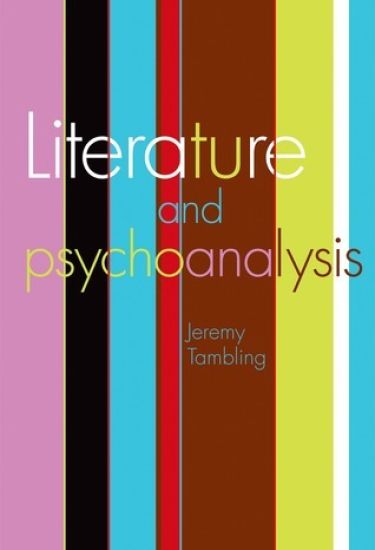
Literature and Psychoanalysis

Literature and Psychoanalysis

Jeremy Tambling

Manchester University Press
2012
nidottu
Literature and Psychoanalysis is an exciting, and compulsive working through of what Freud really said, and why it is so important, with a chapter on Melanie Klein and object relations theory, and two chapters on Lacan, and his work on the unconscious as structured like a language. Investigating different forms of literature through a careful examination of Shakespeare, Blake, the Sherlock Holmes stories, and many other examples from literature, the book makes the argument for taking literature and psychoanalysis together, and essential to each other. The book places both literature and psychoanalysis into the context of all that has been said about these subjects in recent debates in the theory of Derrida and Foucault and Žižek, and into the context of gender studies and queer theory.
Becoming Posthumous

Becoming Posthumous

Jeremy Tambling

Edinburgh University Press
2001
nidottu
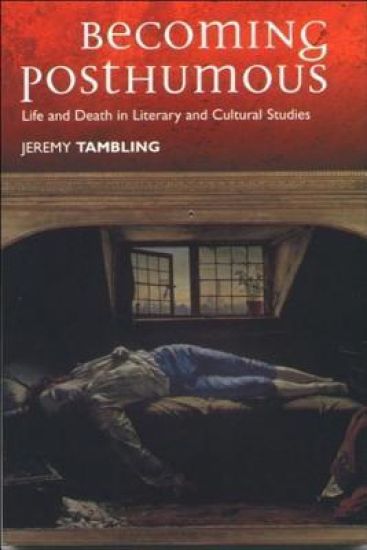
Set against a backdrop of debates about the so-called 'end of history', 'the death of the subject' and 'the end of art', as well as the various forms of the 'post' that became prevalent in the late twentieth century, Jeremy Tambling introduces the idea of 'the posthumous' as a means of thinking about our relationship to the past, to death and to history. The trope of the posthumous is played out in a pattern of four deftly argued 'case-chapters' devoted to Shakespeare's Cymbeline (where the hero is Posthumus), Dickens's David Copperfield (a 'posthumous child'), Nietzsche's Ecce Homo (the record of a posthumous life) and Benjamin's 'Theses on the Philosophy of History' (where history comes into being posthumously). Using these texts as a launching point Professor Tambling provides readings concerned with the question of why we should give attention to history, and to past texts, if there has been an irretrievable 'break' with history, and where history has turned into the heritage industry. Discussing why many writers - Dante, Shakespeare, Jonson, Keats, Dickens, Nietzsche - have been fascinated by the idea of 'posthumous' existence and why post-Nietzschean critics such as Foucault, Derrida and de Man have thought in terms of the death of the subject, Professor Tambling sets out to discover whether the past is dead in relation to the present, or the present in relation to the past. Rigorous and astute in its critical insights, Becoming Posthumous also provides introductory readings of the critical theory of Walter Benjamin, Maurice Blanchot, Gilles Deleuze, Pierre Klossowski and Jacques Derrida. In showing how the idea of posthumous existence runs right through literary and cultural theory as well as major literary works, the book will be relevant to those who are interested in literature, history, and cultural studies, in theories of modernity, or the idea of 'living on', being a ghost, or just thinking about death and its relationship to life.
Histories of the Devil

Histories of the Devil

Jeremy Tambling

Palgrave Macmillan
2017
sidottu
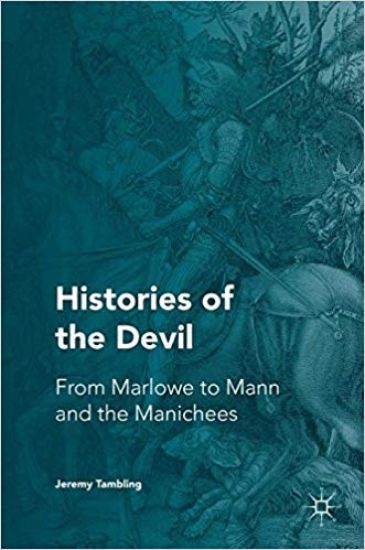
This book is about representations of the devil in English and European literature. Tracing the fascination in literature, philosophy, and theology with the irreducible presence of what may be called evil, or comedy, or the carnivalesque, this book surveys the parts played by the devil in the texts derived from the Faustus legend, looks at Marlowe and Shakespeare, Rabelais, Milton, Blake, Hoffmann, Baudelaire, Goethe, Dostoevsky, Bulgakov, and Mann, historically, speculatively, and from the standpoint of critical theory. It asks: Is there a single meaning to be assigned to the idea of the diabolical? What value lies in thinking diabolically? Is it still the definition of a good poet to be of the devil's party, as Blake argued?
Dickens' Novels as Poetry

Dickens' Novels as Poetry

Jeremy Tambling

Routledge
2017
nidottu
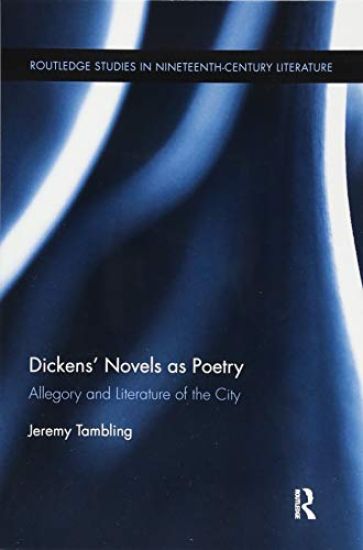
Focusing on the language, style, and poetry of Dickens’ novels, this study breaks new ground in reading Dickens’ novels as a unique form of poetry. Dickens’ writing disallows the statement of single unambiguous truths and shows unconscious processes burrowing within language, disrupting received ideas and modes of living. Arguing that Dickens, within nineteenth-century modernity, sees language as always double, Tambling draws on a wide range of Victorian texts and current critical theory to explore Dickens’ interest in literature and popular song, and what happens in jokes, in caricature, in word-play and punning, and in naming. Working from Dickens’ earliest writings to the latest, deftly combining theory with close analysis of texts, the book examines Dickens’ key novels, such as Pickwick Papers, Martin Chuzzlewit, Dombey and Son, Bleak House, Little Dorrit, Great Expectations, and Our Mutual Friend. It considers Dickens as constructing an urban poetry, alert to language coming from sources beyond the individual, and relating that to the dream-life of characters, who both can and cannot awake to fuller, different consciousness. Drawing on Walter Benjamin, Lacan, and Derrida, Tambling shows how Dickens writes a new and comic poetry of the city, and that the language constitutes an unconscious and secret autobiography. This volume takes Dickens scholarship in exciting new directions and will be of interest to all readers of nineteenth-century literary and cultural studies, and more widely, to all readers of literature.
Going Astray

Going Astray

Jeremy Tambling

Routledge
2016
sidottu
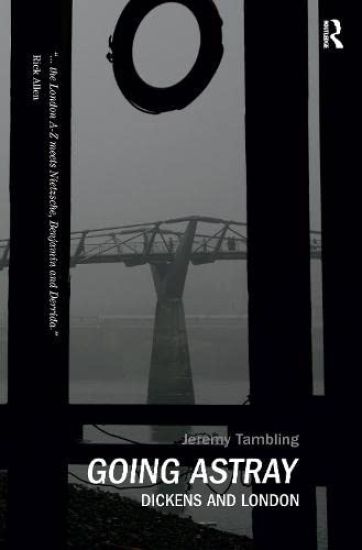
Among the numerous books on Dickenss London, Going Astray is unique in combining detailed topography and biography with close textual analysis and theoretically informed critiques of most of the novelists major works. In Jeremy Tamblings intriguing and illuminating synthesis, the London A-Z meets Nietzsche, Benjamin and Derrida. Rick Allen, author of The Moving Pageant: A Literary Sourcebook on London Street-Life, 1700-1914Dickens wrote so insistently about London its streets, its people, its unknown areas that certain parts of the city are forever haunted by him. Going Astray: Dickens and London looks at the novelists delight in losing the self in the labyrinthine city and maps that interest, onto the compulsion to go astray in writing.Drawing on all Dickens published writings (including the journalism but concentrating on the novels), Jeremy Tambling considers the authors kaleidoscopic characterisations of London: as prison and as legal centre; as the heart of empire and of traumatic memory; as the place of the uncanny; as an old curiosity shop. His study examines the relations between narrative and the city, and explores how the metropolis encapsulates the problems of modernity for Dickens as well as suggesting the limits of representation. Combining contemporary literary and cultural theory with historical maps, photographs and contextual detail, Jeremy Tamblings book is an indispensable guide to Dickens, nineteenth- century literature, and the city itself.
RE:Verse

RE:Verse

Jeremy Tambling

Routledge
2017
sidottu
Many people are intimidated by poetry, thinking it difficult and high-brow and not for them. But it is still considered an essential part of art and literature. RE:Verse asks; Why and How should we read poetry? This book, aimed at people just starting with literature, takes nothing for granted but opens poetry up to all in a way that makes it both exciting and fresh. Examples are taken from a balanced combination of traditional writers such as Keats, Wordsworth, Blake and Shakespeare, and modern poets such as Seamus Heaney, Jackie Kay and Benjamin Zephaniah. RE:Verse ranges over all periods of literature, and over the many critical theories that attempt to show why poetry matters. It places poems into their historical context, looks at poetry in translation, and discusses why much poetry is so difficult as to seem almost unreadable. It sets the standard for talking about how to read poetry, and what to do when this seems to be impossibly difficult. Ultimately, it is the essential, easy-to-read guide to the subject.
Dickens' Novels as Poetry

Dickens' Novels as Poetry

Jeremy Tambling

Routledge
2014
sidottu
Focusing on the language, style, and poetry of Dickens’ novels, this study breaks new ground in reading Dickens’ novels as a unique form of poetry. Dickens’ writing disallows the statement of single unambiguous truths and shows unconscious processes burrowing within language, disrupting received ideas and modes of living. Arguing that Dickens, within nineteenth-century modernity, sees language as always double, Tambling draws on a wide range of Victorian texts and current critical theory to explore Dickens’ interest in literature and popular song, and what happens in jokes, in caricature, in word-play and punning, and in naming. Working from Dickens’ earliest writings to the latest, deftly combining theory with close analysis of texts, the book examines Dickens’ key novels, such as Pickwick Papers, Martin Chuzzlewit, Dombey and Son, Bleak House, Little Dorrit, Great Expectations, and Our Mutual Friend. It considers Dickens as constructing an urban poetry, alert to language coming from sources beyond the individual, and relating that to the dream-life of characters, who both can and cannot awake to fuller, different consciousness. Drawing on Walter Benjamin, Lacan, and Derrida, Tambling shows how Dickens writes a new and comic poetry of the city, and that the language constitutes an unconscious and secret autobiography. This volume takes Dickens scholarship in exciting new directions and will be of interest to all readers of nineteenth-century literary and cultural studies, and more widely, to all readers of literature.
The Death Penalty in Dickens and Derrida

The Death Penalty in Dickens and Derrida

Jeremy Tambling

BLOOMSBURY PUBLISHING PLC
2023
sidottu
In the nineteenth century, Charles Dickens backed the cause of abolition of the death penalty and wrote comprehensively about it, in public letters and in his novels. At the end of the twentieth century, Jacques Derrida ran two years of seminars on the subject, which were published posthumously. What the novelist and the philosopher of deconstruction discussed independently, this book brings into comparison.Tambling examines crime and punishment in Dickens’s novels Barnaby Rudge, A Tale of Two Cities, Oliver Twist and Bleak House and explores those who influenced Dickens’s work, including Hogarth, Fielding, Godwin and Edgar Allen Poe. This book also looks at those who influenced Derrida – Freud, Nietzsche, Foucault and Blanchot – and considers Derrida’s study on terrorism and the USA as the only major democracy adhering to the death penalty.A comprehensive study of punishment in Dickens, and furthering Derrida’s insights by commenting on Shakespeare and blood, revenge, the French Revolution, and the enduring power of violence and its fascination, this book is a major contribution to literary criticism on Dickens and Derrida. Those interested in literature, criminology, law, gender, and psychoanalysis will find it an essential intervention in a topic still rousing intense argument.
The Death Penalty in Dickens and Derrida

The Death Penalty in Dickens and Derrida

Jeremy Tambling

BLOOMSBURY PUBLISHING PLC
2024
nidottu
In the nineteenth century, Charles Dickens backed the cause of abolition of the death penalty and wrote comprehensively about it, in public letters and in his novels. At the end of the twentieth century, Jacques Derrida ran two years of seminars on the subject, which were published posthumously. What the novelist and the philosopher of deconstruction discussed independently, this book brings into comparison.Tambling examines crime and punishment in Dickens’s novels Barnaby Rudge, A Tale of Two Cities, Oliver Twist and Bleak House and explores those who influenced Dickens’s work, including Hogarth, Fielding, Godwin and Edgar Allen Poe. This book also looks at those who influenced Derrida – Freud, Nietzsche, Foucault and Blanchot – and considers Derrida’s study on terrorism and the USA as the only major democracy adhering to the death penalty.A comprehensive study of punishment in Dickens, and furthering Derrida’s insights by commenting on Shakespeare and blood, revenge, the French Revolution, and the enduring power of violence and its fascination, this book is a major contribution to literary criticism on Dickens and Derrida. Those interested in literature, criminology, law, gender, and psychoanalysis will find it an essential intervention in a topic still rousing intense argument.
RE:Verse

RE:Verse

Jeremy Tambling

Routledge
2007
nidottu
Many people are intimidated by poetry, thinking it difficult and high-brow and not for them. But it is still considered an essential part of art and literature. RE:Verse asks; Why and How should we read poetry?This book, aimed at people just starting with literature, takes nothing for granted but opens poetry up to all in a way that makes it both exciting and fresh. Examples are taken from a balanced combination of traditional writers such as Keats, Wordsworth, Blake and Shakespeare, and modern poets such as Seamus Heaney, Jackie Kay and Benjamin Zephaniah. RE:Verse ranges over all periods of literature, and over the many critical theories that attempt to show why poetry matters. It places poems into their historical context, looks at poetry in translation, and discusses why much poetry is so difficult as to seem almost unreadable. It sets the standard for talking about how to read poetry, and what to do when this seems to be impossibly difficult. Ultimately, it is the essential, easy-to-read guide to the subject.
Going Astray

Going Astray

Jeremy Tambling

Longman
2008
nidottu
?Among the numerous books on Dickens?s London, Going Astray is unique in combining detailed topography and biography with close textual analysis and theoretically informed critiques of most of the novelist?s major works. In Jeremy Tambling?s intriguing and illuminating synthesis, the London A-Z meets Nietzsche, Benjamin and Derrida.? Rick Allen, author of The Moving Pageant: A Literary Sourcebook on London Street-Life, 1700-1914Dickens wrote so insistently about London ? its streets, its people, its unknown areas ? that certain parts of the city are forever haunted by him. Going Astray: Dickens and London looks at the novelist?s delight in losing the self in the labyrinthine city and maps that interest, onto the compulsion to ?go astray? in writing.Drawing on all Dickens? published writings (including the journalism but concentrating on the novels), Jeremy Tambling considers the author?s kaleidoscopic characterisations of London: as prison and as legal centre; as the heart of empire and of traumatic memory; as the place of the uncanny; as an old curiosity shop. His study examines the relations between narrative and the city, and explores how the metropolis encapsulates the problems of modernity for Dickens ? as well as suggesting the limits of representation. Combining contemporary literary and cultural theory with historical maps, photographs and contextual detail, Jeremy Tambling?s book is an indispensable guide to Dickens, nineteenth- century literature, and the city itself.