Kirjojen hintavertailu. Mukana 11 342 296 kirjaa ja 12 kauppaa.

Kirjahaku

Etsi kirjoja tekijän nimen, kirjan nimen tai ISBN:n perusteella.

10 kirjaa tekijältä Jerome Klinkowitz

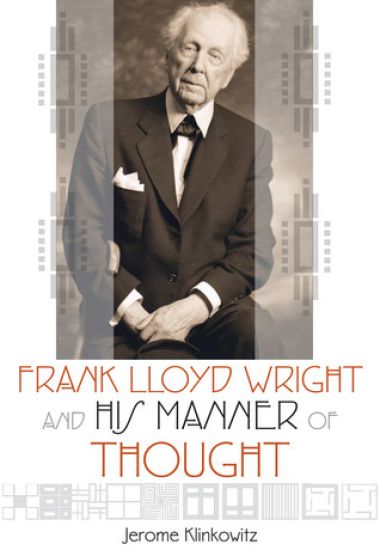
Frank Lloyd Wright and his Manner of Thought

Frank Lloyd Wright and his Manner of Thought

Jerome Klinkowitz

University of Wisconsin Press
2014
nidottu
An iconic figure in American culture, Frank Lloyd Wright is famous throughout the world. Although his achievements in architecture are stunning, it is his importance in cultural history, Jerome Klinkowitz contends, that makes Wright the object of such avid and continuing interest. Designing more than just buildings, Wright offered a concept for living that still influences how people conduct their lives today. Wright's innovations in architecture have been widely studied, but this is the most comprehensive and sustained treatment of his thought.Klinkowitz presents a critical biography driven by the architect's own work and intellectual growth, focusing on the evolution of Wright's thinking and writings from his first public addresses in 1894 to his last essay in 1959. Did Wright reject all of Victorian thinking about the home, or do his attentions to a minister's sermon on ""the house beautiful"" deserve closer attention? Was Wright echoing the Transcendentalism of Ralph Waldo Emerson, or was he more in step with the philosophy of William James? Did he reject the Arts and Crafts movement, or repurpose its beliefs and practices for new times? And, what can be said of his deep dissatisfaction with architectural concepts of his own era, the dominant modernism that became the International Style? Even the strongest advocates of Frank Lloyd Wright have been puzzled by his objections to so much that characterized the twentieth century, from ideas for building to styles of living.In Frank Lloyd Wright and His Manner of Thought, Klinkowitz, a widely published authority on twentieth-century literature, thought, and culture, examines the full extent of Wright's books, essays, and lectures to show how he emerged from the nineteenth century to anticipate the twenty-first.
Kurt Vonnegut

Kurt Vonnegut

Jerome Klinkowitz

Routledge
2019
sidottu
Drawing on his experiences as a young man in the Great Depression and the Second World War, Kurt Vonnegut created a new style of fiction responsive to the post-war world and unique in its appeal to both popular audiences and avant-garde critics. His work was profoundly innovative and yet perfectly lucid. In this comprehensive introductory study, originally published in 1982, Jerome Klinkowitz traces Vonnegut’s influences within the American middle class, his early efforts as a short-story writer for magazines in the 1960s and his startling and unprecedented success as a bestselling experimental novelist with Slaughterhouse-Five. His self-consciously moral posture led to readers throughout the world accepting him as their spokesman for humane values, a role which Klinkowitz considers within the context of his work.
Kurt Vonnegut

Kurt Vonnegut

Jerome Klinkowitz

Routledge
2021
nidottu
Drawing on his experiences as a young man in the Great Depression and the Second World War, Kurt Vonnegut created a new style of fiction responsive to the post-war world and unique in its appeal to both popular audiences and avant-garde critics. His work was profoundly innovative and yet perfectly lucid. In this comprehensive introductory study, originally published in 1982, Jerome Klinkowitz traces Vonnegut’s influences within the American middle class, his early efforts as a short-story writer for magazines in the 1960s and his startling and unprecedented success as a bestselling experimental novelist with Slaughterhouse-Five. His self-consciously moral posture led to readers throughout the world accepting him as their spokesman for humane values, a role which Klinkowitz considers within the context of his work.
The New American Novel of Manners

The New American Novel of Manners

Jerome Klinkowitz

University of Georgia Press
2012
pokkari
In the 1960s, as the underpinnings of society weakened, the traditional novel form seemed less suited to describe American reality. Theorists groped towards non-mimetic fiction as the tools that had sustained the novel since its birth—coherent characterization, linear plot, symbolism—became tools of New Journalism. The New American Novel of Manners explores the virtual reinvention of the novel of manners in America out of the same subjectivity that charged the works of New Journalism.In place of the rigid social structures that never seemed to depict America, novelists such as Richard Yates, Dan Wakefield, and Thomas McGuane located America’s modern-day manners in its semiotics, in the system of signs that envelops us—the blue jeans people wear, the fast food they eat, the décor of the bars they drink in and the rock-and-roll lyrics that play through memories. The new generation of mannerists describe lifestyles that are determined by words and images, by actions that are dictated by what has been read and seen, and patterns of behavior in which life is edited and fictionalized. Klinkowitz reveals a fiction that is once again capable of reflecting the way people live.
Rosenberg/Barthes/Hassan

Rosenberg/Barthes/Hassan

Jerome Klinkowitz

University of Georgia Press
2012
pokkari
Jerome Klinkowitz presents an opening attempt to define postmodernism as it applies to the arts and culture. Rosenberg/Barthes/Hassan discusses the work of three critics who came to prominence in the 1960s, an era of social, ideological, and aesthetic turmoil. Sharing a disdain for modernism's authoritarianism, elitism, and sterile preoccupation with despair, the three critics called for a postmodern art that would emphasize action, reality, and immanence and offer fresh envisionings of the world.Klinkowitz traces the progression of thought that links the work of critic Harold Rosenberg, who introduced the concept of "action painting"; the semiotician Roland Barthes, who redefined art, culture, and ideology as language systems; and visionary literary scholar Ihab Hassan, whose works call for nothing less than a rethinking of man's place within the material and spiritual universe.
Donald Barthelme

Donald Barthelme

Jerome Klinkowitz

Duke University Press
1991
sidottu
Donald Barthelme (1931–1989) is regarded as one of the most imitated and influential American fiction writers since the early 1960s. In Donald Barthelme: An Exhibition, Jerome Klinkowitz presents both an appreciation and a comprehensive examination of the life work of this pathbreaking contemporary writer. A blend of close reading, biography, and theory, this retrospective-informed by Klinkowitz’s expert command of postmodern American fiction-contributes significantly to a new understanding of Barthelme’s work.Klinkowitz argues that the central piece in the Barthelme canon, and the key to his artistic method, is his widely acknowledged masterpiece, The Dead Father. In turning to this pivotal work, as well as to Barthelme’s short stories and other novels, Klinkowitz explores the way in which Barthelme reinvented the tools of narration, characterization, and thematics at a time when fictive techniques were largely believed to be exhausted. Klinkowitz, who was one of the first scholars to study Barthelme’s work and became its definitive bibliographer, situates Barthelme’s life and work within a broad spectrum of influences and affinities. A consideration of developments in painting and sculpture, for example, as well as those of contemporaneous fiction, contribute to Klinkowitz’s analysis. This astute reading will provide great insight for readers, writers, and critics of contemporary American fiction seeking explanations and justifications of Barthelme’s critical importance in the literature of our times.
Structuring the Void

Structuring the Void

Jerome Klinkowitz

Duke University Press
1992
sidottu
If, as the literary theorists of postmodernism contend, “content” does not exist, then how can fiction continue to be written? Jerome Klinkowitz, himself a veteran practitioner and theorist of fiction, addresses this question in Structuring the Void, an account of what today’s novelists and short story writers do when they produce a fictive work. Klinkowitz’s focus is on the way in which writers have turned this lack of content itself into subject matter, and, by thus “structuring the void,” have created a new form of fiction.Among the writers Klinkowitz discusses are Richard Brautigan, Kurt Vonnegut, Max Apple, Saul Bellow, Erica Jong, Susan Quist, Gerald Rosen, Rob Swigart, and Grace Paley. He shows how, in the absence of subject matter, these writers persist in the act of structuring-by organizing autobiography as a narrative device, ritualizing national history and popular culture, or formalizing a comic response to a new imaginative state, the state of California. Klinkowitz also considers subjects such as gender and war, which, though they cannot be represented, nevertheless exercise contraints on a writer’s intention to structure.What emerges from Klinkowitz’s analysis is a clear sense of what today’s fiction-and fiction writing-is about. As such, Structuring the Void will prove invaluable to anyone with an interest in contemporary literature.
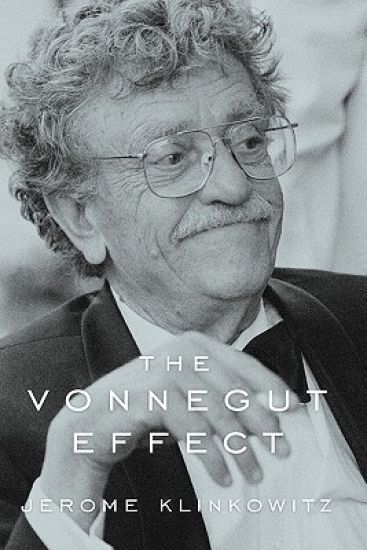
The Vonnegut Effect

The Vonnegut Effect

Jerome Klinkowitz

University of South Carolina Press
2011
nidottu
Kurt Vonnegut is one of the few American writers since Mark Twain to have won and sustained a great popular acceptance while boldly introducing new themes and forms on the literary cutting edge. This is the "Vonnegut effect" that Jerome Klinkowitz finds unique among postmodernist authors. In this innovative study of the author's fiction, Klinkowitz examines the forces in American life that have made Vonnegut's works possible.