Kirjojen hintavertailu. Mukana 11 342 296 kirjaa ja 12 kauppaa.

Kirjahaku

Etsi kirjoja tekijän nimen, kirjan nimen tai ISBN:n perusteella.

7 kirjaa tekijältä Jerome Loving

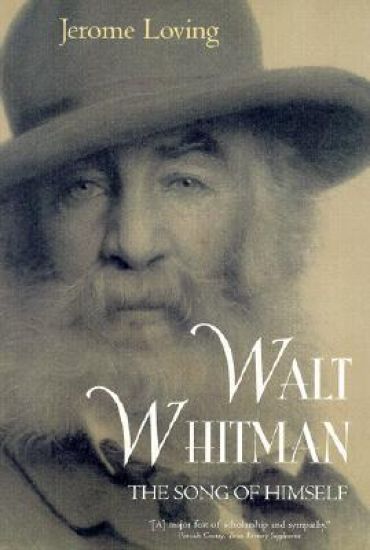
Walt Whitman

Walt Whitman

Jerome Loving

University of California Press
2000
pokkari
"Walt Whitman: The Song of Himself" is the first full-length critical biography of Walt Whitman in more than forty years. Jerome Loving makes use of recently unearthed archival evidence and newspaper writings to present the most accurate, complete, and complex portrait of the poet to date. This authoritative biography affords fresh, often revelatory insights into many aspects of the poet's life, including his attitudes toward the emerging urban life of America, his relationships with his family members, his developing notions of male-male love, his attitudes toward the vexed issue of race, and his insistence on the union of American states. Virtually every chapter presents material that was previously unknown or unavailable, and Whitman emerges as never before, in all his complexity as a corporal, cerebral, and spiritual being. Loving gives us a new Poet of Democracy, one for the twenty-first century. Loving brings to life the elusive early Whitman, detailing his unhappy teaching career, typesetting jobs, quarrels with editors, and relationships with family and friends. He takes us through the Civil War - with Whitman's moving descriptions of the wounded and dying he nursed, the battlegrounds and camps he visited - demonstrating why the war became one of the defining events of Whitman's life and poetry. Loving's account of Whitman's relationship with Ralph Waldo Emerson is one of the most complete and fascinating available. He also draws insights from new material about Whitman's life as a civil servant, his Lincoln lectures, and his abiding campaign to gain acceptance for what was regarded by many as a 'dirty book.' He examines each edition of Leaves of Grass in connection with the life and times that produced it, demonstrating how Whitman's poetry serves as a priceless historical document - marking such events as Grant's death, the completion of the Washington monument, Custer's defeat, and the Johnstown flood - at the same time that it reshapes the canon of American literature. The most important gap in the Whitman record is his journalism, which has never been completely collected and edited. Previous biographers have depended on a very incomplete and inaccurate collection. Loving has found long-forgotten runs of the newspapers Whitman worked on and has gathered the largest collection of his journalism to date. He uses these pieces to significantly enhance our understanding of where Whitman stood in the political and ideological spectra of his era. Loving tracks down the sources of anecdotes about Whitman, how they got passed from one biographer to another, were embellished and re-contextualized. The result is a biography in which nothing is claimed without a basis in the factual record. "Walt Whitman: The Song of Himself" will be an invaluable tool for generations to come, an essential resource in understanding "Leaves of Grass" and its poet - who defied literary decorum, withstood condemnation, and stubbornly pursued his own way.
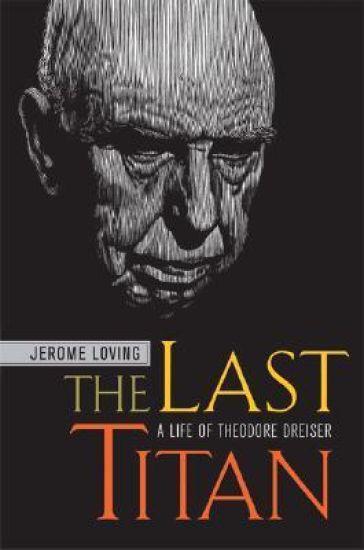
The Last Titan

The Last Titan

Jerome Loving

University of California Press
2005
sidottu
When Theodore Dreiser first published "Sister Carrie" in 1900 it was suppressed for its seamy plot, colloquial language, and immorality - for, as one reviewer put it, its depiction of 'the godless side of American life'. It was a side of life experienced firsthand by Dreiser, whose own circumstances often paralleled those of his characters in the turbulent, turn-of-the-century era of immigrants, black lynchings, ruthless industrialists, violent labor movements, and the New Woman. This masterful critical biography, the first on Dreiser in more than half a century, is the only study to fully weave Dreiser's literary achievement into the context of his life. Jerome Loving gives us a Dreiser for a new generation in a brilliant evocation of a writer who boldly swept away Victorian timidity to open the twentieth century in American literature. Dreiser was a controversial figure in his time, not only because of his literary efforts, which included publication of the brutal and heartbreaking "An American Tragedy" in 1925, but also because of his personal life, which featured numerous sexual liaisons, included membership in the communist party, merited a 180-page FBI file, and ended in Hollywood. "The Last Titan" paints a full portrait of the mature Dreiser between the two world wars - through the roaring twenties, the stock market crash, and the Depression - and describes his contact with important figures from Emma Goldman and H.L. Mencken to two presidents Roosevelt. Tracing Dreiser's literary roots in Hawthorne, Emerson, Thoreau, and especially Whitman, Loving has written what will surely become the standard biography of one of America's best novelists.
Mark Twain

Mark Twain

Jerome Loving

University of California Press
2010
pokkari
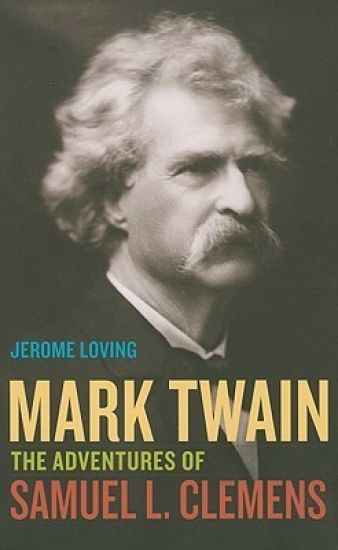
Mark Twain, who was often photographed with a cigar, once remarked that he came into the world looking for a light. In this new biography, published on the centennial of the writer's death, Jerome Loving focuses on Mark Twain, humorist and quipster, and sheds new light on the wit, pathos, and tragedy of the author of "Adventures of Huckleberry Finn." In brisk and compelling fashion, Loving follows Twain from Hannibal to Hawaii to the Holy Land, showing how the southerner transformed himself into a westerner and finally a New Englander. This re-examination of Twain's life is informed by newly discovered archival materials that provide the most complex view of the man and writer to date.
Emily Dickinson

Emily Dickinson

Jerome Loving

Cambridge University Press
2009
pokkari
In Emily Dickinson: The Poet on the Second Story Professor Jerome Loving provides an intuitive and 'interiorized' reading of the poet's most important works. Using biographical matters as a frame for his interpretations, Loving demonstrates how Dickinson's life is bound up with any series reading of her work. Literally, Dickinson wrote on the second storey of her father's house, but Loving argues that she also used that 'story' (or art) as both a retreat from the transitory nature of life and as a way of experiencing life in what might be termed the 'subjunctive' instead of the 'imperative'. Her persona, therefore, is as disembodied in the poems as was the reclusive poet to visitors to the Amherst 'Homestead'. Loving attempts to show that the voice we hear in the poems is that of the 'mind alone', as Dickinson herself said, 'without corporeal friend'. Of interest to students and scholars of American literature, this critical study will also interest more general readers who enjoy Dickinson's poetry.
Jack and Norman

Jack and Norman

Jerome Loving

St. Martins Press-3pl
2017
sidottu
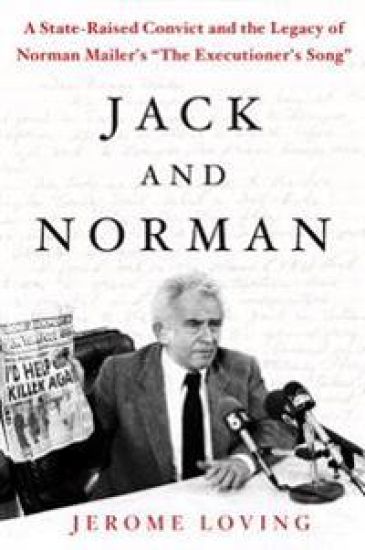
This is the story of an author and his apprentice. It is the story of literary influence and tragedy. It is also the story of incarceration in America. Norman Mailer was writing The Executioner's Song, his novel about condemned killer Gary Gilmore, when he struck up a correspondence with Jack Henry Abbott, Federal Prisoner 87098-132. Over time, Abbott convinced the famous author that he was a talented writer who deserved another chance at freedom. With letters of support from Mailer and other literary elites of the day, Abbott was released on parole in 1981. With Mailer's help, Abbott quickly became the literary "it boy" of New York City. But in a shocking turn of events, the day before a rave review of Abbott's book, In the Belly of the Beast, appeared in The New York Times, Abbott murdered a New York City waiter and fled to Mexico. Eerily, like Gary Gilmore in Mailer's true-life novel, Abbott killed within six weeks of his release from prison. Now Jerome Loving explores the history of two of the most infamous books of the past 50 years, a fascinating story that has never before been told.
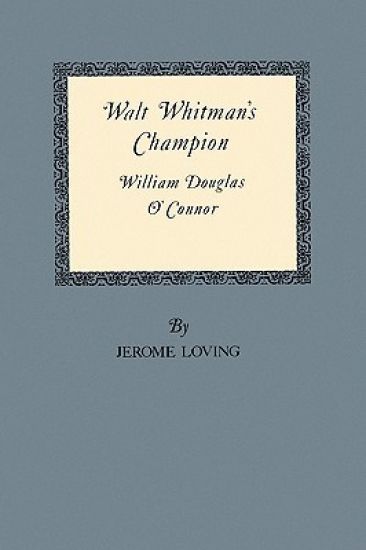
Walt Whitman'S Champion

Walt Whitman'S Champion

Jerome Loving

Texas A M University Press
2000
nidottu
In 1865 Walt Whitman was dismissed from his clerkship in the Department of the Interior because Secretary James Harlan judged Leaves of Grass indecent, unfit to be read aloud "by the evening lamp." Most eloquent among Whitman's defenders was William Douglas O'Connor, whose pamphlet The Good Gray Poet, a panegyric to Whitman and an attack on literary censorship in general and Harlan in particular, was the first of his many heroic if sometimes excessive efforts in Whitman's behalf. A gifted polemicist and a stout though not always judicious advocate of causes (he wrote several screeds favoring Bacon as the author of Shakespeare's works), O'Connor devoted much of his literary life to establishing Whitman and Leaves of Grass in the world of American letters. Whitman considered O'Connor his staunchest "literary believer and champion from the first and throughout . . . for twenty-five years," and indeed, despite a personal estrangement between the two men, O'Connor's support of Whitman the poet never wavered. O'Connor's own literary efforts may command little interest today, but his championship of Whitman as a great, original American poet rendered lasting service to literature. Appropriately, this study of his career is complemented by carefully annotated texts of six of his Whitman essays, including The Good Gray Poet. A complete O'Connor bibliography is also included.