Kirjojen hintavertailu. Mukana 12 390 323 kirjaa ja 12 kauppaa.

Kirjahaku

Etsi kirjoja tekijän nimen, kirjan nimen tai ISBN:n perusteella.

5 kirjaa tekijältä Jerome T. Walsh

Old Testament Narrative

Old Testament Narrative

Jerome T. Walsh

Westminster/John Knox Press,U.S.
2010
nidottu
The Old Testament's stories are intriguing, mesmerizing, and provocative not only due to their ancient literary craft but also because of their ongoing relevance. In this volume, well suited to college and seminary use, Jerome Walsh explains how to interpret these narrative passages of Scripture based on standard literary elements such as plot, characterization, setting, pace, point of view, and patterns of repetition. What makes this book an exceptional resource is an appendix that offers practical examples of narrative interpretation- something no other book on Old Testament interpretation offers.
Berit Olam

Berit Olam

Jerome T. Walsh

Liturgical Press
1996
sidottu
The narratives of Solomon and Jeroboam, of Elijah and Ahab, have fascinated readers for millennia. Even apart from questions of historical authenticity, they are gripping stories of richly drawn characters caught up in the complex tale of God's dealings with Israel. This study explores the narrative world created by 1 Kings' ancient Israelite author: the people who inhabit it, the lives they live, the deeds they do, and the face of God who is revealed in their stories.An introduction explains the significance of 1 Kings as a historical narrative. Originally intended as a literal history, after centuries of writing and rewriting it is now as much a literary work as a historical one: The views of those who formed it can be discerned and studied. Walsh also explains how the rich traditions of Hebrew prose narrative and the Hebrew language itself affect our reading of 1 Kings.
Style And Structure In Biblical Hebrew Narrative
The pages of the Hebrew Bible are filled with stories - short and long, funny and sad, histories, fables, and morality tales. The ancient narrators used a variety of stylistic devices to structure, to connect, and to separate their tales - and thus to establish contexts within which meaning comes to light. What are these devices, and how do they guide our reading and our understanding of the text? Style and Structure in Biblical Hebrew Narrative explores some of the answers and shows scriptural interpretation can be a matter of style." Part one of Style and Structure in Biblical Hebrew Narrative examines a wide variety of symmetrical patterns biblical Hebrew narrative uses to organize its units and subunits, and the interpretive dynamics those patterns can imply. Part two addresses the question of boundaries between literary units. Part three examines devices that biblical Hebrew narrative uses to connect consecutive literary units and subunits. Chapters in Part One: Structures of Organization are "Reverse Symmetry," "Forward Symmetry," "Alternating Repetition," "Partial Symmetry," "Multiple Symmetry," "Asymmetry." Chapters in Part Two: Structures of Disjunction are "Narrative Components," "Repetition," and "Narrative Sequence." Chapters in Part Three: Structures of Conjunction are "Threads," "Links: Examples," "Linked Threads: Examples," "Hinges: Examples," and "Double-Duty Hinges: Examples."Jerome T. Walsh, PhD, is a professor of theology and religious studies at the University of Botswana. He is the author of 1 Kings in the Berit Olam (The Everlasting Covenant) Studies in Hebrew Narrative and Poetry series for which he is also an associate editor."
Berit Olam

Berit Olam

Jerome T. Walsh

Liturgical Press
2021
pokkari
The narratives of Solomon and Jeroboam, of Elijah and Ahab, have fascinated readers for millennia. Even apart from questions of historical authenticity, they are gripping stories of richly drawn characters caught up in the complex tale of God's dealings with Israel. This study explores the narrative world created by 1 Kings' ancient Israelite author: the people who inhabit it, the lives they live, the deeds they do, and the face of God who is revealed in their stories.An introduction explains the significance of 1 Kings as a historical narrative. Originally intended as a literal history, after centuries of writing and rewriting it is now as much a literary work as a historical one: The views of those who formed it can be discerned and studied. Walsh also explains how the rich traditions of Hebrew prose narrative and the Hebrew language itself affect our reading of 1 Kings.
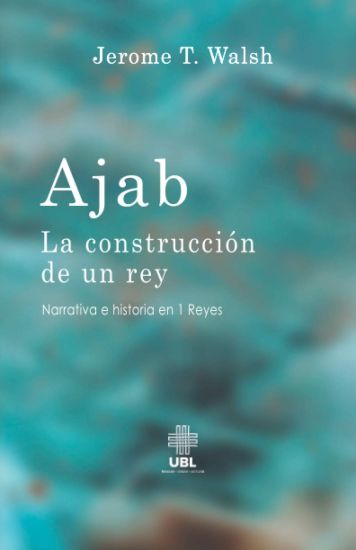
Ajab: La construcción de un rey

Ajab: La construcción de un rey

Jerome T. Walsh

Editorial Sebila
2020
nidottu
Ajab, la construcci n de un rey del Dr. Jerome T. Walsh es un estudio de 1 Reyes 17-22 que centra su atenci n en la figura deAjab, rey de Israel durante el siglo IX a.C. El relato b blico mismo, describe a este rey en t rminos poco elogiosos: "Acab hijo de Omr hizo lo que ofende al SE OR, m s que todos los reyes que lo precedieron" (1 Re 16,30), "y tambi n fabric una imagen de la diosa Aser . En fin, hizo m s para provocar la ira del SE OR, Dios de Israel, que todos los reyes de Israel que lo precedieron." (1 Re 16,33). Esta primera impresi n que el lector moderno recibe de este rey, se confirma a lo largo del relato b blico una y otra vez. El estudio de Walsh arroja nueva luz sobre este personaje, si bien no siempre en t rminos halagadores. Este estudio se basa en dos asuntos principales. Primero, una pregunta de cr tica narrativa: C mo representa el texto al rey Ajab? En otras palabras, Ajab el personaje narrativo c mo es? En segundo lugar, una pregunta de cr tica hist rica: C mo ha crecido y cambiado esta representaci n que se encuentra en nuestros textos, a medida que se ha transmitido de generaci n en generaci n? En otras palabras, cu nto del personaje hist rico de Ajab ha sobrevivido en el personaje narrativo y qu parte de este ltimo es producto de una elaboraci n posterior? El relato del rey Ajab comienza en 1 R 16,29 y termina en 1 R 22,40. Su presencia en estos seis cap tulos es bastante desigual. En los cap tulos 1 R 20-22, l es el personaje central; en los cap tulos 1 R 17-19, por el contrario, El as es mucho m s prominente que Ajab. De hecho, en los cap tulos 1 R 17 y 19, Ajab aparece solo en dos vers culos. Casi ning n otro rey despu s de Salom n, sin embargo, merece un relato de su reinado de tal extensi n. 1. La primera parte inicia con una breve presentaci n del Ajab de la historia. La informaci n que una investigaci nresponsable de la evidencia hist rica puede considerar confiable es limitada en extremo, raz n por la que el retratoresultante de Ajab es realmente un esbozo. Sin embargo, proporciona un punto de referencia para la comparaci ncon las otras dos partes m s largas del libro.2. La segunda parte examina los textos como los tenemos hoy en d a, para poner de relieve a Ajab, tal como lo describe lanarrativa. No es sorprendente que, dados los muchos m s datos con los que trabajar, la imagen del Ajab de la narrativa sea mucho m s compleja y detallada que la del Ajab de la historia. Lo que es sorprendente es la falta casi total de parecido entre los dos.3. En la tercera parte, finalmente, se propone una reconstrucci n de la historia de los textos acerca de Ajab, para determinar c mo se desarroll su retrato textual a lo largo del tiempo y si alguno de los rasgos que encontramos en el Ajab de la narrativa, puede considerarse plausiblemente original en el Ajab de la historia.El recorrido de esta investigaci n arranca en primer lugar con los datos que la historia y la arqueolog a nos ofrecen, paramostrarnos hasta d nde es posible reconstruir los hechos que conformaron su vida real. Luego dirige su atenci n hacia lasmismas narraciones y con una mirada aguda analiza sus detalles, sus relaciones de sentido, sus matices literarios, amparado en un detallado an lisis narrativo de los textos. Finalmente, se exploran lo que los m todos hist rico-cr ticos nos pueden decir sobre estos relatos. Con esta obra, Jerome Walsh demuestra tanto la investigaci n cr tica como los m todos b sicos de los estudios b blicos: la cr tica de las fuentes y de la redacci n, la cr tica textual y la narrativa.