Kirjojen hintavertailu. Mukana 11 342 296 kirjaa ja 12 kauppaa.

Kirjahaku

Etsi kirjoja tekijän nimen, kirjan nimen tai ISBN:n perusteella.

7 kirjaa tekijältä Jerrold Seigel

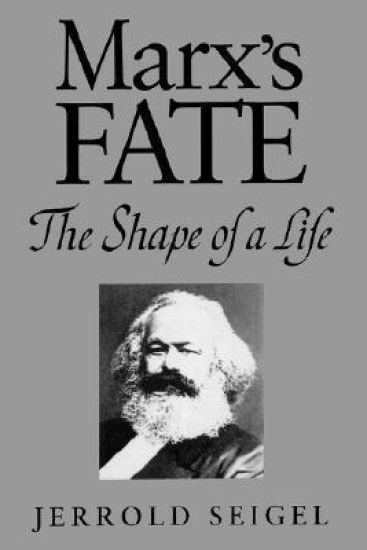
Marx's Fate

Marx's Fate

Jerrold Seigel

Pennsylvania State University Press
1993
pokkari
Marx’s Fate is an intellectual biography of Marx that combines historical, textual and psychological analyses to provide major new insights into the philosopher’s writings and development.
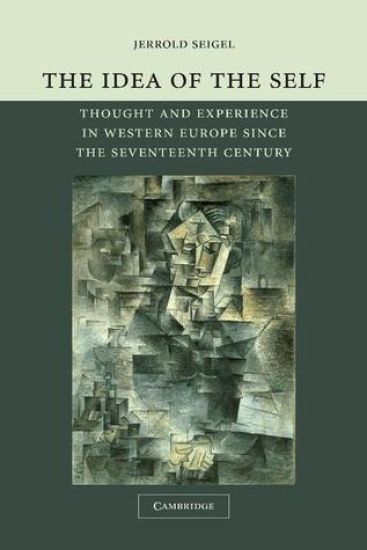
The Idea of the Self

The Idea of the Self

Jerrold Seigel

Cambridge University Press
2005
pokkari
What is the self? The question has preoccupied people in many times and places, but nowhere more than in the modern West, where it has spawned debates that still resound today. Jerrold Seigel here provides an original and penetrating narrative of how major Western European thinkers and writers have confronted the self since the time of Descartes, Leibniz, and Locke. From an approach that is at once theoretical and contextual, he examines the way figures in Britain, France, and Germany have understood whether and how far individuals can achieve coherence and consistency in the face of the inner tensions and external pressures that threaten to divide or overwhelm them. He makes clear that recent ‘postmodernist’ accounts of the self belong firmly to the tradition of Western thinking they have sought to supersede, and provides an open-ended and persuasive alternative to claims that the modern self is typically egocentric or disengaged.
The Idea of the Self

The Idea of the Self

Jerrold Seigel

Cambridge University Press
2005
sidottu
What is the self? The question has preoccupied people in many times and places, but nowhere more than in the modern West, where it has spawned debates that still resound today. In this 2005 book, Jerrold Seigel provides an original and penetrating narrative of how major Western European thinkers and writers have confronted the self since the time of Descartes, Leibniz, and Locke. From an approach that is at once theoretical and contextual, he examines the way figures in Britain, France, and Germany have understood whether and how far individuals can achieve coherence and consistency in the face of the inner tensions and external pressures that threaten to divide or overwhelm them. He makes clear that recent 'postmodernist' accounts of the self belong firmly to the tradition of Western thinking they have sought to supersede, and provides an open-ended and persuasive alternative to claims that the modern self is typically egocentric or disengaged.
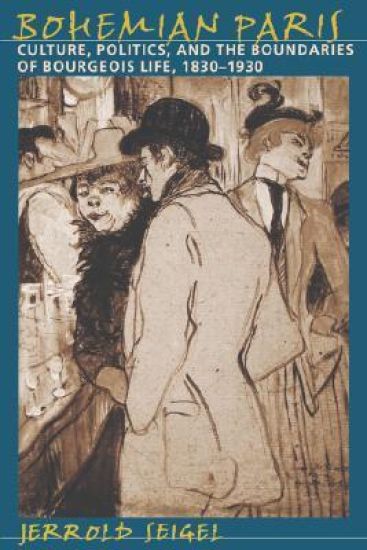
Bohemian Paris

Bohemian Paris

Jerrold Seigel

Johns Hopkins University Press
1999
pokkari
Exotic and yet familiar, rife with passion, immorality, hunger, and freedom, Bohemia was an object of both worry and fascination to workaday Parisians in the nineteenth century. No mere revolt against middle-class society, the Bohemia Seigel discovers was richer and more complex, the stage on which modern bourgeois acted out the conflicts of their social identities, testing the liberation promised by post-revolutionary society against the barriers set up to contain it. Turning life into art, Bohemia became a space where many innovative and original figures-some famous, some obscure-found a home.
Between Cultures

Between Cultures

Jerrold Seigel

University of Pennsylvania Press
2015
sidottu
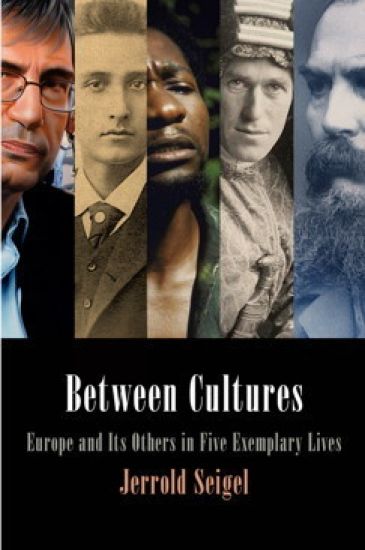
Richard Burton. T. E. Lawrence. Louis Massignon. Chinua Achebe. Orhan Pamuk. The remarkable quintet whose stories make up Jerrold Seigel's Between Cultures are all people who, without ever seeking to exit from the ways of life into which they had been born, devoted themselves to exploring a second cultural identity as an intrinsic part of their first. Richard Burton, the British traveler and writer, sought to experience the inner life of Islam by making the pilgrimage to Mecca in the guise of a Muslim in 1853. T. E. Lawrence, famously known as Lawrence of Arabia, recounted his tortuous ties to the Arab uprising against Turkish rule in his celebrated Seven Pillars of Wisdom. Louis Massignon was a great, deeply introspective, and profoundly troubled French Catholic scholar of Islam. Chinua Achebe, the celebrated pioneer of modern African literature, lived and wrote from the intersection of Western culture and traditional African life. Orhan Pamuk, Nobel Prize-winning novelist, explored the attraction and repulsion between East and West in his native Turkey. Seigel considers these five individuals not only for the intrinsic interest of their stories but also for the depth and breadth of their writing on the challenges of creating an intercultural identity, enabling him to analyze their experiences via historical, psychological, and critical approaches. Fascinating in and of themselves, these lives between cultures also highlight the realities faced by many in this age of high mobility and ever-greater global connection and raise questions about what it means for human beings to belong to cultures.
Remaking the World

Remaking the World

Jerrold Seigel

Cambridge University Press
2024
sidottu
How should we understand Europe's special role in world history, and the enduring impact it made on the rest of the globe? Jerrold Seigel traces both the positive and negative sides of the continent's special role to its absence of effective central authority, the division and competition between its states and peoples, and its propensity for developing autonomous spheres of activity. Remaking the World analyzes how these features fostered Europe's characteristic preoccupation with a politics of liberty, its evolution of an aesthetic sphere animated by values specific to itself, its singular capacity to revolutionize scientific understanding, and its ability to prepare and carry out the first transition to a modern industrial economy. Extended and substantive comparisons with Africa, India, China, and the lands that came under the rule of the Ottomans demonstrate the absence of similar phenomena elsewhere, whereas in Europe they also helped generate the malign force of imperial expansion.
Modernity and Bourgeois Life

Modernity and Bourgeois Life

Jerrold Seigel

Cambridge University Press
2012
pokkari
To be modern may mean many different things, but for nineteenth-century Europeans 'modernity' suggested a new form of life in which bourgeois activities, people, attitudes and values all played key roles. Jerrold Seigel's panoramic new history offers a magisterial and highly original account of the ties between modernity and bourgeois life, arguing that they can be best understood not in terms of the rise and fall of social classes, but as features of a common participation in expanding and thickening 'networks of means' that linked together distant energies and resources across economic, political and cultural life. Exploring the different configurations of these networks in England, France and Germany, he shows how their patterns gave rise to distinctive forms of modernity in each country and shaped the rhythm and nature of change across spheres as diverse as politics, money and finance, gender relations, morality, and literary, artistic and musical life.