
Kirjahaku
Etsi kirjoja tekijän nimen, kirjan nimen tai ISBN:n perusteella.
59 kirjaa tekijältä Jerry Bader
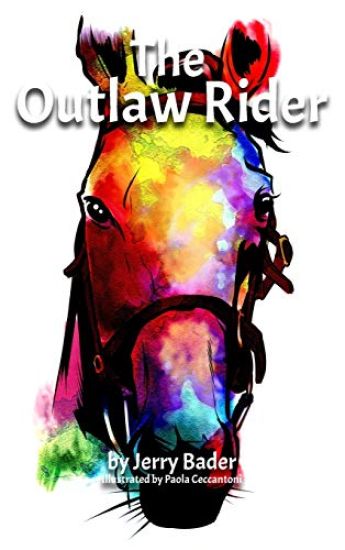
The Outlaw Rider is the first in a series of books that follows the adventures of, Jesse James, a young woman who is orphaned when her mob connected father suddenly dies. Jesse is taken in by Chinese triad big shot Johnny Luck. Jesse is trained as a jockey in order to serve the interests of the Hong Mian triad led by Dragon Head, Benson Yeung.The Outlaw Rider is fiction but is set in a true-to-life environment where racetracks in California, as elsewhere, are desperate to add full fledge casinos and especially slots to their venues. The problem is only Native American groups are eligible for casino licences and corruption abounds. Thousands of Native Americans that can trace there heritages back to the 1800s have been disenrolled (loss of Native status) by the groups that control the casino licenses. Disenrollment reduces the number of Native Americans collecting casino benefits that can be as much as three hundred thousand dollars per person.In the middle of this is a Spirit Horse, called Medicine Hat, a white thoroughbred racehorse with milk chocolate markings including the ears, thus the name, Medicine Hat. The horse becomes the center piece of a fight for control of the casino gaming business in California involving a corrupt State Senator, his billionaire heiress sister, the Hong Mian triad, the Buffalo mob, and two rival Native American groups with Jesse and Medicine Hat in the middle of it all.
Jesse James, the daughter of a deceased mob connected rug salesman, becomes a jockey working for the Hong Mian triad in order to feed winners to State Senator Somersby. The Senator is responsible for approving California gaming licenses. To date, only Native CANGV casinos are allowed to have slots. California horse racing will die if they aren't allowed to add slot machines to their venues. Benson Yeung, Dragon Head of the Hong Mian triad, and his chief lieutenant, Johnny Luck, have a plan to force Somersby to approve their Native partner's demands for off-reservation gaming licenses. At the center of the plan is a unique white thoroughbred Spirit horse, prized by Native people, appropriately named Medicine Hat.The Outlaw Rider is the first in a series of books that follows the adventures of, Jesse James, a young woman who is orphaned when her mob connected father suddenly dies. Jesse is taken in by Chinese triad big shot Johnny Luck. Jesse is trained as a jockey in order to serve the interests of the Hong Mian triad led by Dragon Head, Benson Yeung.The Outlaw Rider is fiction but is set in a true-to-life environment where racetracks in California, as elsewhere, are desperate to add full fledge casinos and especially slots to their venues. The problem is only Native American groups are eligible for casino licences and corruption abounds. Thousands of Native Americans that can trace there heritages back to the 1800s have been disenrolled (loss of Native status) by the groups that control the casino licenses. Disenrollment reduces the number of Native Americans collecting casino benefits that can be as much as three hundred thousand dollars per person.In the middle of this is a Spirit Horse, called Medicine Hat, a white thoroughbred racehorse with milk chocolate markings including the ears, thus the name, Medicine Hat. The horse becomes the center piece of a fight for control of the casino gaming business in California involving a corrupt State Senator, his billionaire heiress sister, the Hong Mian triad, the Buffalo mob, and two rival Native American groups with Jesse and Medicine Hat in the middle of it all.
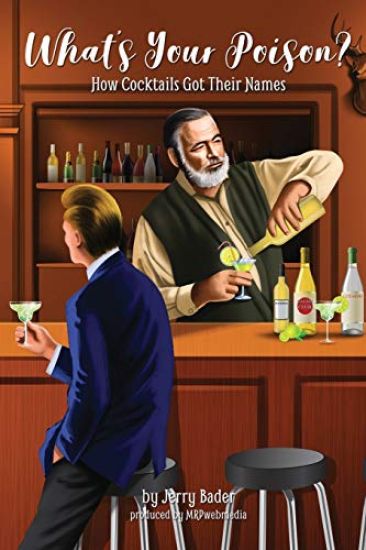
Why do we call mixed alcohol drinks "cocktails"? How do they get their exotic names: names like the Singapore Sling, Screw Driver, the Alamagoozlum, the Angel's Kiss, the Hanky Panky, the Harvey Wallbanger, Sex On The Beach, the Monkey Gland, the Brass Monkey, the Margarita, the Japalac, the Lion's Tail, and many, many more? Who makes up these names, where are they invented, why, and how do you make them? These questions will be answered in "What's Your Poison?" by exploring the incidents, people, and places that prompted the creation of these exotic concoctions.In this book you will you learn several alternative theories of how cocktails became "cocktails" and you'll also learn how to make over forty different variations. In addition you'll learn about some interesting characters you probably never heard of and a few famous ones you most assuredly know. WYP? is a fun book that should spark some interesting conversations while enjoying some unusual but thirst quenching concoctions.
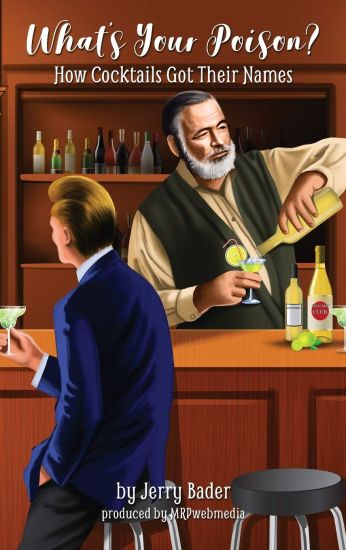
Why do we call mixed alcohol drinks "cocktails"? How do they get their exotic names: names like the Singapore Sling, Screw Driver, the Alamagoozlum, the Angel's Kiss, the Hanky Panky, the Harvey Wallbanger, Sex On The Beach, the Monkey Gland, the Brass Monkey, the Margarita, the Japalac, the Lion's Tail, and many, many more? Who makes up these names, where are they invented, why, and how do you make them? These questions will be answered in "What's Your Poison?" by exploring the incidents, people, and places that prompted the creation of these exotic concoctions.In this book you will you learn several alternative theories how cocktails became "cocktails" and you'll also learn how to make over forty different variations. In addition you'll learn about some interesting characters you probably never heard of and a few famous ones you most assuredly know. WYP? is a fun book that should spark some interesting conversations while enjoying some unusual but thirst quenching concoctions.
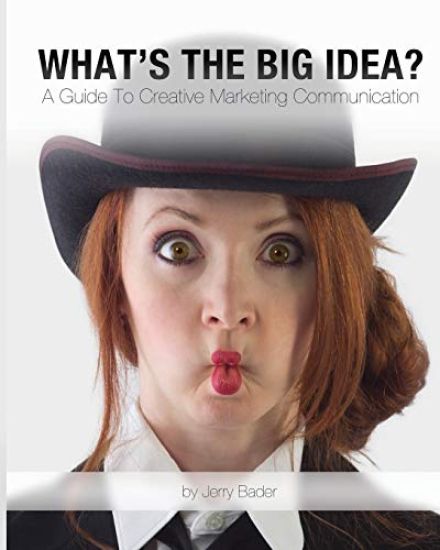
"What's The Big Idea?" lays out 28 optional approaches for creating the high concept that can be the center-point of all marketing decisions a business needs to make. By using one of these concepts entrepreneurs can make the appropriate decisions to invest and use the numerous tactical marketing and advertising options available and more importantly, to avoid wasting money on fad over-hyped tactics that may be suitable for some, but may not be suitable for everyone. Using this e-book to develop a high concept marketing strategy may just be the one thing that will make the difference in a business building a successful brand or in falling into the vast wasteland of Web mediocrity. "What's The Big Idea?" includes, a Concept Mind Map Chart, 28 photographic illustrations, text explaining the overall conceptual framework, and a description for each idea.
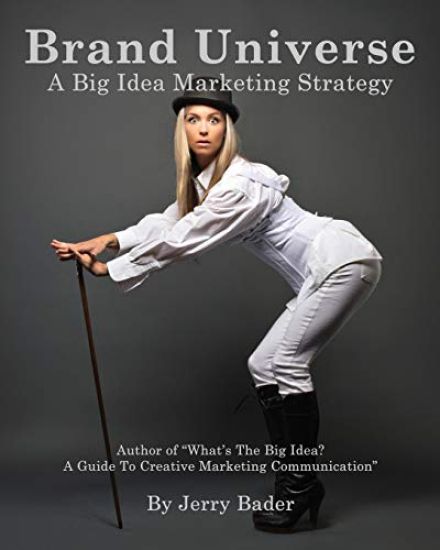
"Brand Universe, A Big Idea Marketing Strategy" builds on "What's The Big Idea?" by providing an implementation roadmap that helps guide the entrepreneur through the process of building a Brand Universe around their Big Idea Strategy. "Brand Universe" is jam-packed with useful information that you can use to actually implement your Big Idea Strategy. Here's some of what's included: - 16 Brand Universe Ideas To Spark Your Imagination complete with photographic Illustrations, text explanations, and implementation examples. - Marketing Strategy Using Brand Story Development - Controlling Your Brand Image - Self-Promotion Vs Brand Personality - Social Media Pitfalls - Why Brand Universe - Brand Universe Structure - Turning Story Into Brand Story with special emphasis on Web Video including in-depth discussions regarding critical implementation elements like The Message, The Medium, The Audience, The Environment, The Messenger, The Performance, The Look, The Sound, and The Words If you're frustrated with advertising that's expensive and ineffective then perhaps it's time to go back to the drawing board and look at marketing from a whole new perspective."Think of your brand as a self-contained universe, an eco-system filled with all the necessary elements that make for success. By looking at brand in this way, you eliminate all the extraneous irrelevances that just get in the way of delivering your essential marketing message, but like the universe itself, there are laws that govern behavior, and those laws shape what, how, and where you present your marketing communication." - Jerry Bader
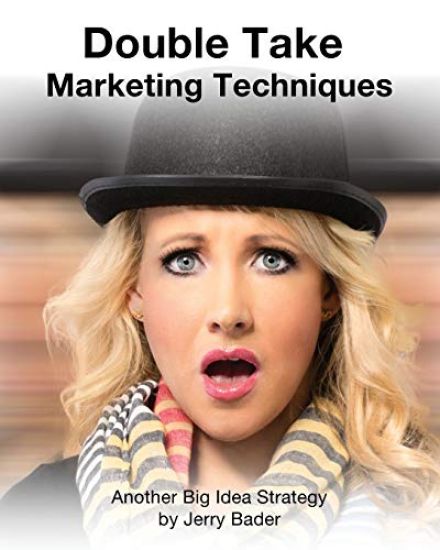
We are pleased to announce the release of the third in our series of Big Idea marketing e-books "Double Take Marketing Techniques." "Double Take Marketing Techniques" is based on the notion that marketing needs to get people pay attention to what you have to say by presenting marketing collaterals that force your audience to take a second look at whatever you're presenting. After all, if people don't absorb your message, you're never going to sell them anything. We've gone through our idea files to find the ideas and techniques that make an audience take a second look.The book contains 15 essential concepts that will help you focus on developing the kind of marketing strategies that reach people on a human level. We've also included 20 Visual Engagement Techniques complete with photographic examples. These are implementable concepts and techniques that will make your targeted prospects sit-up and take notice. "Double Take" is 80 pages jammed packed with information that will make you a better marketing executive or business manager.Together, "What's The Big Idea?," "Brand Universe," and "Double Take" form a valuable addition to any entrepreneurs marketing arsenal. In "What's The Big Idea?" you'll learn why you need a 'high concept' and get to choose from twenty-eight examples on which you can base your marketing strategy.In "Brand Universe" you'll learn what a Brand Universe is, and which one makes sense for your company. Building a Brand Universe helps you make the right marketing decisions for your brand, and avoid the pitfalls of falling prey to media hype and fad marketing schemes.And in "Double Take" you'll learn how to stop your prospects from prematurely clicking away from your website or bypassing your advertisement. "Double Take" concentrates on concepts and techniques that get your targeted audience to take a second look.