Kirjojen hintavertailu. Mukana 12 108 652 kirjaa ja 12 kauppaa.

Kirjahaku

Etsi kirjoja tekijän nimen, kirjan nimen tai ISBN:n perusteella.

13 kirjaa tekijältä Jerry L. Walls

Heaven

Heaven

Jerry L. Walls

Oxford University Press Inc
2002
sidottu
The Christian doctrine of heaven has been a moral source of enormous power in western culture. It has provided a striking account of the ultimate good in life and has for two millennia animated the hope that our lives can be fully meaningful. Recently, however, the doctrine of heaven has lost much of its grip on the western imagination and has become a vague and largely ignored part of the Christian creed. Not only have our hopes been redefined as a result, but our very identity as human beings has been altered. In this book, Jerry L. Walls argues that the doctrine of heaven is ripe for serious reconsideration. He contends not only that the orthodox view of heaven can be defended from objections commonly raised against it, but also that heaven is a powerful resource for addressing persistent philosophical problems, not the least of which concern the ground of morality and the meaning of life. Walls shows how heaven is integrally related to central Christian doctrines, particularly those concerning salvation, and tackles the difficult problem of why faith in Christ is necessary to save us from our sins. In addition, heaven is shown to illumine thorny problems of personal identity and to be an essential component of a satisfactory theodicy. Walls goes on to examine data from near-death experiences from the standpoint of some important recent work in epistemology and argues that they offer positive evidence for heaven. He concludes that we profoundly need to recover the hope of heaven in order to recover our very humanity.
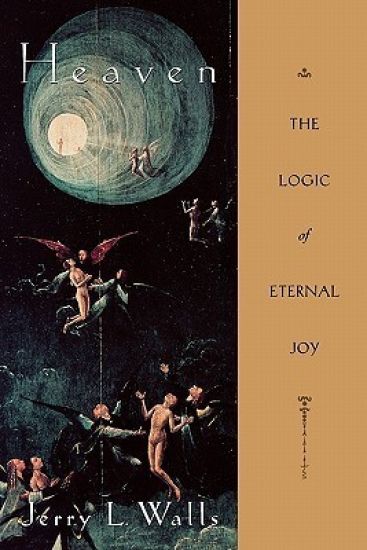
Heaven

Heaven

Jerry L. Walls

Oxford University Press Inc
2007
nidottu
In this book Jerry L. Walls argues that the doctrine of heaven is ripe for serious reconsideration. He contends not only that the orthodox view of heaven can be defended from objections commonly raised against it, but also that heaven is a powerful resource for addressing persistent philosophical problems, not the least of which concern the ground of morality and the meaning of life.
Purgatory

Purgatory

Jerry L. Walls

Oxford University Press Inc
2011
sidottu
This is a sequel to Walls's Heaven: the Logic of Eternal Joy (2002) and his earlier book Hell: The Logic of Eternal Damnation (1992). With Purgatory, Walls completes his examination of the Christian theology of the afterlife. He sketches the theological rationale for the doctrine of purgatory and traces its development in Roman Catholic theology. He examines Protestant objections to the doctrine - in particular the claims that it is not scriptural - and the Protestant Reformed and Wesleyan alternatives. As an intermediate state between death and resurrection, purgatory has traditionally assumed body-soul dualism, a concept called into question by much recent theology. Walls considers the impact of a monistic view of the human person on the doctrine of purgatory. In Catholic theology, purgatory has been understood as applying to persons who are already in a state of grace or salvation. In popular thought, however, it is sometimes understood as a "second chance" for the unconverted. Walls examines the doctrine in the light of "inclusive" theories of salvation that allow for repentance and conversion after death. He concludes with an examination of C.S. Lewis's writings on purgatory, and suggests that Lewis can be a model for evangelicals and other Protestants to engage the doctrine of purgatory in a way that is true to their theology.
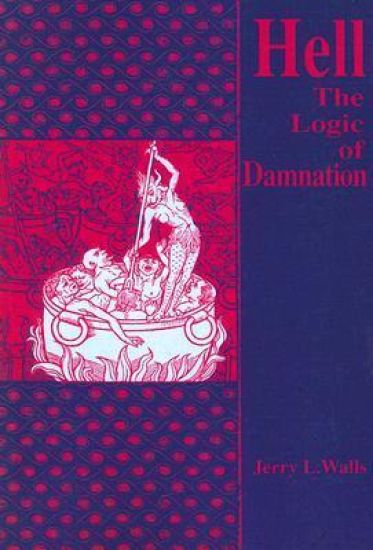
Hell

Hell

Jerry L. Walls

University of Notre Dame Press
1992
nidottu
Jerry L. Walls cogently argues that some traditional views of hell are still defensible and can be believed with intellectual and moral integrity. Focusing on the issues from the standpoint of philosophical theology, he explores the doctrine of hell in relation to both the divine nature and human nature. He argues, with respect to divine nature, that some versions of the doctrine are compatible not only with God's omnipotence and omniscience, but also with a strong account of His perfect goodness. The concept of divine goodness receives special attention since the doctrine of hell is most often rejected on moral grounds. In addition, Walls maintains that the doctrine of hell is intelligible from the standpoint of human freedom, since the idea of a decisive choice of evil is a coherent one.
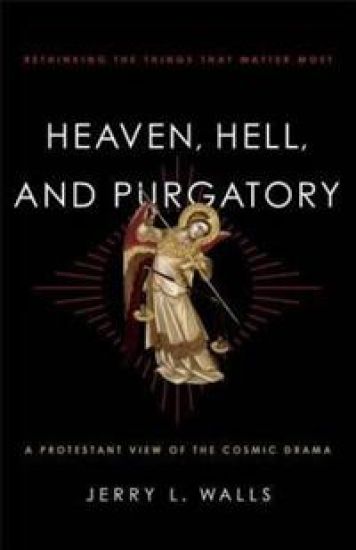
Heaven, Hell, and Purgatory – Rethinking the Things That Matter Most

Heaven, Hell, and Purgatory – Rethinking the Things That Matter Most

Jerry L. Walls

Brazos Press, Div of Baker Publishing Group
2015
nidottu
Will heaven be boring? How can a good and loving God send people to hell? Is there such a place as purgatory? If so, why is it necessary, if we're saved by grace?Questions about the afterlife abound. Given what is at stake, they are the most important questions we will ever consider. Recent years have seen a surge of Christian books written by people claiming to have received a glimpse of the afterlife, and numerous books, films, and TV shows have apocalyptic or postapocalyptic themes. Jerry Walls, a dynamic writer and expert on the afterlife, distills his academic writing on heaven, hell, and purgatory to offer clear biblical, theological, and philosophical grounding for thinking about these issues. He provides an ecumenical account of purgatory that is compatible with Protestant theology and defends the doctrine of eternal hell. Walls shows that the Christian vision of the afterlife illumines the deepest and most important issues of our lives, changing the way we think about happiness, personal identity, morality, and the very meaning of life.
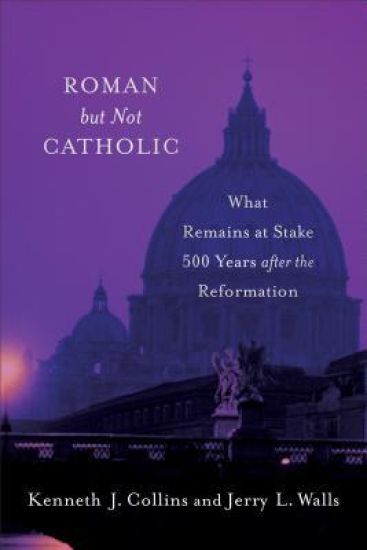
Roman but Not Catholic

Roman but Not Catholic

Jerry L. Walls; Kenneth J. Collins

Baker Academic, Div of Baker Publishing Group
2017
nidottu
This book offers a clearly written, informative, and fair critique of Roman Catholicism in defense of the catholic faith. Two leading evangelical thinkers in church history and philosophy summarize the major points of contention between Protestants and Catholics, honestly acknowledging real differences while conveying mutual respect and charity. The authors address key historical, theological, and philosophical issues as they consider what remains at stake five hundred years after the Reformation. They also present a hopeful way forward for future ecumenical relations, showing how Protestants and Catholics can participate in a common witness to the world.
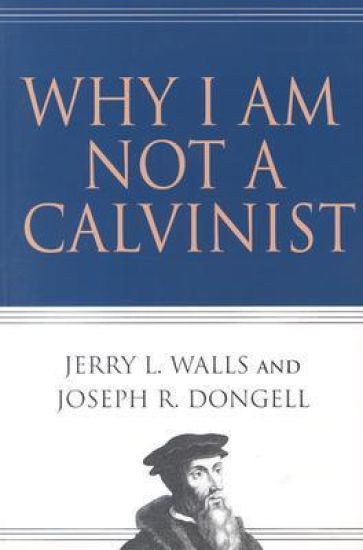
Why I Am Not a Calvinist

Why I Am Not a Calvinist

Jerry L. Walls; Joseph Dongell

Inter-Varsity Press,US
2004
nidottu
What's wrong with Calvinism? Since the Reformation, Calvinism has dominated much of evangelical thought. It has been so well established that many Christians simply assume it to be the truest expression of Christian doctrine. But Calvinism has some serious biblical and theological weaknesses that unsettle laypeople, pastors and scholars alike. God is sovereign. All evangelical Christians--whether Arminians or Calvinists--have no doubt about this fundamental truth. But how does God express his sovereignty? Is God a master puppeteer, pulling our strings? Or has he graciously given his children freedom to respond to his love? In this eminently readable book, Jerry L. Walls and Joseph R. Dongell explore the flaws of Calvinist theology.Why I Am Not a Calvinist is a must-read for all who struggle with the limitations of this dominant perspective within evangelical theology.
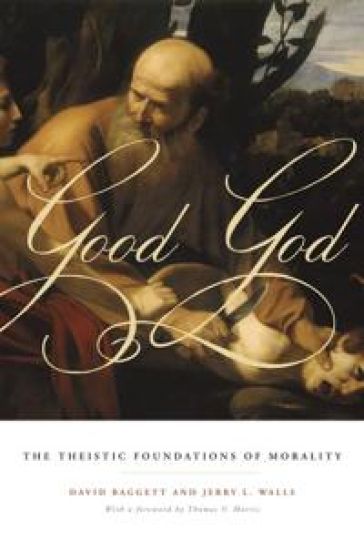
Good God

Good God

David Baggett; Jerry L. Walls

Oxford University Press Inc
2011
sidottu
Moral arguments for God's existence have undergone something of a resurgence in recent years. For quite a while they were out of vogue for a variety of reasons, but recent advances in the philosophy of language and philosophical and natural theology have reinvigorated moral apologetics. This is the first book to consolidate these gains into one coherent treatment, which will rigorously demonstrate to a wide readership how effectively various objections to moral apologetics have been answered. The authors show how strides in answering the problem of evil, the Euthyphro Dilemma, and epistemic vacuity and arbitrariness challenges to theistic ethics make possible a compelling cumulative moral argument that can greatly contribute to the rational case for God's existence--and God's goodness. The authors hope to reach a readership of not just philosophers, apologists, and theologians, but bright college students up through graduate school and beyond. Christians and non-Christians alike, those interested in apologetics, moral theology, atheology, and morality and religious ethics should find the book a significant contribution to their field.
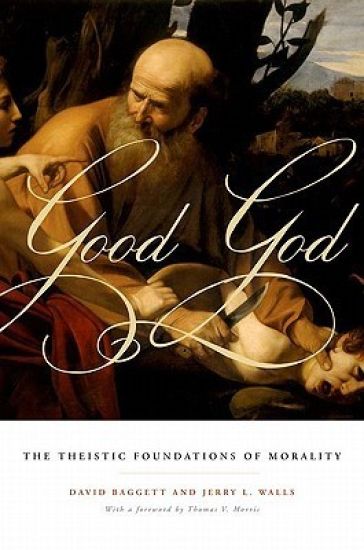
Good God

Good God

David Baggett; Jerry L. Walls

Oxford University Press Inc
2011
nidottu
Moral arguments for God's existence have undergone something of a resurgence in recent years. For quite a while they were out of vogue for a variety of reasons, but recent advances in the philosophy of language and philosophical and natural theology have reinvigorated moral apologetics. This is the first book to consolidate these gains into one coherent treatment, which will rigorously demonstrate to a wide readership how effectively various objections to moral apologetics have been answered. The authors show how strides in answering the problem of evil, the Euthyphro Dilemma, and epistemic vacuity and arbitrariness challenges to theistic ethics make possible a compelling cumulative moral argument that can greatly contribute to the rational case for God's existence--and God's goodness. The authors hope to reach a readership of not just philosophers, apologists, and theologians, but bright college students up through graduate school and beyond. Christians and non-Christians alike, those interested in apologetics, moral theology, atheology, and morality and religious ethics should find the book a significant contribution to their field.
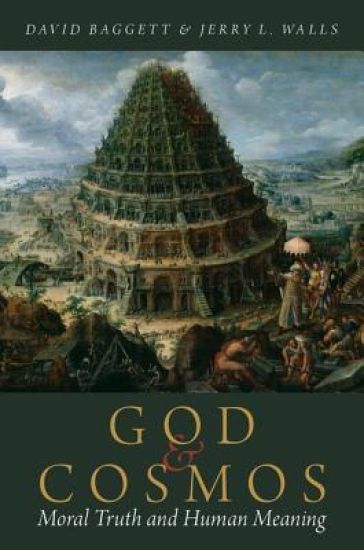
God and Cosmos

God and Cosmos

David Baggett; Jerry L. Walls

Oxford University Press Inc
2016
sidottu
Naturalistic ethics is the reigning paradigm among contemporary ethicists; in God and Cosmos, Baggett and Walls argue that this approach is seriously flawed. This book canvasses a broad array of secular and naturalistic ethical theories in an effort to test their adequacy in accounting for moral duties, intrinsic human value, prospects for radical moral transformation, and the rationality of morality. In each case, the authors argue, although various secular accounts provide real insights and indeed share common ground with theistic ethics, the resources of classical theism and orthodox Christianity provide the better explanation of the moral realities under consideration. Among such realities is the fundamental insight behind the problem of evil, namely, that the world is not as it should be. Baggett and Walls argue that God and the world, taken together, exhibit superior explanatory scope and power for morality classically construed, without the need to water down the categories of morality, the import of human value, the prescriptive strength of moral obligations, or the deliverances of the logic, language, and phenomenology of moral experience. This book thus provides a cogent moral argument for God's existence, one that is abductive, teleological, and cumulative.
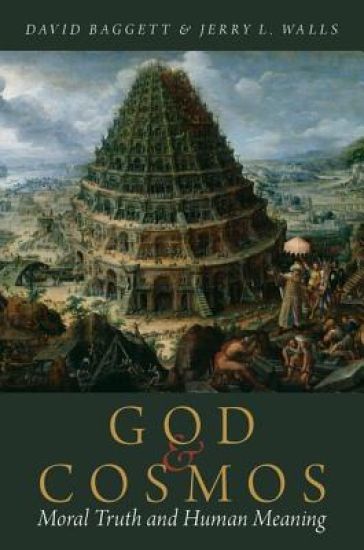
God and Cosmos

God and Cosmos

David Baggett; Jerry L. Walls

Oxford University Press Inc
2016
nidottu
Naturalistic ethics is the reigning paradigm among contemporary ethicists; in God and Cosmos, Baggett and Walls argue that this approach is seriously flawed. This book canvasses a broad array of secular and naturalistic ethical theories in an effort to test their adequacy in accounting for moral duties, intrinsic human value, prospects for radical moral transformation, and the rationality of morality. In each case, the authors argue, although various secular accounts provide real insights and indeed share common ground with theistic ethics, the resources of classical theism and orthodox Christianity provide the better explanation of the moral realities under consideration. Among such realities is the fundamental insight behind the problem of evil, namely, that the world is not as it should be. Baggett and Walls argue that God and the world, taken together, exhibit superior explanatory scope and power for morality classically construed, without the need to water down the categories of morality, the import of human value, the prescriptive strength of moral obligations, or the deliverances of the logic, language, and phenomenology of moral experience. This book thus provides a cogent moral argument for God's existence, one that is abductive, teleological, and cumulative.