Kirjojen hintavertailu. Mukana 11 342 296 kirjaa ja 12 kauppaa.

Kirjahaku

Etsi kirjoja tekijän nimen, kirjan nimen tai ISBN:n perusteella.

6 kirjaa tekijältä Jerry Thompson

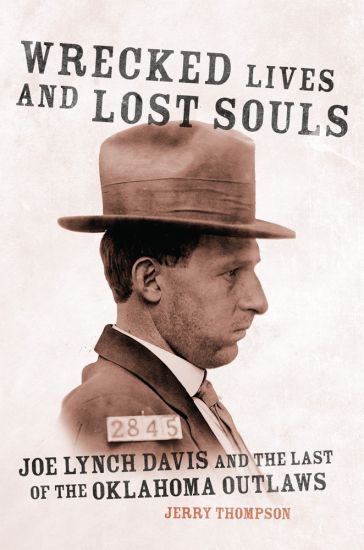
Wrecked Lives and Lost Souls

Wrecked Lives and Lost Souls

Jerry Thompson

University of Oklahoma Press
2019
nidottu
Growing up, Jerry Thompson knew only that his grandfather was a gritty, ""mixed-blood"" Cherokee cowboy named Joe Lynch Davis. That was all anyone cared to say about the man. But after Thompson's mother died, the award-winning historian discovered a shoebox full of letters that held the key to a long-lost family history of passion, violence, and despair. Wrecked Lives and Lost Souls, the result of Thompson's sleuthing into his family's past, uncovers the lawless life and times of a man at the center of systematic cattle rustling, feuding, gun battles, a bloody range war, bank robberies, and train heists in early 1900s Indian Territory and Oklahoma. Through painstaking detective work into archival sources, newspaper accounts, and court proceedings, and via numerous interviews, Thompson pieces together not only the story of his grandfather - and a long-forgotten gang of outlaws to rival the infamous Younger brothers - but also the dark path of a Cherokee diaspora from Georgia to Indian Territory. Davis, born in 1891, grew up on a family ranch on the Canadian River, outside the small community of Porum in the Cherokee Nation. The range was being fenced, and for the Davis family and others, cattle rustling was part of a way of life - a habit that ultimately spilled over into violence and murder. The story ""goes way back to the wild & wooly cattle days of the west,"" an aunt wrote to Thompson's mother, ""when there was cattle rustling, bank robberies & feuding."" One of these feuds - that Joe Davis was ""raised right into"" - was the decade-long Porum Range War, which culminated in the murder of Davis's uncle in 1907. In fleshing out the details of the range war and his grandfather's life, Thompson brings to light the brutality and far-reaching consequences of an obscure chapter in the history of the American West.
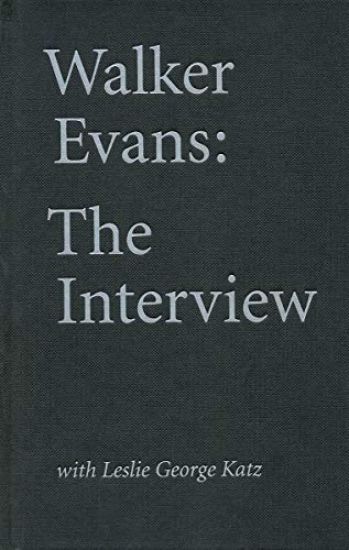
Walker Evans: The Interview

Walker Evans: The Interview

Jerry Thompson

Eakins Press,N.Y.
2019
sidottu
Walker Evans in his own words: the legendary interview, back in print In 1971, Art in America published an interview with Walker Evans conducted by Leslie George Katz, writer and publisher of the Eakins Press. The interview is charming and illuminating in its clarity and candor. Nearing the end of his life, Evans speaks freely about his influences and how he got started as a photographer (“I was damn well going to be an artist and I wasn’t going to be a businessman,” he remembers), and reflects back on his work and his thinking. The interview has become legendary, consulted by curators, scholars and students for half a century and considered a definitive source for insights into the process, philosophy and personality of one of America’s greatest photographers. In 1995, the Eakins Press Foundation republished Evans’ interview in a deluxe clothbound edition titled Walker Evans Incognito. More than 20 years later, this new edition brings the Evans interview back into print in an elegant and affordable volume for a new generation. Walker Evans scholar Anne Bertrand introduces the interview and its publication history, and contributes notes throughout the text that provide important contextual information. Walker Evans: The Interview offers an opportunity to rediscover the man behind the famous images, in his own words. Born in St. Louis, Missouri, Walker Evans (1903–75) took up photography in 1928. His book collaboration with James Agee, Let Us Now Praise Famous Men (1941), which portrayed the lives of three white tenant families in southern Alabama during the Depression, has become one of that era's most defining documents. Evans joined the staff of Time magazine in 1945, and shortly after moved to Fortune magazine, where he stayed until 1965. That year, he became a professor of photography at the Yale University School of Art. Evans died at his home in Old Lyme, Connecticut, in 1975. Leslie George Katz (1918–97) was the founder and publisher of the Eakins Press Foundation. Until his death in 1997, he wrote extensively about American art and culture, and through his sustained efforts to celebrate his heroes—Thomas Eakins, Walt Whitman, and Walker Evans—found a way to define a new sort of democratic, patriotic intellectualism.
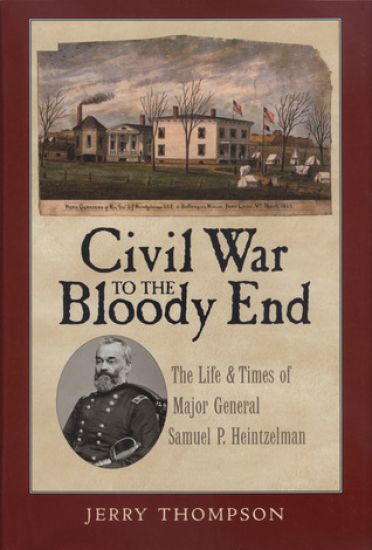
Civil War to the Bloody End

Civil War to the Bloody End

Jerry Thompson

Texas A M University Press
2006
sidottu
If President Lincoln could have unmade a general, perhaps he would have started with Samuel Peter ""Sourdough"" Heintzelman, whose early military successes were overshadowed by a prickly disposition and repeated Union defeats during the Civil War. By the time his friend Robert E. Lee left Arlington to lead a Rebel army against the bluecoats, Heintzelman had already seen duty in Mexico, established Fort Yuma in California in 1850, mined for silver in Arizona, and ably led U.S. forces on the Texas-Mexico border during the 1859-60 Cortina War. During the Civil War, he was in the forefront of the fighting at First Bull Run and the disastrous 1862 Peninsula Campaign. He commanded the III Corps of the Army of the Potomac at the siege of Yorktown and in the ferocious fighting at Williamsburg, Fair Oaks, Oak Grove, Savage's Station, Glendale, and Malvern Hill. Although he aspired to succeed General George B. McClellan, he was relieved of his command after his troops were badly mauled at Second Bull Run. After demonstrating his inability to guard the southern approaches to Washington, D.C., from Virginia guerillas, he spent the latter part of the war administering prison camps in the Midwest, keeping a watchful eye on Copperhead subversives, and quarreling with more than one disgruntled governor. In early Reconstruction Texas, Heintzelman struggled with the conflict between former Secessionists and Radical Republicans. Despite his failures, Heintzelman remains among the most fascinating military figures of nineteenth-century America, if only for his broad involvement across much of the South and West during this pivotal era of the nation's history. By mining Heintzelman's massive journals and countless historical archives, Jerry Thompson has not only provided a retelling of the personal history of a frustrated general but has also given readers a richly textured account of the events, the political crosscurrents, and the times in which ""Sourdough"" won his unenviable reputation.
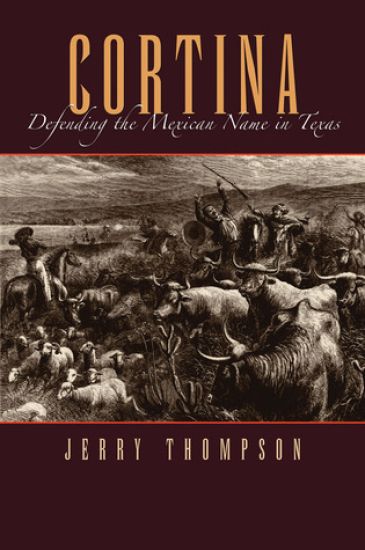
Cortina

Cortina

Jerry Thompson

Texas A M University Press
2013
nidottu
At a time when the U.S.-Mexican border was still not clearly defined and when the doctrine of Manifest Destiny and land hunger impelled the Anglo presence ever deeper and more intrusively into South Texas, Juan Nepomucino Cortina cut a violent swath across the region in a conflict that came to be known as The Cortina War. Did this border caudillo fight to defend the rights, honour, and legal claims of the Mexicans of South Texas, as he claimed? Or was his a quest for personal vengeance against the newcomers who had married into his family, threatened his mother's land holdings, and insulted his honour?Historian Jerry Thompson mines the archival record and considers it in light of recent revisionist history of the region. As a result, he produces not only a carefully nuanced work on Cortina - the most comprehensive to date for this pivotal borderlands figure - but also a balanced interpretation of the violence that racked South Texas from the 1840s through the 1860s.Cortina's influence in the region made him a force to be reckoned with during the American Civil War. He influenced Mexican politics from the 1840s to the 1870s and fought in the Mexican Army for more than forty-five years. His daring cross-border cattle raids, carried out for more than two decades, made his exploits the stuff of sensational journalism in the newspapers of New York, Boston, and other American cities. By the time of his imprisonment in 1877, Cortina and his followers had so roiled South Texas that Anglo reprisals were being taken against Mexicans and Tejanos throughout the region, ironically worsening the racism that had infuriated Cortina in the beginning. The effects of this troubled period continue to resonate in Anglo-Mexican and Anglo-Tejano relations, down to this very day.Students of regional and borderlands history will find this premier biography to be a rich source of new perspectives. Its transnational focus and balanced approach will reward scholarly and general readers alike.
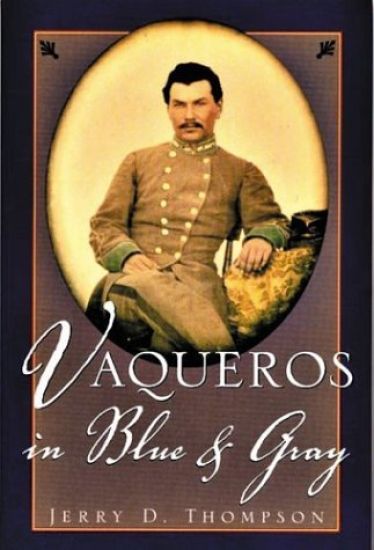
Vaqueros in Blue and Gray

Vaqueros in Blue and Gray

Jerry Thompson

State House Press
2000
nidottu
As many as 9,5000 men of Hispanic heritage fought in the United States' Civil War. In Texas, the bitter conflict deeply divided the Tejanos– Texans of Mexican heritage. An estimated 2,500 fought in the ranks of the Confederacy while 950, including some Mexican nationals, fought for the Stars and Stripes, Vaqueros in Blue & Gray, originally published in 1976, is the story of these Tejanos who participated in the Civil War.This valuable resource for both the history of the Civil War and for the important role of the Tejanos in the history of Texas relates the various battles and skirmishes at Eagle Pass, Laredo, Carrizo (Zapata), Los Patricios, Las Rucias, the final Confederate expedition against Brownsville, and the last battle of the Civil War at Palmito Ranch.Included is the story of the Tejanoswho fought in the Union Army and saw action in Louisiana and in the Rio Grande Valley.This new edition of the history of these vaqueros contains the first comprehensive list, containing almost 4,000 names, ever compiled of the Confederate and Union Hispanics from Texas who served in the war.Vaqueros in Blue & Gray presents a stirring saga of these brave people, their land, and their epic role in the Civil War and in the history of Texas.