Kirjojen hintavertailu. Mukana 12 016 292 kirjaa ja 12 kauppaa.

Kirjahaku

Etsi kirjoja tekijän nimen, kirjan nimen tai ISBN:n perusteella.

3 kirjaa tekijältä Jerry W. Knudson

Roots of Revolution

Roots of Revolution

Jerry W. Knudson

University Press of America
2009
sidottu
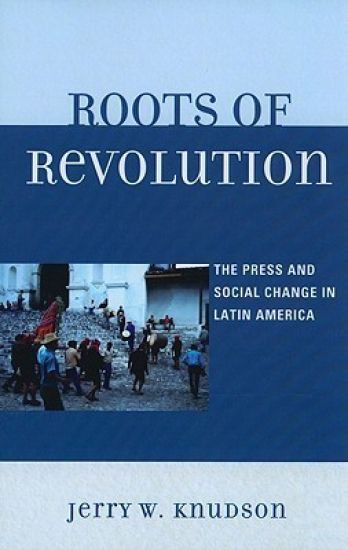
Rebels of the South! It is better to die on your feet than to live on your knees. —Inscription dated April 11, 1919, one day after the assassination of Emiliano Zapata, carved on a post at the Borda Garden in Cuernavaca, seen by Frank Tannenbaum in 1923. Peace by Revolution, An Interpretation of Mexico (New York, 1933), page179. Do not wear a shirt of eleven yards, for he who wants to be a Redeemer will be crucified. Guadalajara proverb, quoted in John Reed, Insurgent Mexico. 1914, page 78. Roots of Revolution focuses on the longstanding social and economic ills that caused society to disintegrate into violence during the classic social and economic Latin American revolutions of Mexico from 1910 to 1940, Bolivia since 1952, Cuba since 1959, and Nicaragua since 1979. Peaceful change eluded - temporarily at least - Chile, Argentina and Peru, and the future of Venezuela and other countries is undetermined. Considering the pervasive hunger and illiteracy in Latin America, as well as the inadequate or non-existent medical and educational systems, it is surprising to note that there have only been four classic revolutions with profound social and economic restructuring of society. Based upon the author's firsthand knowledge as a journalist focused on Latin America, this book is designed to give the latest information, historical or present, on such revolutions. The human element is emphasized, including that of the author, but these comments are clearly separated from the body of the work.
Roots of Revolution

Roots of Revolution

Jerry W. Knudson

University Press of America
2009
nidottu
Rebels of the South! It is better to die on your feet than to live on your knees. —Inscription dated April 11, 1919, one day after the assassination of Emiliano Zapata, carved on a post at the Borda Garden in Cuernavaca, seen by Frank Tannenbaum in 1923. Peace by Revolution, An Interpretation of Mexico (New York, 1933), page179. Do not wear a shirt of eleven yards, for he who wants to be a Redeemer will be crucified. Guadalajara proverb, quoted in John Reed, Insurgent Mexico. 1914, page 78. Roots of Revolution focuses on the longstanding social and economic ills that caused society to disintegrate into violence during the classic social and economic Latin American revolutions of Mexico from 1910 to 1940, Bolivia since 1952, Cuba since 1959, and Nicaragua since 1979. Peaceful change eluded - temporarily at least - Chile, Argentina and Peru, and the future of Venezuela and other countries is undetermined. Considering the pervasive hunger and illiteracy in Latin America, as well as the inadequate or non-existent medical and educational systems, it is surprising to note that there have only been four classic revolutions with profound social and economic restructuring of society. Based upon the author's firsthand knowledge as a journalist focused on Latin America, this book is designed to give the latest information, historical or present, on such revolutions. The human element is emphasized, including that of the author, but these comments are clearly separated from the body of the work.
Jefferson and the Press

Jefferson and the Press

Jerry W. Knudson

University of South Carolina Press
2006
sidottu
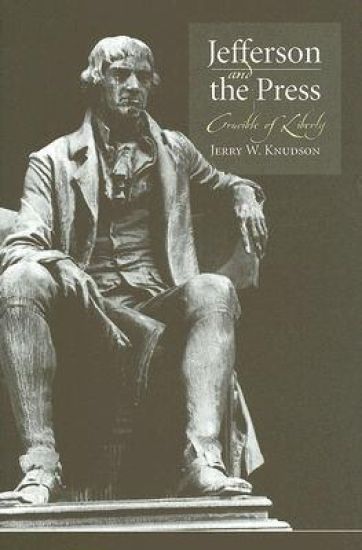
Neither fair nor balanced, journalistic warfare during America's first transfer of power. With the exception of Abraham Lincoln, no president prior to the twentieth century has been more vilified by the U.S. news media than Thomas Jefferson. ""Jefferson and the Press"" demonstrates the power of the press in the early years of the Republic. Four-fifths of the young nation's 235 newspapers were Federalist, but, as Jerry W. Knudson explains, the minority Republican newspapers combated these odds through direct invectives and vehemently candid editorials. Knudson details the editorial responses of four Federalist and four Republican newspapers in wide circulation to six major episodes of the Jeffersonian era: the election of 1800-1801, the return of Thomas Paine from revolutionary France, the Louisiana Purchase, the Hamilton-Burr duel, the impeachment of Supreme Court Justice Samuel Chase, and the economic embargo of 1807-1809. Rocked by domestic scandals, the American nation read accounts in Federalist papers that demonized Jefferson and in Republican papers that lauded the president's achievements. Knudson profiles the men projecting these radically different views - savvy editors who embraced their ability to channel public opinion and who often became famous personalities in their own right, including Samuel Harrison Smith of National Intelligencer in Washington, D.C., and William Duane of Philadelphia's Aurora. He shows these editors to have been sophisticated political ""scribblers"" who fearlessly printed what they thought with bluntness and ferocity that might shock even twenty-first-century readers. Concerned with how these charged verbal skirmishes in the press both molded and reflected public opinion, Knudson reveals the power, abrasiveness, and polarizing effects of a free but quite partisan press as the only source of public information during the young nation's first major shift in leadership. Diverging from accepted views, he frames his argument to illustrate that newspapers reached their height of influence and malevolence during Jefferson's presidency rather than that of Andrew Jackson in the 1820s and 1830s.