Kirjojen hintavertailu. Mukana 11 342 296 kirjaa ja 12 kauppaa.

Kirjahaku

Etsi kirjoja tekijän nimen, kirjan nimen tai ISBN:n perusteella.

3 kirjaa tekijältä Jesse J. Prinz

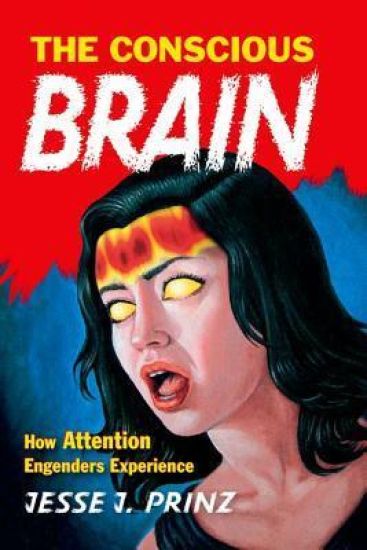
The Conscious Brain

The Conscious Brain

Jesse J. Prinz

Oxford University Press Inc
2015
nidottu
The problem of consciousness continues to be a subject of great debate in cognitive science. Synthesizing decades of research, The Conscious Brain advances a new theory of the psychological and neurophysiological correlates of conscious experience. Prinz's account of consciousness makes two main claims: first consciousness always arises at a particular stage of perceptual processing, the intermediate level, and, second, consciousness depends on attention. Attention changes the flow of information allowing perceptual information to access memory systems. Neurobiologically, this change in flow depends on synchronized neural firing. Neural synchrony is also implicated in the unity of consciousness and in the temporal duration of experience. Prinz also explores the limits of consciousness. We have no direct experience of our thoughts, no experience of motor commands, and no experience of a conscious self. All consciousness is perceptual, and it functions to make perceptual information available to systems that allows for flexible behavior. Prinz concludes by discussing prevailing philosophical puzzles. He provides a neuroscientifically grounded response to the leading argument for dualism, and argues that materialists need not choose between functional and neurobiological approaches, but can instead combine these into neurofunctional response to the mind-body problem. The Conscious Brain brings neuroscientific evidence to bear on enduring philosophical questions, while also surveying, challenging, and extending philosophical and scientific theories of consciousness. All readers interested in the nature of consciousness will find Prinz's work of great interest.
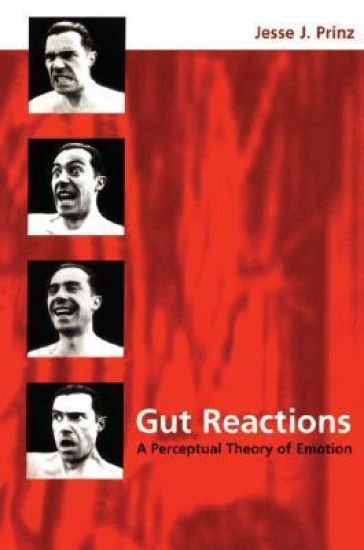
Gut Reactions

Gut Reactions

Jesse J. Prinz

Oxford University Press Inc
2006
nidottu
Gut Reactions is an interdisciplinary defense of the claim that emotions are perceptions of changes in the body. This thesis, pioneered by William James and resuscitated by Antonio Damasio, has been widely criticized for failing to acknowledge that emotions are meaningful insofar as they represent concerns, not respiratory function and blood pressure. Fear represents danger, sadness represents loss. To explain this fact, many researchers conclude that emotions must involve judgments regarding one's relationship to the environment. Prinz offers a new unified account of the emotions that reconciles these two theories. He argues that emotions are embodied appraisals--they are perceptions of the body, but, through the body, they also allow us to literally perceive danger, loss, and other matters of concern. The basic idea behind embodied appraisal theory is captured in the familiar notion of a "gut reaction," which has been overlooked by much emotion research. Using recent work in semantics, Prinz show how emotions can be meaningful without incorporating judgments or other cognitive states. Criticizing those who think that some emotions are social constructions, while others can be explained by evolutionary psychology, Prinz argues that all emotions are the same kind of phenomena, involving both nature and nurture. Prinz also distinguishes emotions from other affective states, such as motivations and moods, and offers a theory of emotional valence (what makes some emotions good and others bad). Ultimately, his theory of emotion consciousness is inspired by recent research on the neural correlates of conscious vision. Drawing a parallel between emotion consciousness and visual consciousness, Prinz shows that emotion is a form of perception in the fullest sense. Where vision reveals the identity of objects in a given situation, emotion reveals how that situation bears on our well-being.
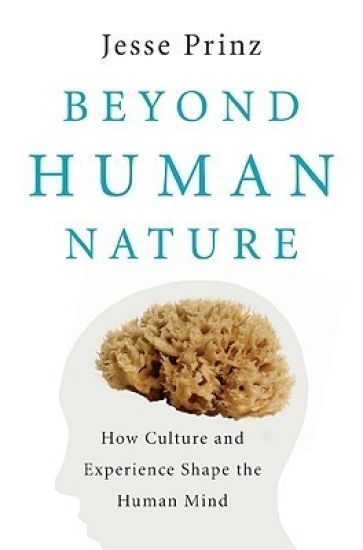
Beyond Human Nature: How Culture and Experience Shape the Human Mind
In this era of genome projects and brain scans, it is all too easy to overestimate the role of biology in human psychology. But in this passionate corrective to the idea that DNA is destiny, Jesse Prinz focuses on the most extraordinary aspect of human nature: that nurture can supplement and supplant nature, allowing our minds to be profoundly influenced by experience and culture. Drawing on cutting-edge research in neuroscience, psychology, and anthropology, Prinz shatters the myth of human uniformity and reveals how our differing cultures and life experiences make each of us unique. Along the way he shows that we can't blame mental illness or addiction on our genes, and that societal factors shape gender differences in cognitive ability and sexual behavior. A much-needed contribution to the nature-nurture debate, Beyond Human Nature shows us that it is only through the lens of nurture that the spectrum of human diversity becomes fully and brilliantly visible.