Kirjojen hintavertailu. Mukana 11 342 296 kirjaa ja 12 kauppaa.

Kirjahaku

Etsi kirjoja tekijän nimen, kirjan nimen tai ISBN:n perusteella.

3 kirjaa tekijältä Jessica Barr

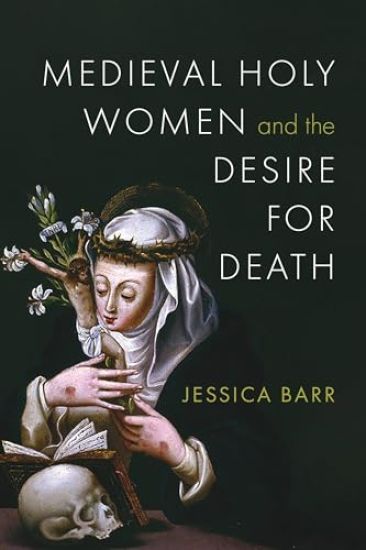
Medieval Holy Women and the Desire for Death

Medieval Holy Women and the Desire for Death

Jessica Barr

UNIVERSITY OF NOTRE DAME PRESS
2026
sidottu
Medieval Holy Women and the Desire for Death investigates the tension between death as necessary for bringing about union with God and as the end of life on earth.For medieval Christians, only death could offer complete union with God. For medieval women in particular, death was figured as a desirable end to their embodied lives; at least, this is the story told by the clergymen who typically wrote their biographies. Medieval Holy Women and the Desire for Death questions this assumption and studies visionary narratives, treatises, and spiritual reflections by and about medieval Christian women from the thirteenth through the fifteenth centuries to reveal how these women understood their own deaths and how their depictions conformed to or departed from the stories told about them.Rather than focusing on externalities like rituals, revenants, or miracles, Jessica Barr instead tackles the desire for death from the inside, seeking to elucidate the ways in which medieval people anticipated or experienced biological death on a personal level. In narrating their spiritual lives within the framework of deeply held Christian beliefs, these medieval women mystics illustrate how theology and experience converge—and, not infrequently, diverge.
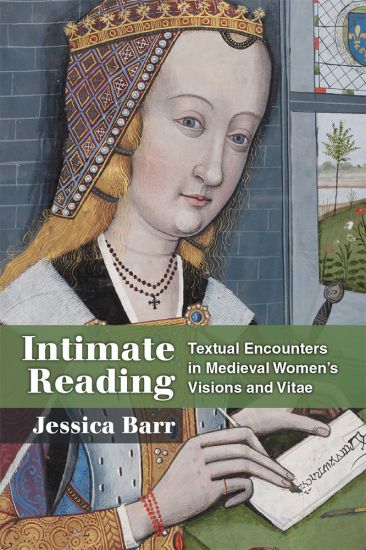
Intimate Reading

Intimate Reading

Jessica Barr

The University of Michigan Press
2020
sidottu
Intimate Reading: Textual Encounters in Medieval Women’s Visions and Vitae explores the ways that women mystics sought to make their books into vehicles for the reader’s spiritual transformation. Jessica Barr argues that the cognitive work of reading these texts was meant to stimulate intensely personal responses, and that the very materiality of the book can produce an intimate encounter with God. She thus explores the differences between mystics’ biographies and their self-presentation, analyzing as well the complex rhetorical moves that medieval women writers employ to render their accounts more effective. This new volume is structured around five case studies. Chapters consider the biographies of 13th-century holy women from Liège, the writings of Margery Kempe, Gertrude of Helfta, Mechthild of Magdeburg, Marguerite Porete, and Julian of Norwich. At the heart of Intimate Reading is the question of how reading works—what it means to enter imaginatively and intellectually into the words of another. The volume showcases the complexity of medieval understandings of the work of reading, deepening our perception of the written word’s capacity to signify something that lies even beyond rational comprehension.
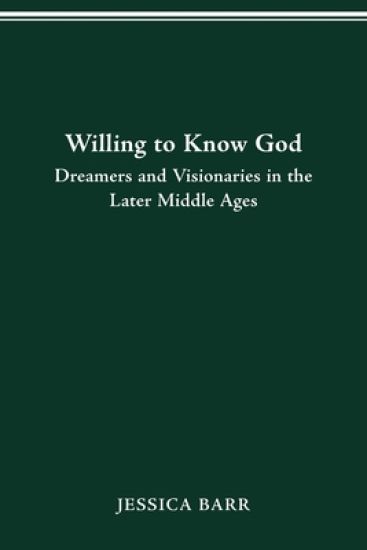
Willing to Know God

Willing to Know God

Jessica Barr

Ohio State University Press
2021
pokkari
Although authors of mystical treatises and dream visions shared a core set of assumptions about how visions are able to impart transcendent truths to their recipients, the modern divide between "religious" and "secular" has led scholars to study these genres in isolation. Willing to Know God addresses the simultaneous flowering of mystical and literary vision texts in the Middle Ages by questioning how the vision was thought to work. What preconditions must be met in these texts for the vision to transform the visionary? And when, as in poems such as Pearl, this change does not occur, what exactly has gone wrong? Through close readings of medieval women's visionary texts and English dream poems, Jessica Barr argues that the vision required the active as well as the passive participation of the visionary. In these texts, dreamers and visionaries must be volitionally united with the divine and employ their rational and analytic faculties in order to be transformed by the vision. Willing to Know God proposes that the study of medieval vision texts demands a new approach that takes into account both vision literature that has been supposed to have a basis in lived experience and visions that are typically read as fictional. It argues that these two "genres" in fact complement and inform one another. Rather than discrete literary modes, they are best read as engaged in an ongoing conversation about the human mind's ability to grasp the divine.