Kirjojen hintavertailu. Mukana 12 083 983 kirjaa ja 12 kauppaa.

Kirjahaku

Etsi kirjoja tekijän nimen, kirjan nimen tai ISBN:n perusteella.

2 kirjaa tekijältä Jessica M. Wilson

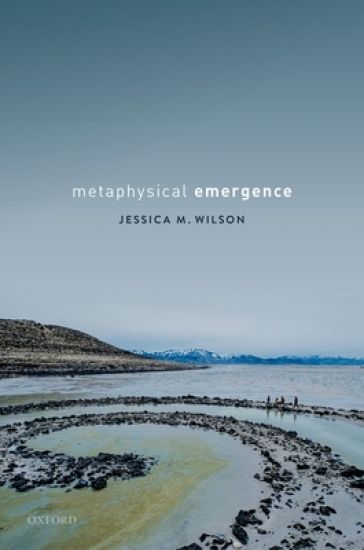
Metaphysical Emergence

Metaphysical Emergence

Jessica M. Wilson

Oxford University Press
2021
sidottu
Both the special sciences and ordinary experience suggest that there are metaphysically emergent entities and features: macroscopic goings-on (including mountains, trees, humans, and sculptures, and their characteristic features) which depend on, yet are distinct from and distinctively efficacious with respect to, lower-level physical configurations and features. These appearances give rise to two key questions. First, what is metaphysical emergence, more precisely? Second, is there any metaphysical emergence, in principle and moreover in fact? Metaphysical Emergence provides clear and systematic answers to these questions. Wilson argues that there are two, and only two, forms of metaphysical emergence of the sort seemingly at issue in the target cases: 'Weak' emergence, whereby a dependent feature has a proper subset of the powers of the feature upon it depends, and 'Strong' emergence, whereby a dependent feature has a power not had by the feature upon which it depends. Weak emergence unifies and illuminates seemingly diverse accounts of non-reductive physicalism; Strong emergence does the same as regards seemingly diverse anti-physicalist views positing fundamental novelty at higher levels of compositional complexity. After defending the in-principle viability of each form of emergence, Wilson considers whether complex systems, ordinary objects, consciousness, and free will are actually metaphysically emergent. She argues that Weak emergence is quite common, and that there is Strong emergence in the important case of free will.
Metaphysical Emergence

Metaphysical Emergence

Jessica M. Wilson

Oxford University Press
2023
nidottu
Both the special sciences and ordinary experience suggest that there are metaphysically emergent entities and features: macroscopic goings-on (including mountains, trees, humans, and sculptures, and their characteristic properties) which depend on, yet are distinct from and distinctively efficacious with respect to, lower-level physical configurations and features. These appearances give rise to two key questions. First, what is metaphysical emergence, more precisely? Second, is there any metaphysical emergence, in principle and moreover in fact? Metaphysical Emergence provides clear and systematic answers to these questions. Wilson argues that there are two, and only two, forms of metaphysical emergence of the sort seemingly at issue in the target cases: 'Weak' emergence, whereby a dependent feature has a proper subset of the powers of the feature upon which it depends, and 'Strong' emergence, whereby a dependent feature has a power not had by the feature upon which it depends. Weak emergence unifies and illuminates seemingly diverse accounts of non-reductive physicalism; Strong emergence does the same as regards seemingly diverse anti-physicalist views positing fundamental novelty at higher levels of compositional complexity. After defending the in-principle viability of each form of emergence, Wilson considers whether complex systems, ordinary objects, consciousness, and free will are actually metaphysically emergent. She argues that Weak emergence is quite common, and that there is Strong emergence in the important case of free will.