Kirjojen hintavertailu. Mukana 12 282 443 kirjaa ja 12 kauppaa.

Kirjahaku

Etsi kirjoja tekijän nimen, kirjan nimen tai ISBN:n perusteella.

13 kirjaa tekijältä Jessy

Teen Brain: Primed for Addiction
Teenage years are a rollercoaster of emotions and experiences. Why? It's all in the brain During adolescence, the emotional center develops rapidly, making teens crave excitement and novelty. This "wired for risk" state isn't a bug, it's a feature. It helps teens explore independence, learn from trial and error, and solidify their identities. However, the prefrontal cortex, responsible for planning and long-term thinking, lags behind. This can lead to impulsive decisions - that joyride that seems thrilling might not seem so great later. While risk-taking is a natural part of growing up, understanding these brain changes can help teens (and parents ) navigate this adventurous stage more safely.
Black Swans: Taming Financial Risk
Don't let the unexpected derail your financial future "Black Swans: Taming Financial Risk" equips you to navigate the unpredictable world of markets. This book dives deep into the concept of Black Swan events - those rare, high-impact occurrences that can wreak havoc on your investments. Learn how to identify potential risks, develop strategies to mitigate their impact, and build a resilient portfolio that can weather any storm. "Black Swans" goes beyond theory, offering practical guidance and actionable steps to protect your assets. Whether you're a seasoned investor or just starting out, this book empowers you to make informed decisions and navigate the financial landscape with confidence, even when the unexpected arises.
Hidden Culprit: Atherosclerosis & Heart Disease
Cholesterol, a waxy substance in your blood, plays a double game in your body. While it's needed for healthy cells, high levels can silently build up in arteries, increasing your risk of heart attack and stroke. Imagine cholesterol like sticky fat clinging to artery walls. Over time, this buildup narrows the arteries (atherosclerosis), reducing blood flow. In a heart attack, a clot blocks a narrowed artery supplying the heart muscle, causing severe chest pain and potential tissue damage. Strokes occur when a clot cuts off blood flow to the brain, leading to sudden weakness, speech problems, or paralysis. The two main cholesterol players are LDL ("bad") and HDL ("good"). LDL deposits cholesterol in arteries, while HDL carries it away for disposal. High LDL and low HDL raise your risk. The good news? You can influence your cholesterol levels. Lifestyle changes like a healthy diet, regular exercise, and maintaining a healthy weight can significantly lower LDL and boost HDL. If these aren't enough, medication can help. Get your cholesterol checked regularly, especially if you have a family history of heart disease or other risk factors. Early detection and management can significantly reduce your risk of a heart attack or stroke. Remember, healthy habits are key to keeping your arteries clear and your heart happy.
Walking the Resistance: Connecting Random Walks and Electrical Networks
"Walking the Resistance" isn't your typical hike through the woods. It takes you on a surprising journey that connects the seemingly unrelated worlds of random walks and electrical networks. This book explores the beautiful and powerful relationship between these two seemingly disparate concepts. Imagine a tiny particle taking random steps on a grid, like a lost hiker. "Walking the Resistance" shows how this random walk can be mapped to the flow of electricity in a network of resistors. By understanding the electrical properties of the network, we can predict the behavior of the random walk, and vice versa. This book delves into the mathematics behind this connection, but it doesn't get bogged down in technical jargon. It uses clear explanations and analogies to make the concepts accessible to a broad audience. Readers will discover how this connection has applications in various fields, from physics and computer science to finance and biology. "Walking the Resistance" is a mind-bending exploration that will change the way you see random walks and electrical networks.
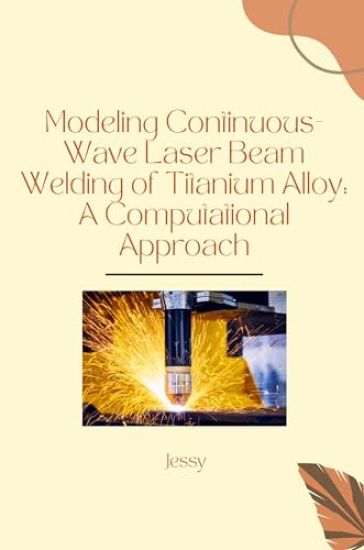
Modeling Continuous-Wave Laser Beam Welding of Titanium Alloy: A Computational Approach
This licentiate book addresses an aspect of production technology that is metal processing through fusion. A challenge to take up in production technol-ogy is to develop sustainable manufacturing processes to save both material and energy consumption. A metal fusion heat source with high efficiency is laser beam. The industrial demand to increase the productivity and improve the robustness of high-power laser beam welding (LBW) and laser beam addi-tive manufacturing (LBAM) processes is driving huge research efforts towards the repeatability and reliability of the processes. Application of high-power continuous-wave laser beam for metal fusion in areas such as welding and ad-ditive manufacturing (AM) has increased during the last years with rapid pace. Continuous-wave lasers have proven their great performance in terms of their stability and power output during processing. However laser metal fusion is very complicated, and more detailed physical understanding would improve this process. The aim of this licentiate book is to reach better model reliability and deeper understanding of continuous-wave LBW of a Titanium alloy (Ti-6Al-4V) in conduction mode through a Computational Fluid Dynamics (CFD) approach.
The Silent Healers: Unveiling Care for the Disabled in the Past
For millennia, archaeology has painted a largely homogenous picture of the past. While skeletal remains and artifacts offer invaluable insights into ancient societies, they often overlook a crucial segment of the population - disabled and/or impaired individuals. Historically relegated to the fringes of historical narratives, these individuals have been categorized as "liminal" figures (Doat, 2017), existing on the margins and receiving scant attention (Metzler, 2013). When disability is acknowledged in the archaeological record, it's often framed through a lens of pity, focusing on suffering and despair (Metzler, 2013). This narrow perspective leads to a skewed understanding of past societies, omitting the rich tapestry of experiences woven by those navigating disability. This exclusion has significant consequences. By neglecting disabled individuals, we create an incomplete picture of the past. Archaeology, with its focus on past lifeways, has the potential to reveal a more nuanced understanding of how societies cared for their members. This necessitates a shift in perspective, moving beyond the traditional focus on pathology and impairment towards a recognition of the complex social dynamics surrounding disability.
Plasmonics: Shrinking Metals, Expanding Possibilities
"Plasmonics: Shrinking Metals, Expanding Possibilities" uses a catchy contrast to introduce the world of plasmonics. - Shrinking Metals: This refers to the manipulation of metals at the nanoscale, creating tiny metallic nanostructures. - Expanding Possibilities: This emphasizes the vast potential applications unlocked by plasmonics. The title piques curiosity - how can shrinking metals lead to such a vast expansion of possibilities? The piece could delve into the core concept: the interaction of light with these engineered nanostructures. This interaction creates a unique property called "surface plasmon resonance," which allows for manipulating light in remarkable ways. We can then explore some of these exciting applications. Plasmonic nanoparticles are used in biosensing for medical diagnostics, detecting minute biomolecules. They can also enhance solar cell efficiency by trapping light more effectively. The title hints at the ongoing exploration of plasmonics. Scientists are delving into metamaterials with unusual optical properties and photocatalysis, where light drives chemical reactions. By "shrinking metals," plasmonics unlocks a world of expanding possibilities, pushing the boundaries of science and technology across various fields.
From Buffer to Boon: How Floodplain Reconnection Benefits Rivers and Beyond
This title uses strong metaphors to capture the value of floodplains. "Buffer" suggests their traditional role in flood control, while "Boon" emphasizes the wider benefits of reconnection. "Beyond" hints at the impact that extends beyond the river itself. The piece could delve deeper into the historical perception of floodplains. They were often seen primarily as buffers, prompting interventions like levees to control water flow. The focus would then shift to how reconnection transforms floodplains from "buffers" to "boons." Here are some key benefits: - Enhanced Flood Control: Reconnected floodplains absorb floodwaters naturally, reducing the strain on levees and protecting downstream communities. - Ecological Restoration: Floodplains provide vital habitats for fish, birds, and other wildlife. Reconnection allows these ecosystems to flourish. - Improved Water Quality: Floodplains act as natural filters, removing pollutants and sediments before they reach the main channel. "From Buffer to Boon" goes beyond just river health. It suggests benefits for: - Biodiversity: Reconnection supports a wider range of species in the floodplain ecosystem. - Water Security: Cleaner water benefits communities and ecosystems that rely on the river. The title paves the way for exploring the ripple effects of floodplain restoration. It highlights the interconnectedness of healthy rivers and the well-being of surrounding environments and communities.