Kirjojen hintavertailu. Mukana 11 342 296 kirjaa ja 12 kauppaa.

Kirjahaku

Etsi kirjoja tekijän nimen, kirjan nimen tai ISBN:n perusteella.

17 kirjaa tekijältä Jill Armitage

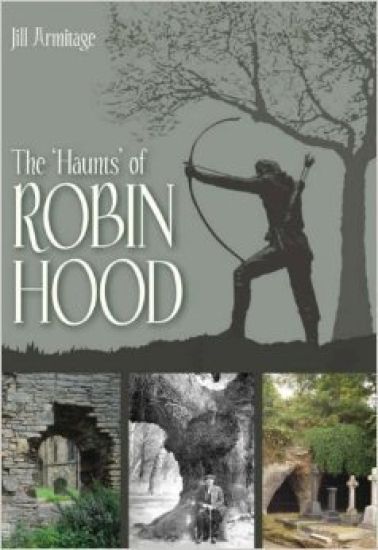
Haunts of Robin Hood

Haunts of Robin Hood

Jill Armitage

The History Press Ltd
2007
nidottu
Places like Sherwood Forest remained uncharted and ill-defined, with only wild and uncertain tracks and occasional clearings; in this dark realm grew the legend of Robin Hood and his companions. Illustrated with more than 100 photographs, this work takes the reader on a guided tour through the ghost stories of Robin Hood Country.
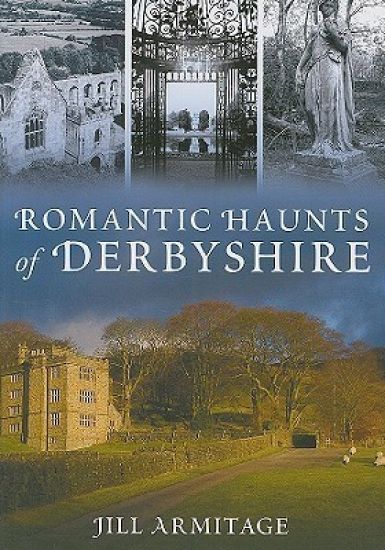
Romantic Haunts of Derbyshire

Romantic Haunts of Derbyshire

Jill Armitage

The History Press Ltd
2008
nidottu
Since the days of Jane Austen, Derbyshire has been considered one of England's most romantic destinations but unfortunately not everyone is as lucky in love as Elizabeth Bennet. From creepy sightings of mysterious shadowy figures and spirits, such as the kissing ghost at Renishaw Hall, to moving objects, unexplained sounds and bloodstains that cannot be removed, this selection covers various aspects of paranormal - and romantic - activity in the county.
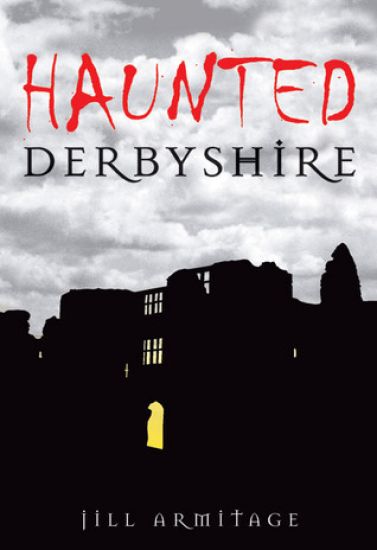
Haunted Derbyshire

Haunted Derbyshire

Jill Armitage

The History Press Ltd
2009
nidottu
Drawing on contemporary and historical sources, Haunted Derbyshire contains many creepy accounts of spirits, spectres and poltergeists - including the Mad Monk of North Wingfield, the crying angel of Etwell and the headless ghost of Wenley Hill. It also features some of Derbyshire's best-known characters, including Florence Nightingale and George Stephenson, the Railway King. If you have ever wondered why the Chesterfield Canal veered from its straight course, why horses shy at crossroads, empty theatre seats move or miners leave shoes in mines, Haunted Derbyshire will give you the chilling answers.
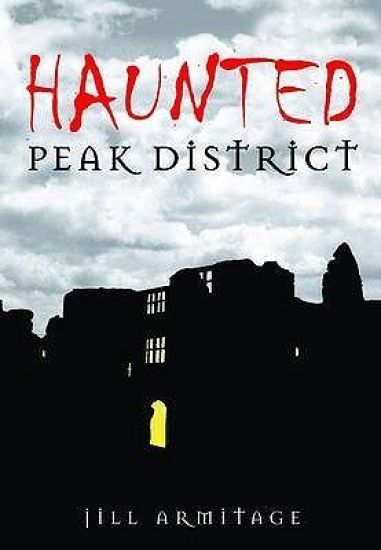
Haunted Peak District

Haunted Peak District

Jill Armitage

The History Press Ltd
2009
nidottu
The Peak District of Derbyshire is said to experience more bizarre happenings and unexplainable encounters than any other part of England. This chilling collection of true-life tales details many terrifying accounts of spectres and apparitions which have been documented over the years. Ranging from private residences and graveyards to public houses, tourist attractions, theatres and museums, this book includes many pulse-raising narratives that are guaranteed to make your blood run cold. Containing over sixty illustrations, Haunted Peak District will appeal to everyone with an interest in the supernatural history of this part of Derbyshire.
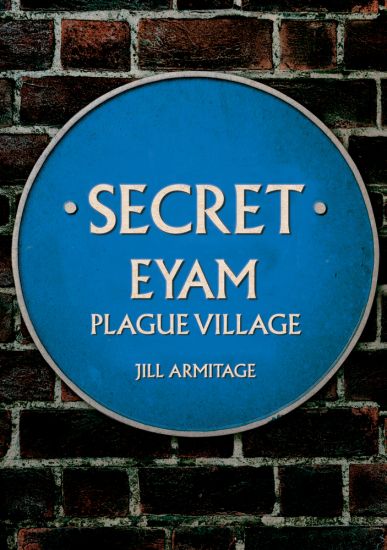
Secret Eyam

Secret Eyam

Jill Armitage

AMBERLEY PUBLISHING
2023
nidottu
Eyam (pronounced Eem), given the Saxon name Eaham, meaning a well-watered hamlet, is a secluded Peak District village hemmed in by green slopes and majestic hills. Within ¼ mile, the busy world passes by along the A623, yet every year thousands of people head directly to this isolated rural community, tragically famous as the plague village that self-isolated. The year 1665 saw outbreaks of bubonic plague in London and many other cities, towns and villages across England. The incomprehensible terror of the plague, caused by the bite of a rat flea infected by the bacterium Pasteurella pestis, arrived in Eyam in September 1665 and in order to contain the disease, the villagers chose to lock themselves in isolation. This was an act of true altruism by grief-stricken people in a village where every home became a morgue and every resident a mourner. Some 350 years later, as we have encountered a pandemic of gigantic proportions with the Covid-19 crisis, the story of Eyam has inspired Simon Armitage, Poet Laureate, to devote half of his poem ‘Lockdown’ to the suffering of these people. Secret Eyam: Plague Village, illustrated throughout, expands upon these stories, taking a closer examination of this area’s important history.
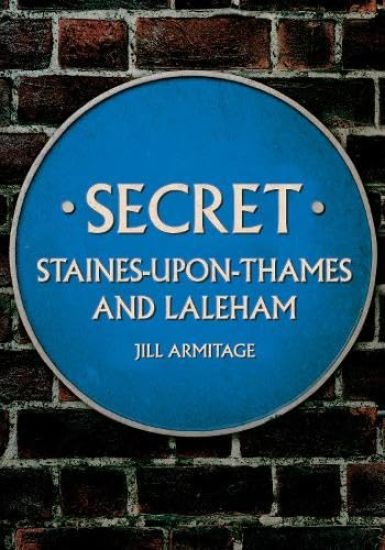
Secret Staines-upon-Thames and Laleham

Secret Staines-upon-Thames and Laleham

Jill Armitage

AMBERLEY PUBLISHING
2024
nidottu
Staines-upon-Thames and its neighbour Laleham are 19 miles west of central London, linked by road and river. Because of the stranded or braided character of the river here, when the Romans came in AD 43, they found a series of primitive wooden bridges crossing the flood plains of the Thames, Colne and Wraysbury rivers. They called it Ad Pontes – literally ‘at the bridges’. It became an important inland port/trading town due to its strategic position where the essential road route from London to the West Country crossed The Thames. It retained its prominence through the centuries due to waterpower that drove mill machinery, grinding flour and mustard, fulling fabric, producing papier-maché, ale and linoleum which became a global success on an unheard-of scale for the time. As commerce replaced industry, Staines reinvented itself with a make-over on a gigantic scale, gaining the prestigious Town Centre Environment Award in 2003 for its ambitious shopping precincts, offices and homes. Few vestiges of the past were preserved but Staines has retained its secrets in twenty-six monumental site-specific representations on an art trail along the Roman backbone of the town. Part of the social fabric of everyday life, each artwork discloses a fascinating tale. Continue your journey beside the Thames to Laleham, a quiet riverside village with immense charm, and you walk in the footsteps of former Laleham resident Thomas Arnold, the Headmaster of Rugby immortalised in Tom Brown’s School Days. His school in Laleham, the present Muncaster House, is just one of twenty-five listed buildings here, where a wander along its picturesque lanes is a walk through its intriguing history.
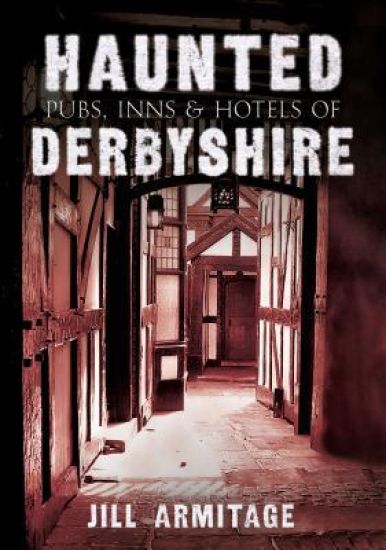
Haunted Pubs, Inns and Hotels of Derbyshire

Haunted Pubs, Inns and Hotels of Derbyshire

Jill Armitage

Amberley Publishing
2011
nidottu
Haunted Pubs, Inns & Hotels of Derbyshire takes you on a spookily paranormal pub crawl with a difference. Whether it's to a scenic country pub, a traditional old coaching inn or a more modern establishment, these are the places where people have seen ghosts, heard them, smelt them and - most frightening of all - felt them. We delve deep into the mysterious phenomena that have baffled investigators, and terrified landlords, cleaners and customers for years. Here the hidden secrets behind these strange goings-on are explored and revealed in chilling detail. Some tales will leave you shocked and shaken, while others are as entertaining as they are bewildering. History, folk memory, anecdote and eyewitness evidence are all pieced together in these eerie and evocative true stories. We stop off at old coaching inns, pubs and alehouses, encountering spectral highwaymen, monks, Cavaliers and Roman soldiers. We uncover the ghostly fate of serving wenches, old regulars, heartbroken maids and murder victims. We find hotel rooms haunted by benevolent, playful and curious spirits as well as plagued by poltergeist activity. Jill Armitage invites you to join her on this journey and share in her fascination for the strange and spooky. Haunted Pubs, Inns & Hotels of Derbyshire will surely delight and frighten in equal measure.
Celtic Queen

Celtic Queen

Jill Armitage

Amberley Publishing
2020
sidottu
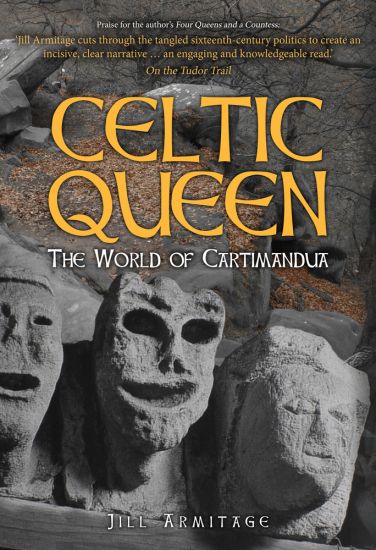
Queens Cartimandua and Boudica were both Celtic noblewomen, recorded by classical writers as part of a tradition of women who showed particular courage, ambition and political skill, and who were just as formidable in war as their husbands. They took on the status of Celtic goddesses and were central players in the struggle against the Roman annexation of Britain. Boudica led the rebellion against the Romans but her reputation may be largely symbolic. Using historical and archaeological evidence, Celtic Queen uncovers the arguably more impressive story of Queen Cartimandua, the independent ruler of the powerful Brigante tribe whose territory was the single largest Celtic kingdom in Britain. Cartimandua’s leadership in battle and political influence were probably much greater than Boudica’s. Unlike Boudica, wife of King Prasutagus of the Iceni tribe, Cartimandua was the regent of the Brigante tribe in her own right. Her tribe prospered in the new Imperial world because she cooperated with the invaders and she held her position as queen until AD69. Cartimandua's territory was considerable, covering most of modern Cheshire, South and North Yorkshire, Lancashire, North Humberside, Cumbria, County Durham and Tyne and Wear. But she was seen as a shameless adulteress after an open affair with her husband’s armour bearer. Such sexual liberation was normal for powerful Celtic women but it scandalised Roman society. With many references to popular Celtic culture, their gods, beliefs, art and symbolism, as well as living conditions and the hillforts that would have been Cartimandua’s headquarters, Celtic Queen offers an insight into the life of this fascinating woman and the Romano/Celtic world in which she lived.
Arbella Stuart

Arbella Stuart

Jill Armitage

Amberley Publishing
2019
pokkari
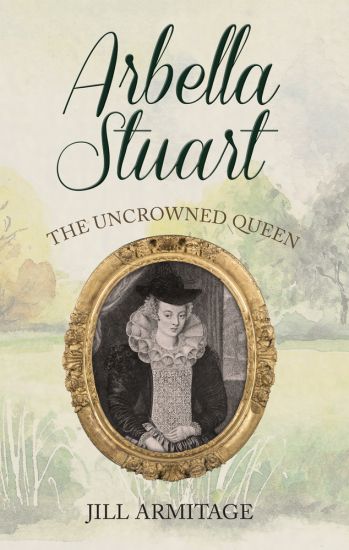
In 1562, Elizabeth I, the last of Henry VIII’s children, lay dying of smallpox, and the curse of the Tudor succession again reared its head. The queen was to recover, but the issue remained: if the queen did not produce an heir, who was next in line to succeed? Lady Arbella Stuart was cousin to both the English queen and James VI of Scotland, a woman whose parents’ marriage had been orchestrated to provide an heir to the English throne. Raised by her formidable grandmother, Bess of Hardwick, Arbella lived her life in Elizabeth’s shadow and, unfortunately, at her mercy. In this book, Jill Armitage revitalises Arbella’s tale, focusing on her lineage, her life and her legacy. Through her story we discover a well-born, well-educated woman desperate to control her own fate, but who is ultimately powerless against those in the scheming Tudor court; and the author explores the harsh consequence that comes from being on the wrong side of the revenge of a jealous, calculating queen.
Four Queens and a Countess

Four Queens and a Countess

Jill Armitage

Amberley Publishing
2019
pokkari
When Mary Stuart was forced off the Scottish throne she fled to England, a move that made her cousin Queen Elizabeth very uneasy. Elizabeth had continued the religious changes made by her father and England was a Protestant country, yet ardent Catholics plotted to depose Elizabeth and put Mary Stuart on the English throne. So what was Queen Elizabeth going to do with a kingdomless queen likely to take hers? Elizabeth had Mary placed under house arrest with her old friend Bess of Hardwick, then married to her fourth husband, the wealthy and influential Earl of Shrewsbury. The charismatic Scotswoman was treated more like a dowager queen than a prisoner and enjoyed an affluent lifestyle until Bess suspected Mary of seducing her husband. But for sixteen years, with the never-ending threat of a Catholic uprising, Bess was forced to accommodate Mary and her entourage at enormous cost to both her finances and her marriage. Bess had also known the doomed Jane Grey and Mary I, Elizabeth’s predecessor. She had been in service in the Grey household and companion to the infant Jane. Mary had been godmother to Bess’s fifth child. Four Queens and a Countess delves deep into the relationships of these women with their insurmountable differences, the way they tried to accommodate them and the lasting legacy this has left.
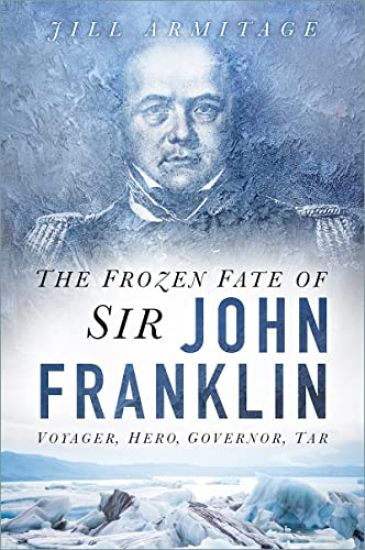
The Frozen Fate of Sir John Franklin

The Frozen Fate of Sir John Franklin

Jill Armitage

THE HISTORY PRESS LTD
2022
sidottu
British naval officer Sir John Franklin enjoyed a distinguished naval career in the Napoleonic wars, before being appointed governor and commander-in-chief of Tasmania. He established an education system copied throughout the colonies, but his sympathetic approach to the native aborigines and transported convicts made him unpopular with the colonists. Returning to Arctic exploration to investigate the unknown, he mapped over 3,000 miles of the coast of Northern Canada but his fourth and final voyage in 1845, immortalised in The Terror, failed to return. Some 50 expeditions were sent over 20 years to find him or his remains, until in 2014, his ship The Erebus was discovered. Now, through modern technology, the true fate of Sir John, and the secrets of that fateful voyage, are being rediscovered. This new biography by Jill Armitage, who is distantly related to Sir John Franklin, explores the man and his life, and his fateful final journey.
Arbella Stuart

Arbella Stuart

Jill Armitage

Amberley Publishing
2017
sidottu
In 1562, Elizabeth I, the last of Henry VIII’s children, lay dying of smallpox, and the curse of the Tudor succession again reared its head. The queen was to recover, but the issue remained: if the queen did not produce an heir, who was next in line to succeed? Lady Arbella Stuart was cousin to both the English queen and James VI of Scotland, a woman whose parents’ marriage had been orchestrated to provide an heir to the English throne. Raised by her formidable grandmother, Bess of Hardwick, Arbella lived her life in Elizabeth’s shadow and, unfortunately, at her mercy. In this book, Jill Armitage revitalises Arbella’s tale, focusing on her lineage, her life and her legacy. Through her story we discover a well-born, well-educated woman desperate to control her own fate, but who is ultimately powerless against those in the scheming Tudor court; and the author explores the harsh consequence that comes from being on the wrong side of the revenge of a jealous, calculating queen.