Kirjojen hintavertailu. Mukana 11 627 067 kirjaa ja 12 kauppaa.

Kirjahaku

Etsi kirjoja tekijän nimen, kirjan nimen tai ISBN:n perusteella.

15 kirjaa tekijältä Jim Daniels

Places/Everyone

Places/Everyone

Jim Daniels

University of Wisconsin Press
1985
nidottu
Jim Daniels, in his first book of poems, draws upon his experiences in living and working in his native Detroit to present a start, realistic picture of urban, blue-collar life. Daniels, his brothers, his father, and his grandfather have all worked in the auto industry, and that background seeps into nearly all these poems. The first of the book's three sections sketches out this background, then moves into a neighborhood full of people whose lives are so linked to the ups and downs of the auto industry that they have to struggle to find their own lives; in Still Lives in Detroit, #2, Daniels writes, There's a man in this picture. / No one can find him. The second section contains the Digger poems, a series on the lives of a Detroit auto worker and his family which tries to capture the effects of the work on life outside the factory. Here, we listen to Digger think, dream, wander on psychological journeys while he moves through his routines, shoveling the snow, mowing the lawn, and so forth. In section three, the poems move into the workplace, whether that be a liquor store, a hamburger joint, or a factory. These poems, sometimes dark, sometimes humorous, concentrate on the efforts of workers to rise above the often depressing work of blue-collar or minimum-wage jobs, to salvage some pride and dignity. The poems in this book try to give a voice to those who are often shut out of poetry. They are important. These lives are important, and the poems, more than anything, say that.
Show and Tell

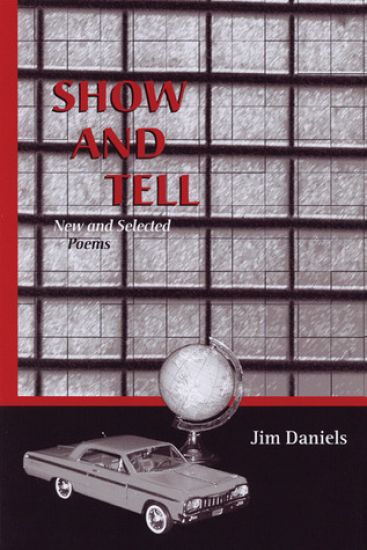
Show and Tell

Jim Daniels

University of Wisconsin Press
2003
nidottu
"Show and Tell" is a varied, complex collection of poems, serious and wise, wry and often profound. Jim Daniels' work has become both more experimentally dramatic and more poetically sure of itself.
Punching Out

Punching Out

Jim Daniels

Wayne State University Press
1990
nidottu
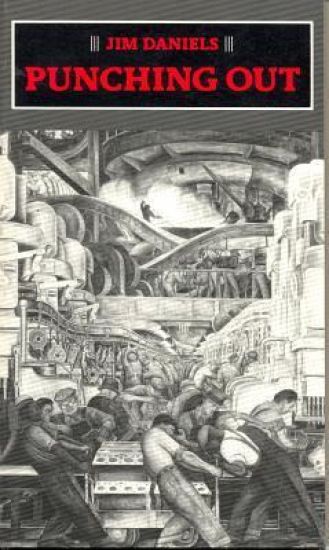
Daniels' second book of poetry takes readers inside an auto factory with Digger, a young man whose initial reaction of shock and dismay at the difficult working conditions prompts him to find ways to cope with the dehumanization he experiences there. The book is a series of tightly woven poems that play off one another so that the book accumulates tension and energy as it progresses. Daniels treats his characters and their work with respect, giving them a dignity that factory condition deny them. Opting for blunt, straightforward language, Daniels does not try to "poeticize" the factory but rather injects the factory into his poetry.
In Line for the Exterminator

In Line for the Exterminator

Jim Daniels

Wayne State University Press
2007
nidottu
In Line for the Exterminator is the final collection in Jim Daniels' trilogy of books explaining the urban working-class landscape. Daniels, who grew up near the Eight Mile Road boundary between Detroit and suburban Warren, Michigan, walks the razor's edge of the borderline in this collection, examining complex issues of race and class that are a part of daily life there.The title poem, ""In Line for the Exterminator,"" sets the ironic tone for this collection, examining a group of people waiting in line for a sinister-sounding amusement-park ride. Daniels presents blue-collar culture both in and out of the workplace, showing its profound influence on the lives of workers and their families. As in ""Places/Everyone and M-80"", Daniels uses his character Digger to show the effects of work on outside life, following Digger into retirement from his factory job and into his struggle to find a new future. In addition, Daniels deals frankly with the specter of urban violence that haunts the community and threatens to tear it apart. Local heroes, from professional wrestler the Sheik to the contemporary rapper Eminem, also appear as touchstones for the community's complex view of itself.How do ordinary citizens sustain hope and dignity in the face of economic and societal upheaval? How do people avoid the mirages offered by drugs and alcohol, or the intoxication of guns and crime? In ""Line for the Exterminator"" offers no easy answers but presents searing portraits of individuals struggling with these questions and finding small victories and moments of consolation in their everyday lives. Those interested in poetry, depictions of working-class city life, and Detroit social history will enjoy this significant volume.
Gun/Shy

Gun/Shy

Jim Daniels

Wayne State University Press
2021
nidottu
The poems in Gun/Shy deal with the emotional weight of making do. Tinged with both the regrets and wisdom of aging, Jim Daniels's poems measure the wages of love in a changing world with its vanishing currency. He explores the effects of family work-putting children to bed, leading parents to their final resting places-and what is lost and gained in those exertions. Childhood and adolescence are examined, through both looking back on his own childhood and on that of his children. While his personal death count rises, Daniels reflects on his own mortality. He finds solace in small miracles-his mother stretching the budget to feed five children with ""hamburger surprise"" and potato skins, his children collecting stones and crabapples as if they were gold coins. Daniels, as he always has, carries the anchor of Detroit with him, the weight both a comfort and a burden. He explores race, white privilege, and factory work. Eight Mile Road, a fraught border, pulses with division, and the echoes of music, singing through Detroit's soiled but solid heart, resonate in these poems. His first long poem in many years, ""Gun/Shy,"" centers the book. Through the personas of several characters, Daniels dives into America's gun culture and the violent gulf between the fearful and the feared. Throughout, he seeks connection in likely and unlikely places: a river rising after spring rain and searchlights crossing the night sky. Comets and cloudy skies. Cement ponds and the Garden of Eden. Adolescence and death. Wounds physical and psychic. Disguises and more disguises. These are the myths we memorize to help us sleep at night, those that keep us awake and trembling. Daniels's accessible language, subtlety, and deftness make this collection one that belongs on every poetry reader's shelf.
M-80

M-80

Jim Daniels

University of Pittsburgh Press
1993
nidottu
Daniels's third book of poems, in which he explores the sharp edges of urban life. His characters struggle for survival against urban violence, racial tension and a crumbling economy. The collection is named after one of the most dangerous fireworks found on city streets.
Blessing the House

Blessing the House

Jim Daniels

University of Pittsburgh Press
1997
nidottu
Jim Daniels’ Blessing the House visits the sites of domestic faith - Catholic schools, sex and marriage, childbirth - in an attempt to witness a world worth believing in. In their search for hope, grace, and decency in the small dramas of an individual life, these poems become larger, more overtly political and express a genuine interest in human emotion.
Comment Card

Comment Card

Jim Daniels

Carnegie-Mellon University Press
2024
nidottu
A poetry collection that hunts for meaning in the ordinary and astonishing. Comment Card offers up a world of juxtapositions, searching for equilibrium between the sublime and the mundane: a man watching young lovers kiss while poisoned ants rain down on his porch. A Christmas tree-needle collection and Jimmy Durante. The litter of a three-hole punch and a daughter leaving for college. Tamarinds and the International Space Station. A crushed snail and the Holy Trinity. These poems wonder, how did we get here, and, by the way, where are we?
Street Calligraphy

Street Calligraphy

Jim Daniels

Steel Toe Books
2017
nidottu
"In Street Calligraphy, Jim Daniels continues to enchant and transport us across state lines while rooting us in tragic heart lessons and the triumphs of love. These are moving, unflinching poems -- brutal and brave in their pulse to assert that even after a world where "We drew lies with chalk / and the truth with tar. / We lit our hair on fire / to cover the smell," -- there comes a beautiful reassembling of what it means to have people who sing you home." -- Aimee Nezhukumathil, author of Oceanic
Night with Drive-By Shooting Stars

Night with Drive-By Shooting Stars

Jim Daniels

Western Michigan University, New Issues Press
2002
nidottu
Jim Daniels' collection bears witness to a life both mis- and well-spent: to the family, remembered and new; to the melancholy pull of drugs and casual sex; to growing up; and to the only tenable way of growing old, which is to embrace every small joy even as one laments its brevity. Indeed, Night with Drive-By Shooting Stars rages not against the dying of light but the dying fall itself—against poetic and existential complacency. "Louder, kids," says Daniels in the beautiful "Cold Seed:" "daddy’s dying."
Birth Marks

Birth Marks

Jim Daniels

BOA Editions, Limited
2013
pokkari
A poet of the working-class and city streets, Jim Daniels's fourteenth poetry collection travels from Detroit to Ohio to Pittsburgh, from one post-industrial city to another, across jobs and generations. Daniels focuses on the urban landscape and its effects on its inhabitants as they struggle to establish community on streets hissing with distrust and random violence. Out here, silence scrapes its knuckles in an attempt at prayer. Jim Daniels is Thomas Stockham Baker Professor of English at Carnegie Melon. Poetry editor for the scholarly journal Labor: A Working Class History of America, his awards include two National Endowment for the Arts Awards and the Brittingham Prize for Poetry.
The Human Engine at Dawn

The Human Engine at Dawn

Jim Daniels

INDIANA UNIVERSITY PRESS
2022
pokkari
Reviews The ghost behind these haunted and haunting poems is the bittersweet and stunningly detailed memory of the poet's formative years in blue-collar Detroit, echoed sometimes in his present home of Pittsburgh. The latter (much less the former) isn't Paris, he admits, but then, "Fuck Paris." With The Human Engine at Dawn, Jim Daniels remains among this country's most gifted and engaging poets.-William Trowbridge, author of Call Me Fool Jim Daniels. Singer of the broken city. Ishmael of lost families and foundered dreams. Virgil of what he calls "our poorly wired world." These poems are deep dives into Daniels' past, and a past Detroit. The portraits of his mother and father are unforgettable, both for their blunt, unsentimental honesty and their tenderness. Again and again Daniels manages to unearth bright shards of beauty in the bleak alleyways and poverty-haunted streets of the city. And there's an ode here to his father's bowling ball that will knock you down, that will roll you right back to the smoky, beer-soaked heart of the last century. The Human Engine at Dawn, in its dark and lyrical urgency, reminds me of why I came to poetry in the first place.-George Bilgere, author of Central AirAbout the AuthorJim Daniels' latest books include Gun/Shy (poetry), The Perp Walk (fiction), and the anthology RESPECT: The Poetry of Detroit Music (coedited with M. L. Liebler). A native of Detroit, he lives in Pittsburgh and teaches in the Alma College low-residency MFA program.
Late Invocation for Magic

Late Invocation for Magic

Jim Daniels

Michigan State University Press
2026
nidottu
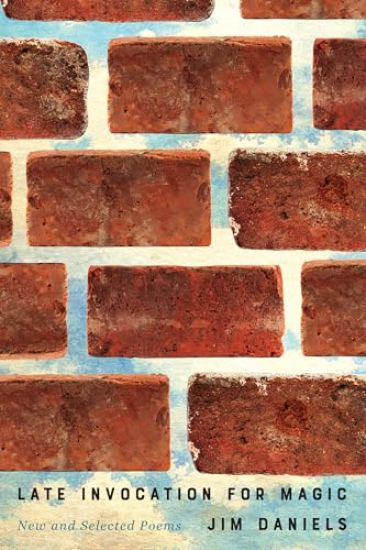
In poems selected from his long career, Jim Daniels focuses on Detroit and other Rust Belt cities, where issues of class and race and justice play out in the streets and kitchens and backyards and garages of the Americans trying to live and make a living there. Known for his courage, clarity, and accessibility, Danielsexamines the tension between our idealized country and the messier cultural and economic divides, often focusing on those who can’t afford or have access to “magic.”