Kirjojen hintavertailu. Mukana 12 016 292 kirjaa ja 12 kauppaa.

Kirjahaku

Etsi kirjoja tekijän nimen, kirjan nimen tai ISBN:n perusteella.

11 kirjaa tekijältä Jim Moran

Sophocles, the Hyena; a Fable

Sophocles, the Hyena; a Fable

Jim Moran

Hassell Street Press
2021
sidottu
This work has been selected by scholars as being culturally important and is part of the knowledge base of civilization as we know it.This work is in the public domain in the United States of America, and possibly other nations. Within the United States, you may freely copy and distribute this work, as no entity (individual or corporate) has a copyright on the body of the work.Scholars believe, and we concur, that this work is important enough to be preserved, reproduced, and made generally available to the public. To ensure a quality reading experience, this work has been proofread and republished using a format that seamlessly blends the original graphical elements with text in an easy-to-read typeface.We appreciate your support of the preservation process, and thank you for being an important part of keeping this knowledge alive and relevant.
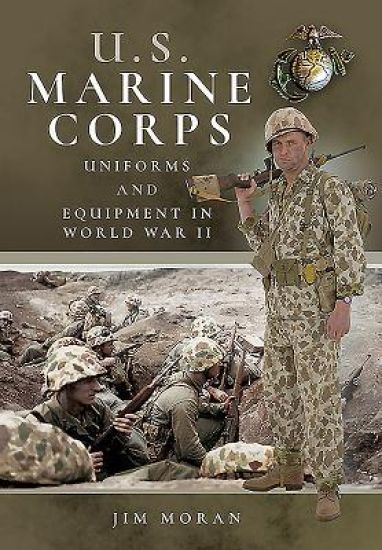
US Marine Corps Uniforms and Equipment in World War II
The United States Marine Corps was one of the phenomena of the Second World War. Greatly expanded from its pre-war order of battle of scattered defence battalions, overseas garrisons and ship detachments, it became a multi-division force bearing the brunt of the hardest fighting across the whole vast expanse of the Pacific theatre of operations. In August 1942 Marines were among the first to strike back at the Japanese in the jungles of Guadalcanal; Marine Raider battalions were formed to carry the fight to the enemy; and from the Central Solomon's landings of mid-1943 it was the Marines who spearheaded the 'island hopping' amphibious campaign which brought them to Okinawa, on Japan's doorstep, by VJ-Day. This epic story has been well documented in most respects except one: the uniforms, insignia and personal equipment of the Marines who fought their way across the Pacific. Authoritative, illustrated reference works of this important aspect of World War II's physical history have been notoriously lacking. In this book, long-time collector and researcher Jim Moran fills the gap, with a systematic, detailed guide illustrated with more than 300 photographs, including some 200 close-ups of surviving items in private collections on both sides of the Atlantic. The author covers service and field uniforms at the outbreak of war; the development of the Marine's dungaree's ; the introduction and development of the camouflage uniforms which became the Marine's trademark in the popular imagination; the 782 gear webbing equipment; the various packs and other load-carrying items; the uniforms, insignia and equipment special to the elite Marine Raiders and Paramarines; the uniforms and accoutrements of the US Marine Corps Women's Reserve; and a range of issue and personal small kit items which collectors may encounter. His research is supported by some 100 wartime photographs showing the identified item in use. Assisted and encouraged by the US Marine Corps Historical Center at Quantico, Virginia, Jim Moran has produced an essential reference for the collector, modeller, illustrator and uniform historian.
US Marine Corps Uniforms and Equipment in World War II
The United States Marine Corps was one of the phenomena of the Second World War. Greatly expanded from its pre-war order of battle of scattered defence battalions, overseas garrisons and ship detachments, it became a multi-division force bearing the brunt of the hardest fighting across the whole vast expanse of the Pacific theatre of operations. In August 1942 Marines were among the first to strike back at the Japanese in the jungles of Guadalcanal; Marine Raider battalions were formed to carry the fight to the enemy; and from the Central Solomon's landings of mid-1943 it was the Marines who spearheaded the 'island - hopping' amphibious campaign which brought them to Okinawa, on Japan's doorstep, by VJ-Day. This epic story has been well documented in most respects - except one: the uniforms, insignia and personal equipment of the Marines who fought their way across the Pacific. Authoritative, illustrated reference works of this important aspect of World War II's physical history have been notoriously lacking. In this book, long-time collector and researcher Jim Moran fills the gap, with a systematic, detailed guide illustrated with more than 300 photographs, including some 200 close-ups of surviving items in private collections on both sides of the Atlantic. The author covers service and field uniforms at the outbreak of war; the development of the Marine's dungaree's'; the introduction and development of the camouflage uniforms which became the Marine's trademark in the popular imagination; the 782 gear' webbing equipment; the various packs and other load-carrying items; the uniforms, insignia and equipment special to the elite Marine Raiders and Paramarines; the uniforms and accoutrements of the US Marine Corps Women's Reserve; and a range of issue and personal small kit items which collectors may encounter. His research is supported by some 100 wartime photographs showing the identified item in use. Assisted and encouraged by the US Marine Corps Historical Center at Quantico, Virginia, Jim Moran has produced an essential reference for the collector, modeller, illustrator and uniform historian.
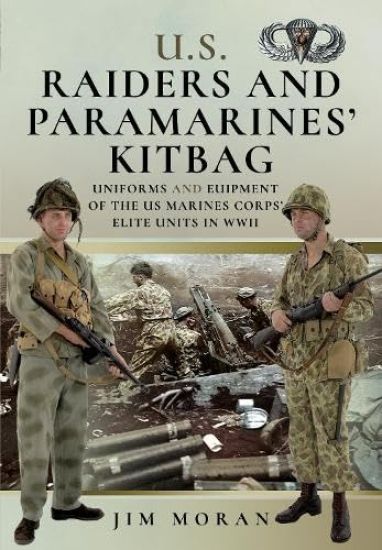
US Raiders and Paramarines' Kitbag

US Raiders and Paramarines' Kitbag

Jim Moran

PEN SWORD BOOKS LTD
2025
sidottu
During World War II, the United States Marine Corps (USMC) evolved into a powerful multi-division force, playing a central role in the Pacific theater. Among its lesser-known units were the Paramarines and the Raiders. The Paramarines, the Marine parachute troops, were formed in 1942, with the first operational unit taking part in the Guadalcanal and Tulagi battles. Though their only combat jump occurred in southern France with an OSS unit, they saw action as infantry in the Solomons Campaign before being disbanded in 1944. The Raiders, modeled after the British Commandos, were a hard-hitting assault force trained to strike swiftly from any location. The initial group trained in Scotland became the foundation of the 1st and 2nd Raider Battalions. Pioneers in camouflage, they used black-dyed shirts and trousers, sprayed their green uniforms, and crafted helmet covers from burlap and netting. In this book, Jim Moran, a collector and researcher, delves into the uniforms and gear used by these elite units. Illustrated with over 200 photos, including close-ups of surviving items, it offers a detailed guide to their distinctive equipment. Supported by the US Marine Corps Historical Center, this work serves as an essential reference for collectors, historians, and enthusiasts.
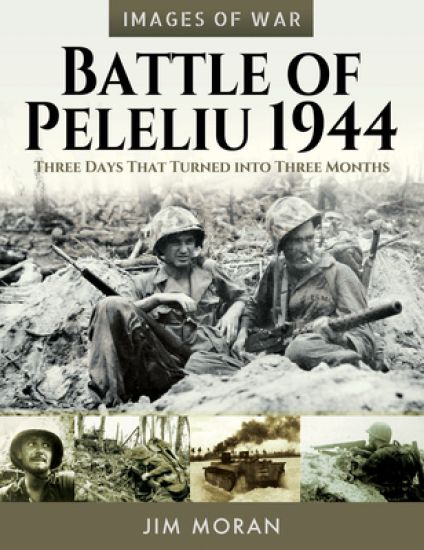
Battle of Peleliu, 1944

Battle of Peleliu, 1944

Jim Moran

Frontline Books
2021
nidottu
After the Allies had defeated the Japanese in the Solomons and the Dutch East Indies, the capture of the Philippines became General MacArthur's next objective. For this offensive to succeed, MacArthur felt compelled to secure his eastern flank by seizing control of the Palau Islands, one of which was Peleliu. The task of capturing this island, and the enemy airfield on it, was initially handed to Admiral Nimitz. The Palau Islands, however, formed part of Japan's second defensive line, and Peleliu's garrison amounted to more than 10,000 men. Consequently, when the US preliminary bombardment began on 12 September 1944, it was devastating. For two days the island was pounded relentlessly. Such was the scale of the destruction that the commander of the 1st Marine Division, Major General William H. Rupertus, told his men: 'We're going to have some casualties, but let me assure you this is going to be a fast one, rough but fast. We'll be through in three days - it may only take two.' At 08.32 hours on 15 September 1944, the Marines went ashore. Despite bitter fighting, and a ferocious Japanese defence, by the end of the day the Marines had a firm hold on Peleliu. But rather than Japanese resistance crumbling during the following days as had been expected, it stiffened, as they withdrew to their prepared defensive positions. The woods, swamps, caves and mountains inland had been turned into a veritable fortress - it was there where the real battle for possession of Peleliu was fought. Day after day the Americans battled forward, gradually wresting control of Peleliu from the Japanese. Despite Major General Rupertus' prediction, it was not until 27 November, after two months, one week and five days of appalling fighting, and a final, futile last sacrificial charge by the remaining enemy troops, that the Battle of Peleliu came to an end.
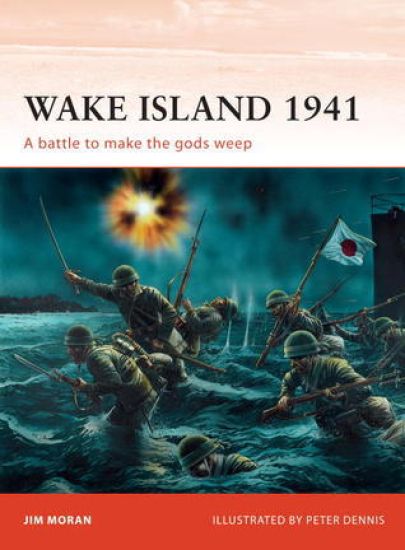
Wake Island 1941

Wake Island 1941

Jim Moran

Osprey Publishing
2011
nidottu
An illustrated examination of the daring last stand by a collection of marines, sailors, and other service personnel on Wake Island in World War II - one of the legendary stories of American military history.On the same day that the Japanese attacked Pearl Harbor, they also launched air attacks on Wake Island, an American marine and naval base in the Pacific. Three days later a Japanese invasion force stormed the island, but were bloodily repulsed by the scratch force of marines, sailors and even service personnel who defended it. Despite US attempts to relieve the island, the Japanese launched a much greater invasion a few weeks later and, despite gallant resistance, eventually caused the US Forces to surrender.This book tells the complete story of the vicious fighting on Wake Island, featuring full-color maps and archive photography.
RV Information Source: A Guide for New and Experienced Enthusiasts

RV Information Source: A Guide for New and Experienced Enthusiasts

Jim Moran

Createspace Independent Publishing Platform
2017
nidottu
Your first stop for RV Information and an excellent guide for all levels of enthusiasts. RV Information Source provides helpful insights and covers topics for both new and experienced enthusiasts. The book includes best RV brands listing by type - Class A, B, C, Travel Trailer, and Fifth Wheels. Helps answer one of the most asked questions in the industry "how much can you actually tow?" Provides a listing of demographic and income statistics. and a comprehensive list of RV clubs and memberships to join. The purpose of this E-book is to inform you on various topics in the RV (Recreational Vehicle) industry. I will try and level set and provide some introductory material for people who are new to the industry and also provide some of the latest trends and resources for seasoned veterans. The first section will provide an overview of the various types of RV's and explains the differences. It lists some key features all owners must consider, including cost factors, tow capacity, and space differences. The middle section will list out some of the popular RV brands and provide some information on each brand. The last section shares information latest RV industry trends, income statistics, and RV affiliate programs and clubs to consider.
Blockchain and Bitcoin Basics: A Beginners Guide to Blockchain, Bitcoin, Other Cryptocurrencies and Why It's Important to Learn Now!
This book is an introduction into the world of Blockchain, Bitcoin, and Altcoins. With all of the media attention focused on Bitcoin, there is a need to inform everyone on this groundbreaking technology. This is a short read and easy to understand for any beginners who want to learn about the latest news on Bitcoin and Altcoins. Blockchain has been called the Fourth Industrial Revolution and the greatest innovation since the inception of the Internet. The book includes: The history of blockchain, The history of Bitcoin along with the creator Satoshi Nagamoto, Listing and description of other cryptocurrencies (Altcoins), Mining explained, Smart Contracts, and Bitcoin Quotes. This book is an essential read for every person in the world. The impact and potential to the be the biggest technological and financial disruptor of our time is immense.
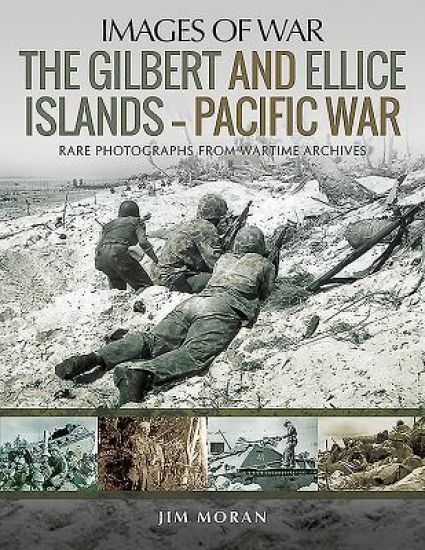
The Gilbert and Ellis Islands - Pacific War
This classic Images of War book covers the dramatic events that befell both the Gilbert and Ellis Pacific island groups using a wealth of well-captioned photos and informed text. Soon after the attack on Pearl Harbor in December 1941, the Gilbert Islands were occupied by the Japanese who built a seaplane base at Butaritari. In August 1942 this base was attacked by the US 2nd Raider Battalion (Carlson's Raiders). As a result the base was reinforced and a second built at Apamana. Betio Island on the Tarawa Atoll became the main Japanese strong point. Operation Galvanic, the US assault on Butarita, Apamana and Betio, was launched in November 1943 by the 2nd Marine Division and the 27th Infantry Division. While short in duration, the Betio battle has the dubious distinction of being the most costly in US Marine Corps history. Thanks to the author's in depth knowledge and access to superb contemporary images, this book will be of particular interest and value to historians and laymen.