Kirjojen hintavertailu. Mukana 11 342 296 kirjaa ja 12 kauppaa.

Kirjahaku

Etsi kirjoja tekijän nimen, kirjan nimen tai ISBN:n perusteella.

6 kirjaa tekijältä Jin Li

Spatial Predictive Modeling with R

Spatial Predictive Modeling with R

Jin Li

TAYLOR FRANCIS LTD
2022
sidottu
Spatial predictive modeling (SPM) is an emerging discipline in applied sciences, playing a key role in the generation of spatial predictions in various disciplines. SPM refers to preparing relevant data, developing optimal predictive models based on point data, and then generating spatial predictions. This book aims to systematically introduce the entire process of SPM as a discipline. The process contains data acquisition, spatial predictive methods and variable selection, parameter optimization, accuracy assessment, and the generation and visualization of spatial predictions, where spatial predictive methods are from geostatistics, modern statistics, and machine learning. The key features of this book are: •Systematically introducing major components of SPM process.•Novel hybrid methods (228 hybrids plus numerous variants) of modern statistical methods or machine learning methods with mathematical and/or univariate geostatistical methods.•Novel predictive accuracy-based variable selection techniques for spatial predictive methods.•Predictive accuracy-based parameter/model optimization.•Reproducible examples for SPM of various data types in R.This book provides guidelines, recommendations, and reproducible examples for developing optimal predictive models by considering various components and associated factors for quality-improved spatial predictions. It provides valuable tools for researchers, modelers, and university students not only in SPM field but also in other predictive modeling fields. Dr Li has produced over 100 various publications in spatial predictive modelling, statistical computing, ecological and environmental modelling, and ecology, developed a number of hybrid methods for SPM, and published four R packages for variable selections as well as SPM.
Spatial Predictive Modeling with R

Spatial Predictive Modeling with R

Jin Li

TAYLOR FRANCIS LTD
2024
nidottu
Spatial predictive modeling (SPM) is an emerging discipline in applied sciences, playing a key role in the generation of spatial predictions in various disciplines. SPM refers to preparing relevant data, developing optimal predictive models based on point data, and then generating spatial predictions. This book aims to systematically introduce the entire process of SPM as a discipline. The process contains data acquisition, spatial predictive methods and variable selection, parameter optimization, accuracy assessment, and the generation and visualization of spatial predictions, where spatial predictive methods are from geostatistics, modern statistics, and machine learning. The key features of this book are: •Systematically introducing major components of SPM process.•Novel hybrid methods (228 hybrids plus numerous variants) of modern statistical methods or machine learning methods with mathematical and/or univariate geostatistical methods.•Novel predictive accuracy-based variable selection techniques for spatial predictive methods.•Predictive accuracy-based parameter/model optimization.•Reproducible examples for SPM of various data types in R.This book provides guidelines, recommendations, and reproducible examples for developing optimal predictive models by considering various components and associated factors for quality-improved spatial predictions. It provides valuable tools for researchers, modelers, and university students not only in SPM field but also in other predictive modeling fields. Dr Li has produced over 100 various publications in spatial predictive modelling, statistical computing, ecological and environmental modelling, and ecology, developed a number of hybrid methods for SPM, and published four R packages for variable selections as well as SPM.
Cultural Foundations of Learning

Cultural Foundations of Learning

Jin Li

Cambridge University Press
2012
pokkari
Western and East Asian people hold fundamentally different beliefs about learning that influence how they approach child rearing and education. Reviewing decades of research, Dr Jin Li presents an important conceptual distinction between the Western mind model and the East Asian virtue model of learning. The former aims to cultivate the mind to understand the world, whereas the latter prioritizes the self to be perfected morally and socially. Tracing the cultural origins of the two large intellectual traditions, Li details how each model manifests itself in the psychology of the learning process, learning affect, regard of one's learning peers, expression of what one knows and parents' guiding efforts. Despite today's accelerated cultural exchange, these learning models do not diminish but endure.
Cultural Foundations of Learning

Cultural Foundations of Learning

Jin Li

Cambridge University Press
2012
sidottu
Western and East Asian people hold fundamentally different beliefs about learning that influence how they approach child rearing and education. Reviewing decades of research, Dr Jin Li presents an important conceptual distinction between the Western mind model and the East Asian virtue model of learning. The former aims to cultivate the mind to understand the world, whereas the latter prioritizes the self to be perfected morally and socially. Tracing the cultural origins of the two large intellectual traditions, Li details how each model manifests itself in the psychology of the learning process, learning affect, regard of one's learning peers, expression of what one knows and parents' guiding efforts. Despite today's accelerated cultural exchange, these learning models do not diminish but endure.
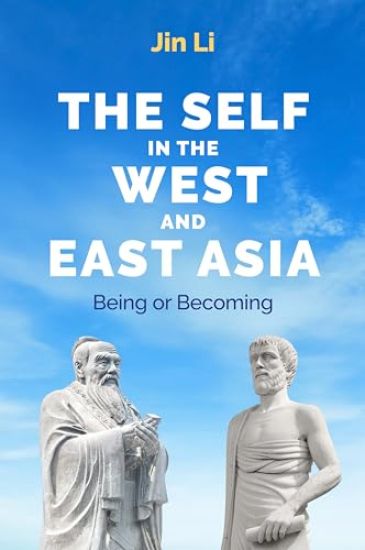
The Self in the West and East Asia

The Self in the West and East Asia

Jin Li

JOHN WILEY AND SONS LTD
2024
sidottu
From the fraught world of geopolitics to business and the academy, it’s more vital than ever that Westerners and East Asians understand how each other thinks. As Jin Li shows in this groundbreaking work, the differences run deep. Li explores the philosophical origins of the concept of self in both cultures and synthesizes her findings with cutting-edge psychological research to reveal a fundamental contrast. Westerners tend to think of the self as being, as a stable entity fixed in time and place. East Asians think of the self as relational and embedded in a process of becoming. The differences show in our intellectual traditions, our vocabulary, and our grammar. They are even apparent in our politics: the West is more interested in individual rights and East Asians in collective wellbeing. Deepening global exchanges may lead to some blurring and even integration of these cultural tendencies, but research suggests that the basic self-models, rooted in long-standing philosophies, are likely to endure. The Self in the West and East Asia is an enriching and enlightening account of a crucial subject at a time when relations between East and West have moved center-stage in international affairs.