Kirjojen hintavertailu. Mukana 11 342 296 kirjaa ja 12 kauppaa.

Kirjahaku

Etsi kirjoja tekijän nimen, kirjan nimen tai ISBN:n perusteella.

3 kirjaa tekijältä Jitendra R. Raol

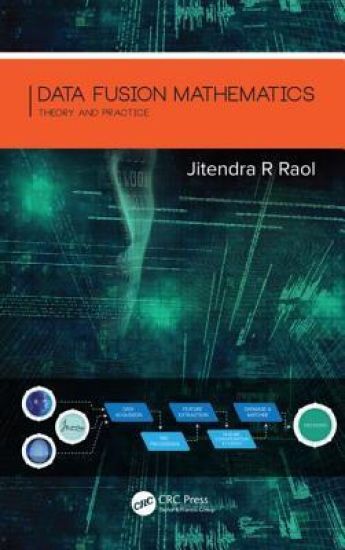
Data Fusion Mathematics

Data Fusion Mathematics

Jitendra R. Raol

CRC Press
2017
nidottu
Fills the Existing Gap of Mathematics for Data FusionData fusion (DF) combines large amounts of information from a variety of sources and fuses this data algorithmically, logically and, if required intelligently, using artificial intelligence (AI). Also, known as sensor data fusion (SDF), the DF fusion system is an important component for use in various applications that include the monitoring of vehicles, aerospace systems, large-scale structures, and large industrial automation plants. Data Fusion Mathematics: Theory and Practice offers a comprehensive overview of data fusion, and provides a proper and adequate understanding of the basic mathematics directly related to DF. The material covered can be used for evaluation of the performances of any designed and developed DF systems. It tries to answer whether unified data fusion mathematics can evolve from various disparate mathematical concepts, and highlights mathematics that can add credibility to the data fusion process.Focuses on Mathematical Tools That Use Data FusionThis text explores the use of statistical/probabilistic signal/image processing, filtering, component analysis, image algebra, decision making, and neuro-FL–GA paradigms in studying, developing and validating data fusion processes (DFP). It covers major mathematical expressions, and formulae and equations as well as, where feasible, their derivations. It also discusses SDF concepts, DF models and architectures, aspects and methods of type 1 and 2 fuzzy logics, and related practical applications. In addition, the author covers soft computing paradigms that are finding increasing applications in multisensory DF approaches and applications. This book: Explores the use of interval type 2 fuzzy logic and ANFIS in DFCovers the mathematical treatment of many types of filtering algorithms, target-tracking methods, and kinematic DF methodsPresents single and multi-sensor tracking and fusion mathematicsConsiders specific DF architectures in the context of decentralized systemsDiscusses information filtering, Bayesian approaches, several DF rules, image algebra and image fusion, decision fusion, and wireless sensor network (WSN) multimodality fusion Data Fusion Mathematics: Theory and Practice incorporates concepts, processes, methods, and approaches in data fusion that can help you with integrating DF mathematics and achieving higher levels of fusion activity, and clarity of performance. This text is geared toward researchers, scientists, teachers and practicing engineers interested and working in the multisensor data fusion area.
Multi-Sensor Data Fusion with MATLAB®

Multi-Sensor Data Fusion with MATLAB®

Jitendra R. Raol

CRC Press Inc
2009
sidottu
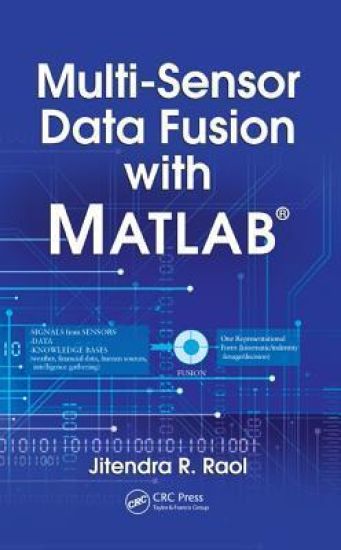
Using MATLAB® examples wherever possible, Multi-Sensor Data Fusion with MATLAB explores the three levels of multi-sensor data fusion (MSDF): kinematic-level fusion, including the theory of DF; fuzzy logic and decision fusion; and pixel- and feature-level image fusion. The authors elucidate DF strategies, algorithms, and performance evaluation mainly for aerospace applications, although the methods can also be applied to systems in other areas, such as biomedicine, military defense, and environmental engineering.After presenting several useful strategies and algorithms for DF and tracking performance, the book evaluates DF algorithms, software, and systems. It next covers fuzzy logic, fuzzy sets and their properties, fuzzy logic operators, fuzzy propositions/rule-based systems, an inference engine, and defuzzification methods. It develops a new MATLAB graphical user interface for evaluating fuzzy implication functions, before using fuzzy logic to estimate the unknown states of a dynamic system by processing sensor data. The book then employs principal component analysis, spatial frequency, and wavelet-based image fusion algorithms for the fusion of image data from sensors. It also presents procedures for combing tracks obtained from imaging sensor and ground-based radar. The final chapters discuss how DF is applied to mobile intelligent autonomous systems and intelligent monitoring systems.Fusing sensors’ data can lead to numerous benefits in a system’s performance. Through real-world examples and the evaluation of algorithmic results, this detailed book provides an understanding of MSDF concepts and methods from a practical point of view.Select MATLAB programs are available for download on www.crcpress.com
Data Fusion Mathematics

Data Fusion Mathematics

Jitendra R. Raol

Productivity Press
2015
sidottu
Fills the Existing Gap of Mathematics for Data FusionData fusion (DF) combines large amounts of information from a variety of sources and fuses this data algorithmically, logically and, if required intelligently, using artificial intelligence (AI). Also, known as sensor data fusion (SDF), the DF fusion system is an important component for use in various applications that include the monitoring of vehicles, aerospace systems, large-scale structures, and large industrial automation plants. Data Fusion Mathematics: Theory and Practice offers a comprehensive overview of data fusion, and provides a proper and adequate understanding of the basic mathematics directly related to DF. The material covered can be used for evaluation of the performances of any designed and developed DF systems. It tries to answer whether unified data fusion mathematics can evolve from various disparate mathematical concepts, and highlights mathematics that can add credibility to the data fusion process.Focuses on Mathematical Tools That Use Data FusionThis text explores the use of statistical/probabilistic signal/image processing, filtering, component analysis, image algebra, decision making, and neuro-FL–GA paradigms in studying, developing and validating data fusion processes (DFP). It covers major mathematical expressions, and formulae and equations as well as, where feasible, their derivations. It also discusses SDF concepts, DF models and architectures, aspects and methods of type 1 and 2 fuzzy logics, and related practical applications. In addition, the author covers soft computing paradigms that are finding increasing applications in multisensory DF approaches and applications. This book: Explores the use of interval type 2 fuzzy logic and ANFIS in DFCovers the mathematical treatment of many types of filtering algorithms, target-tracking methods, and kinematic DF methodsPresents single and multi-sensor tracking and fusion mathematicsConsiders specific DF architectures in the context of decentralized systemsDiscusses information filtering, Bayesian approaches, several DF rules, image algebra and image fusion, decision fusion, and wireless sensor network (WSN) multimodality fusion Data Fusion Mathematics: Theory and Practice incorporates concepts, processes, methods, and approaches in data fusion that can help you with integrating DF mathematics and achieving higher levels of fusion activity, and clarity of performance. This text is geared toward researchers, scientists, teachers and practicing engineers interested and working in the multisensor data fusion area.