Kirjojen hintavertailu. Mukana 12 016 292 kirjaa ja 12 kauppaa.

Kirjahaku

Etsi kirjoja tekijän nimen, kirjan nimen tai ISBN:n perusteella.

6 kirjaa tekijältä Jo Carruthers

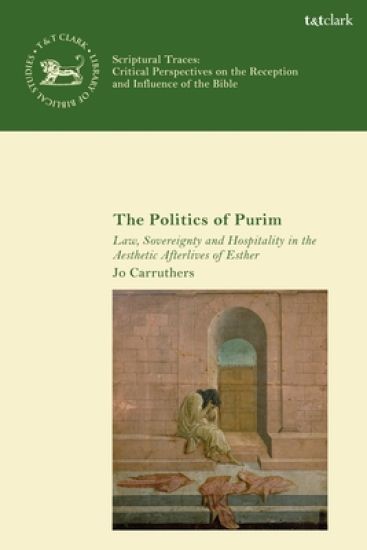
The Politics of Purim

The Politics of Purim

Jo Carruthers

T. T.Clark Ltd
2020
sidottu
This book approaches the holiday of Purim as profane, freed to human use and ends, in order to consider the political legacy of the biblical story of Esther in festival and art works. Jo Carruthers explores carnival and synagogue practices, the purimshpil (Purim’s own dramatic genre), illuminated Esther scrolls, as well as artworks by Botticelli, Millais and Jan Steen. The complex and astute interrogation of political life in such festival and artworks is analysed through theories of sovereignty, law, precarity and hospitality by key political thinkers such as Giorgio Agamben, Hannah Arendt, Walter Benjamin, Judith Butler, Jacques Derrida, and Jacques Rancière. Carruthers considers different motifs of boundary conservation and dissolution, as a means of contemplating the political implications of Purim and the Esther story for diaspora politics. How is sovereignty aspired to and attained by marginalized and threatened communities? How can one respond to the ethical call of hospitality to relax sovereign boundaries whilst protecting and celebrating that which is exceptional? The practice of giving gifts, mishloach manos, offers a model of hospitality that together with Purim’s profane impulse is epitomized in the final chapter’s discussion of a 2018 Brooklyn purimshpil, that offers a riotous ridiculing of white supremacist rhetoric, norms of domination, capitalist inequalities, modern slavery and ablest identities and assumptions.
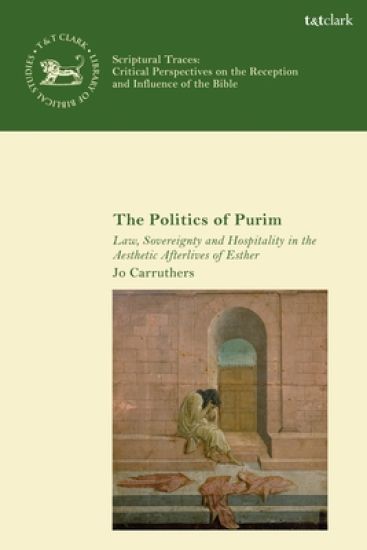
The Politics of Purim

The Politics of Purim

Jo Carruthers

T. T.Clark Ltd
2021
nidottu
This book approaches the holiday of Purim as profane, freed to human use and ends, in order to consider the political legacy of the biblical story of Esther in festival and art works. Jo Carruthers explores carnival and synagogue practices, the purimshpil (Purim’s own dramatic genre), illuminated Esther scrolls, as well as artworks by Botticelli, Millais and Jan Steen. The complex and astute interrogation of political life in such festival and artworks is analysed through theories of sovereignty, law, precarity and hospitality by key political thinkers such as Giorgio Agamben, Hannah Arendt, Walter Benjamin, Judith Butler, Jacques Derrida, and Jacques Rancière. Carruthers considers different motifs of boundary conservation and dissolution, as a means of contemplating the political implications of Purim and the Esther story for diaspora politics. How is sovereignty aspired to and attained by marginalized and threatened communities? How can one respond to the ethical call of hospitality to relax sovereign boundaries whilst protecting and celebrating that which is exceptional? The practice of giving gifts, mishloach manos, offers a model of hospitality that together with Purim’s profane impulse is epitomized in the final chapter’s discussion of a 2018 Brooklyn purimshpil, that offers a riotous ridiculing of white supremacist rhetoric, norms of domination, capitalist inequalities, modern slavery and ablest identities and assumptions.
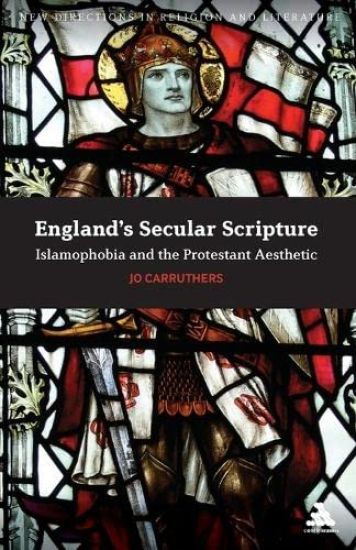
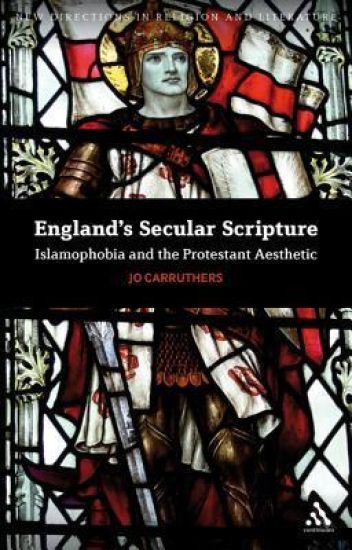
England's Secular Scripture

England's Secular Scripture

Jo Carruthers

Continuum Publishing Corporation
2011
nidottu
By outlining Protestantism and Englishness in early-modern literature to the present-day, this study reveals how other religious identities can be alienated in British society. "England's Secular Scripture" seeks to trace English Islamophobia to its roots in England's Protestant past, and more specifically to its aesthetic and literary rooting in Protestant values. Carruthers argues that English antagonism towards Islam lies in part in the formation of English identities in early modern Reformation Protestantism. The book traces the transposing, and secularizing, of Reformation doctrines into a 'Protestant aesthetic'; of simplicity, individualism, and rationalism in the literature of Spenser and Milton. Wordsworth, Hardy, Eliot and Orwell, among others, perpetuate this aesthetic, one that continues to shape English mythologies up to the present day. Carruthers sheds light on contemporary Islamophobia, helping us to understand that Englishness is not merely a secular identity (combating what is seen as an irrational fundamentalist identity), but one informed, paradoxically, by Protestant logic and history. This series aims to showcase new work at the forefront of religion and literature through short studies written by leading and rising scholars in the field. Books will pursue a variety of theoretical approaches as they engage with writing from different religious and literary traditions. Collectively, the series will offer a timely critical intervention to the interdisciplinary crossover between religion and literature, speaking to wider contemporary interests and mapping out new directions for the field in the early twenty-first century.
England's Secular Scripture

England's Secular Scripture

Jo Carruthers

Continuum Publishing Corporation
2011
sidottu
By outlining Protestantism and Englishness in early-modern literature to the present-day, this study reveals how other religious identities can be alienated in British society. "England's Secular Scripture" seeks to trace English Islamophobia to its roots in England's Protestant past, and more specifically to its aesthetic and literary rooting in Protestant values. Carruthers argues that English antagonism towards Islam lies in part in the formation of English identities in early modern Reformation Protestantism. The book traces the transposing, and secularizing, of Reformation doctrines into a 'Protestant aesthetic'; of simplicity, individualism, and rationalism in the literature of Spenser and Milton. Wordsworth, Hardy, Eliot and Orwell, among others, perpetuate this aesthetic, one that continues to shape English mythologies up to the present day. Carruthers sheds light on contemporary Islamophobia, helping us to understand that Englishness is not merely a secular identity (combating what is seen as an irrational fundamentalist identity), but one informed, paradoxically, by Protestant logic and history. This series aims to showcase new work at the forefront of religion and literature through short studies written by leading and rising scholars in the field. Books will pursue a variety of theoretical approaches as they engage with writing from different religious and literary traditions. Collectively, the series will offer a timely critical intervention to the interdisciplinary crossover between religion and literature, speaking to wider contemporary interests and mapping out new directions for the field in the early twenty-first century.
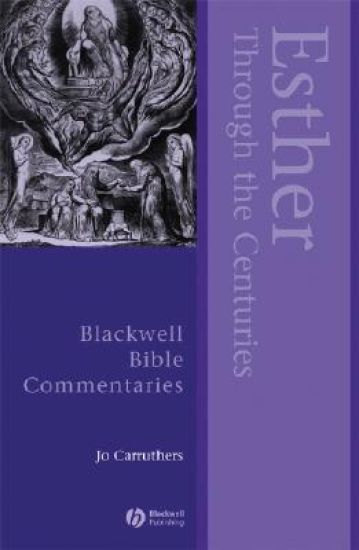
Esther Through the Centuries

Esther Through the Centuries

Jo Carruthers

Wiley-Blackwell
2020
nidottu
This interdisciplinary commentary ranges from early midrashic interpretation to contemporary rewritings introducing interpretations of the only biblical book not to mention God. Unearths a wealth of neglected rewritings inspired by the story’s relevance to themes of nationhood, rebellion, providence, revenge, female heroism, Jewish identity, exile, genocide and ‘multiculturalism’Reveals the various struggles and strategies used by religious commentators to make sense of this only biblical book that does not mention GodAsks why Esther is underestimated by contemporary feminist scholars despite a long history of subversive rewritingsCompares the most influential Jewish and Christian interpretations and interpretersIncludes an introduction to the book’s myriad representations in literature, music, and artPublished in the reception-history series, Blackwell Bible Commentaries
Esther Through the Centuries

Esther Through the Centuries

Jo Carruthers

Wiley-Blackwell (an imprint of John Wiley Sons Ltd)
2007
sidottu
This interdisciplinary commentary ranges from early midrashic interpretation to contemporary rewritings introducing interpretations of the only biblical book not to mention God. Unearths a wealth of neglected rewritings inspired by the story’s relevance to themes of nationhood, rebellion, providence, revenge, female heroism, Jewish identity, exile, genocide and ‘multiculturalism’Reveals the various struggles and strategies used by religious commentators to make sense of this only biblical book that does not mention GodAsks why Esther is underestimated by contemporary feminist scholars despite a long history of subversive rewritingsCompares the most influential Jewish and Christian interpretations and interpretersIncludes an introduction to the book’s myriad representations in literature, music, and artPublished in the reception-history series, Blackwell Bible Commentaries